
"Dream, Dream, Dream! Conduct these dreams into thoughts, and then transform them into action."
- Dr. A. P. J. Abdul Kalam
"Dream, Dream, Dream! Conduct these dreams into thoughts, and then transform them into action."
- Dr. A. P. J. Abdul Kalam
16 Jun 2026
India’s aviation sector has achieved a remarkable new milestone. Two Indian airports have been named among the World’s Most Beautiful Airports of 2026, earning a place alongside some of the most architecturally stunning aviation hubs across the globe.
The prestigious recognition comes from Prix Versailles, one of the world’s most respected architecture and design awards. Announced at UNESCO headquarters in Paris, the annual awards celebrate projects that combine innovation, sustainability, cultural significance, and exceptional user experience.
This year, India emerged as a standout performer, with Navi Mumbai International Airport Terminal 1 and Lokapriya Gopinath Bordoloi International Airport Terminal 2 in Guwahati making it to the elite list of seven airports selected worldwide.
Modern airports are no longer just places where passengers catch flights. Increasingly, they are becoming symbols of national identity, culture, and architectural ambition. The Prix Versailles jury recognised airports that go beyond functionality to create memorable experiences while embracing sustainability and local heritage.
For India, the inclusion of two airports on the prestigious list reflects the country's growing confidence in creating world-class infrastructure that competes on the global stage.
The new Terminal 2 at Guwahati’s Lokapriya Gopinath Bordoloi International Airport has been celebrated for beautifully capturing the spirit of Northeast India.
Designed by renowned architect Nuru Karim, the terminal draws inspiration from Assam’s natural landscapes, rivers, and cultural traditions. Flowing ceiling patterns mirror the majestic Brahmaputra River, while local craftsmanship and indigenous art are woven seamlessly into the interiors.
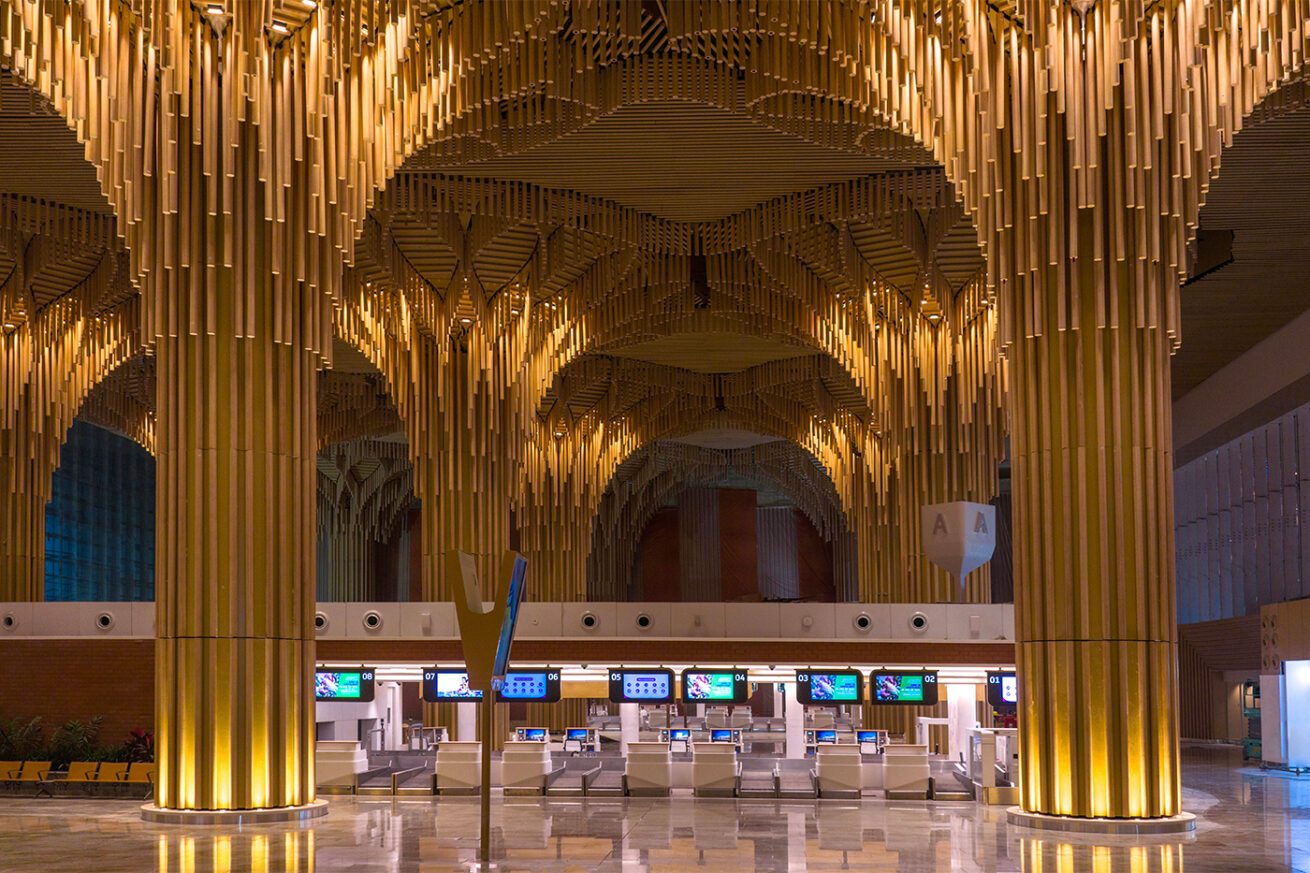
The terminal is also inspired by the Bamboo Orchid, a symbol closely associated with the region’s rich biodiversity. Through biophilic design principles, the structure creates a strong connection between architecture and nature while prioritising sustainability and operational efficiency. As the primary gateway to Northeast India, the airport serves as both a transportation hub and a cultural showcase for the region.
If Guwahati celebrates nature and tradition, Navi Mumbai represents India's futuristic aspirations. Designed by the globally acclaimed Zaha Hadid Architects, Terminal 1 of Navi Mumbai International Airport has been inspired by the lotus flower, India’s national flower and a symbol of growth and elegance.

The terminal features striking lotus-shaped columns, geometric portals, vast open spaces, and lush green areas that create a visually stunning experience for travellers. Blending cutting-edge technology, art, and functionality, the airport aims to redefine passenger experiences while positioning India as a major global aviation hub.
The two Indian airports share the spotlight with some of the world’s most impressive aviation infrastructure projects.
The 2026 list also includes airports in Guangzhou (China), Frankfurt am Main (Germany), Kandal Stueng (Cambodia), Pittsburgh (United States), and San Diego (United States).
Being recognised alongside these internationally acclaimed airports highlights India's rising stature in global infrastructure and design excellence.
The recognition from Prix Versailles is about much more than beautiful buildings. It is a celebration of how architecture can tell stories, preserve culture, and create meaningful experiences. With Guwahati drawing inspiration from Assam’s heritage and Navi Mumbai showcasing futuristic Indian ambition, these airports represent two different faces of modern India—both equally inspiring.
As travellers pass through these award-winning terminals, they will experience not just world-class infrastructure, but also a glimpse of India's creativity, diversity, and vision for the future.
.jpeg)
I have a Masters in Literature and a knack for spotting the silver lining! When I’m not chasing good news, you’ll find me nurturing my farm or lost in a good book.