"Dream, Dream, Dream! Conduct these dreams into thoughts, and then transform them into action."
- Dr. A. P. J. Abdul Kalam
"Dream, Dream, Dream! Conduct these dreams into thoughts, and then transform them into action."
- Dr. A. P. J. Abdul Kalam
25 Feb 2026
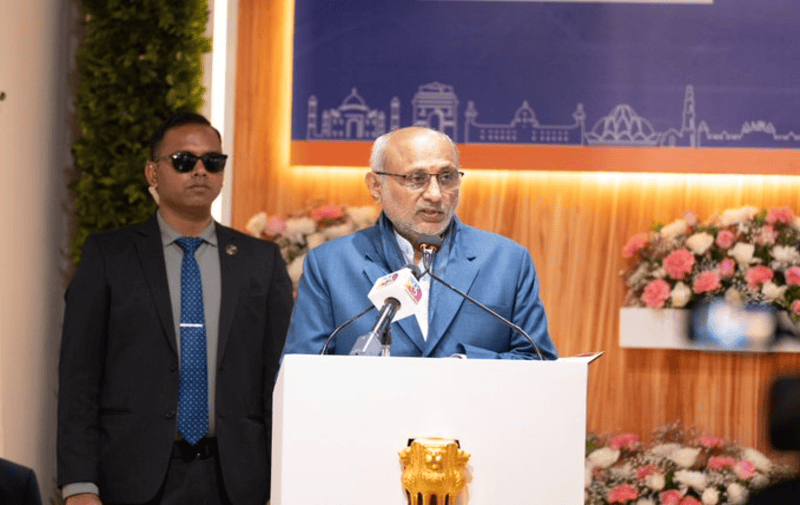
Tourism is no longer just about ticking destinations off a travel list. It is about stories carried across borders, cultures meeting without translators, and economies growing through shared experiences. At the Tourism Leadership Summit 2026 in New Delhi, Vice President C.P. Radhakrishnan underscored this evolving vision, presenting tourism not merely as an industry, but as a strategic pillar of diplomacy, development, and inclusive growth. Inaugurating the summit organised by the US-India Strategic Partnership Forum (USISPF), the Vice President articulated a forward-looking blueprint that places tourism at the heart of India’s economic and global engagement strategy.
Addressing policymakers, industry leaders, and international stakeholders, Mr. Radhakrishnan described tourism as a powerful instrument of soft diplomacy. In an increasingly interconnected world, travel fosters understanding in ways formal negotiations cannot. Visitors who experience India’s heritage, cuisine, festivals, and traditions often leave as informal ambassadors, strengthening people-to-people ties.
The Vice President highlighted tourism as a key pillar of the India-US economic corridor. Beyond trade and technology, tourism deepens bilateral relations by building cultural familiarity and mutual trust. In this context, tourism becomes more than revenue generation; it becomes relationship building at scale. As global travelers increasingly seek authentic, meaningful experiences, India’s diverse civilisational landscape offers immense potential. From spiritual retreats and wellness traditions to architectural marvels and ecological diversity, the country’s tourism assets are vast and varied.
A central highlight of the address was India’s Tourism Vision 2029, a comprehensive roadmap aimed at transforming the country’s tourism infrastructure. The plan envisions developing at least one world-class tourist destination in every state, backed by robust infrastructure, seamless connectivity, smart amenities, and sustainable practices. This approach signals a decentralised growth strategy. Instead of concentrating tourism in a few established hotspots, the vision seeks to distribute economic benefits more evenly across regions. For local communities, this means greater employment opportunities, entrepreneurship prospects, and enhanced public infrastructure. World-class destinations today require more than scenic beauty. They demand efficient airports, reliable last-mile connectivity, digital integration, clean facilities, and safe environments. By prioritising these aspects, the government aims to elevate India’s global competitiveness in tourism.
Tourism remains one of the largest employment generators globally, and India is no exception. From hotel staff and tour operators to artisans, drivers, and local guides, millions depend directly or indirectly on tourism for their livelihoods. Mr. Radhakrishnan stressed the importance of investing in skills development to ensure that India’s workforce is prepared to meet global standards. Skill enhancement not only improves service quality but also increases income stability for workers. Particular emphasis was placed on entrepreneurship and women-led enterprises. Women have historically played a significant role in hospitality, handicrafts, and local cultural industries. Strengthening their participation in tourism can accelerate inclusive economic growth while empowering communities socially and financially.
The Vice President highlighted the need to upgrade visitor amenities and inzterpretation centres to enhance engagement at tourist sites. Interpretation centres play a crucial role in helping visitors understand historical, cultural, and ecological contexts, transforming a simple visit into an educational journey. Improving last-mile connectivity was also emphasised as critical to unlocking tourism potential. Often, the most captivating destinations remain under-visited due to inadequate access. Seamless connectivity ensures that even remote sites can participate in the national tourism ecosystem. Equally important is digital storytelling. Modern travelers rely heavily on digital platforms for discovery and engagement. By leveraging digital tools, India can narrate its heritage more dynamically, reaching global audiences and creating immersive pre-travel experiences.
As climate concerns intensify worldwide, the Vice President underscored the need to align tourism expansion with environmental goals. Sustainable tourism practices are no longer optional; they are essential to preserving destinations for future generations. Balancing infrastructure development with ecological preservation is critical. Waste management, water conservation, renewable energy integration, and biodiversity protection must be integral to tourism planning. Travelers today increasingly prioritise eco-conscious choices. Destinations that demonstrate genuine commitment to sustainability not only protect their natural assets but also strengthen their global appeal. The Tourism Leadership Summit 2026 thus marked more than a ceremonial inauguration. It articulated a vision where tourism serves as a catalyst for economic growth, a channel for diplomatic engagement, and a platform for social empowerment.
Romanticizing life and shaping stories from everything I see through my journalistic lens. Also, I love sports on the side.