"Dream, Dream, Dream! Conduct these dreams into thoughts, and then transform them into action."
- Dr. A. P. J. Abdul Kalam
"Dream, Dream, Dream! Conduct these dreams into thoughts, and then transform them into action."
- Dr. A. P. J. Abdul Kalam
5 Oct 2026
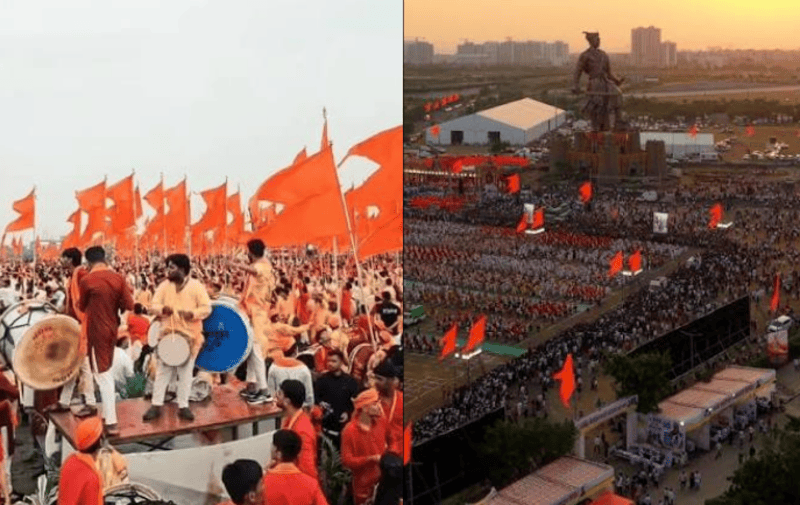
Pune witnessed a spectacular celebration of Maharashtra’s cultural heritage on October 4, 2026, as more than 5,000 dhol-tasha players came together for one extraordinary performance.
Held at Borhadewadi in Moshi, Pimpri-Chinchwad, the massive gathering brought together performers from 151 dhol-tasha pathaks. As thousands of drums sounded in unison, the venue transformed into a sea of rhythm, energy and tradition.
The performance, dedicated to Chhatrapati Sambhaji Maharaj, has entered the record books as the largest collective dhol-tasha performance, turning a cultural tribute into a historic spectacle.
The scale of the gathering was extraordinary. Performers from across the region came together to create one coordinated performance, showcasing the discipline and collective spirit behind Maharashtra’s celebrated dhol-tasha tradition.
For generations, dhol-tasha has been an integral part of Maharashtra’s public celebrations and cultural events. But bringing together 151 pathaks and thousands of musicians created a spectacle on an entirely different scale. Every beat added to the growing roar, with the combined sound of the drums echoing across Borhadewadi.
What began as an ambitious record attempt became a celebration that put Maharashtra’s traditional percussion art firmly in the spotlight.
The performance carried additional significance because it took place against the backdrop of the grand Sambhaji Maharaj memorial being developed in Moshi. The memorial features a 140-foot statue standing on a 40-foot pedestal, forming part of the upcoming Shambu Srushti theme park and cultural complex.
Designed by renowned sculptor Ram Sutar, the statue is set to become a prominent landmark in Pimpri-Chinchwad. The project is backed by the Pimpri-Chinchwad Municipal Corporation. The gathering of thousands of dhol players added a powerful cultural dimension to the landmark setting, with music becoming the language of the tribute.
The achievement was about more than numbers. It demonstrated how a traditional art form can bring thousands of people together through rhythm, coordination and shared cultural pride. With 5,000+ players, 151 pathaks and one thunderous performance, Pune created a moment that will be remembered well beyond the event itself.
The record may be measured in numbers, but the real spectacle was in the sound, the unmistakable roar of Maharashtra’s dhol-tasha tradition rising together in tribute.
.jpeg)
I have a Masters in Literature and a knack for spotting the silver lining! When I’m not chasing good news, you’ll find me nurturing my farm or lost in a good book.