"Dream, Dream, Dream! Conduct these dreams into thoughts, and then transform them into action."
- Dr. A. P. J. Abdul Kalam
"Dream, Dream, Dream! Conduct these dreams into thoughts, and then transform them into action."
- Dr. A. P. J. Abdul Kalam
2 Nov 2026
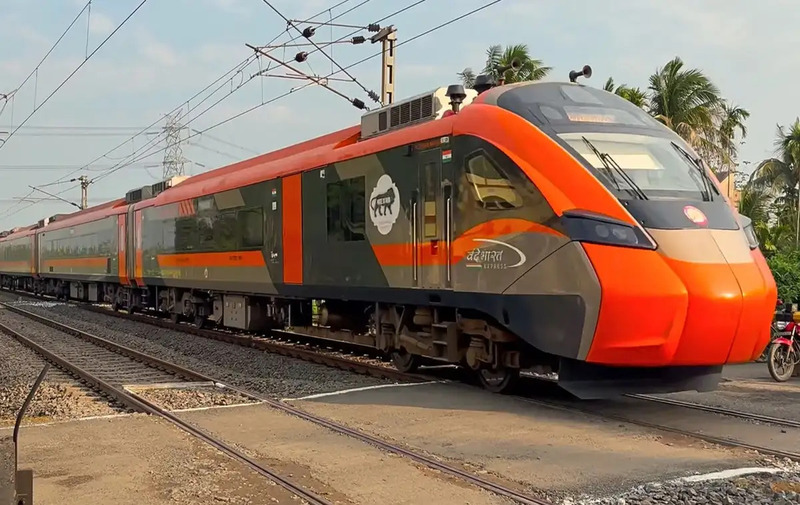
Stand on a railway platform as a Vande Bharat train glides in, and you may notice something unusual—there is no separate locomotive pulling the coaches.
So, what powers one of India’s fastest trains?
The answer lies beneath the coaches themselves. Instead of depending on a single engine at the front, Vande Bharat uses a system that distributes power across the train, allowing several parts of it to work together.
Vande Bharat is a self-propelled train set. Electric traction motors are fitted beneath every second coach, meaning the train does not need a separate locomotive to pull it. The train draws electricity from overhead wires through equipment mounted on its roof. This power is then supplied to the traction motors below the coaches, setting the wheels in motion.
Think of it this way: instead of one powerful engine pulling a long line of coaches, Vande Bharat has several powered units helping to move the entire train.
This distributed system also frees up valuable space. With much of the electrical equipment placed beneath the coaches, there is more room for passengers inside. By shifting electrical equipment beneath the coaches, Vande Bharat also makes better use of passenger space. According to the Press Information Bureau, its 16-coach configuration can seat 1,128 passengers, more than a conventional Shatabdi rake of similar length.
The secret to quick acceleration lies in a simple principle of physics—more powered wheels mean more grip. When a wheel turns, it pushes backwards against the rail. In return, the rail pushes the wheel forward. This force helps move the train ahead. In a conventional locomotive-hauled train, only the locomotive's wheels provide the driving force while the coaches are pulled behind it. In Vande Bharat, powered wheels are distributed along the train, allowing more wheels to contribute to the forward push.
The result is greater traction and faster acceleration. According to New India Samachar, an upgraded version of the train can reach 100 km/h in under 52 seconds.
The same motors that help Vande Bharat speed up can also help it slow down. During braking, the train uses a combination of electric and pneumatic braking. Its motors can act in reverse, converting some of the train's kinetic energy into electricity and feeding it back into the power system—a process known as regenerative braking. With braking forces spread across multiple axles, the system helps the train decelerate efficiently while also saving energy.
Adding to its appeal, Vande Bharat is also a proud ‘Made in India’ success story.
While Vande Bharat may appear to have no engine, the reality is far more fascinating. It has many motors working together beneath its coaches—turning a train without a conventional locomotive into a powerful example of engineering in motion.
.jpeg)
I have a Masters in Literature and a knack for spotting the silver lining! When I’m not chasing good news, you’ll find me nurturing my farm or lost in a good book.