"Dream, Dream, Dream! Conduct these dreams into thoughts, and then transform them into action."
- Dr. A. P. J. Abdul Kalam
"Dream, Dream, Dream! Conduct these dreams into thoughts, and then transform them into action."
- Dr. A. P. J. Abdul Kalam
14 Apr 2026
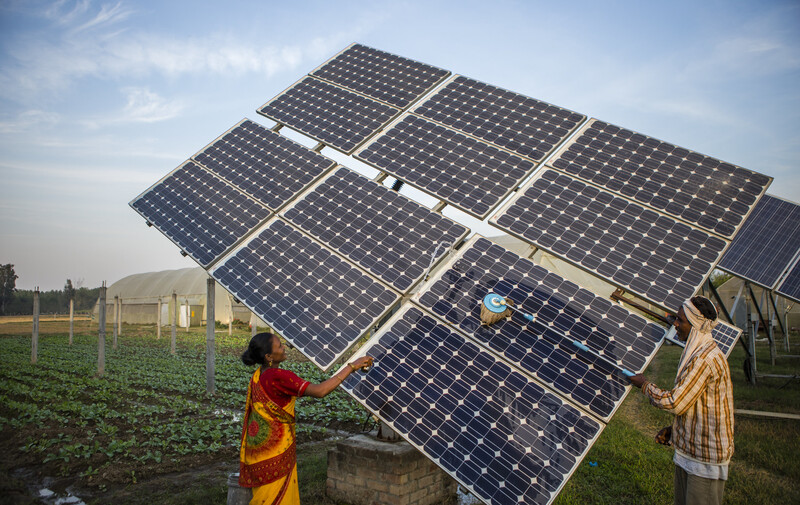
There are moments in a country’s journey that quietly redefine its future. India reaching 150.26 GW of installed solar capacity as of March 2026 is one such moment. It is not just a number. It is a story of transformation. From sunlit rooftops in crowded cities to vast solar parks stretching across deserts, India is steadily turning its most abundant natural resource into its greatest strength. What once seemed like an ambitious dream is now a visible reality—one that is lighting homes, powering industries, and reshaping the nation’s energy landscape.
The scale of India’s solar expansion over the past year has been nothing short of extraordinary. In the financial year 2025–26 alone, the country added a record 44.6 GW of solar capacity—the highest ever in a single year. This growth is nearly double the additions recorded in the previous year, reflecting not just acceleration but momentum. This surge has been driven by a combination of policy clarity, investor confidence, and a growing urgency to reduce dependence on fossil fuels. The government’s consistent push, along with increasing private sector participation, has created an ecosystem where renewable energy is no longer an alternative—it is becoming the default. Solar power has emerged as the backbone of India’s renewable journey, contributing the largest share to the country’s total renewable energy capacity of 275 GW.
Today, solar energy accounts for nearly 55% of India’s renewable capacity, far ahead of other sources like wind, hydro, and biomass. This dominance is not accidental. It reflects the scalability and adaptability of solar power. Large-scale solar parks have transformed barren lands into hubs of energy production, while rooftop installations are bringing power generation directly to homes and businesses. Ground-mounted solar projects alone added around 34.8 GW during the year, marking a staggering 106% year-on-year growth. Much of this expansion can be traced to the ambitious bidding trajectory launched by the Ministry of New and Renewable Energy in 2023, which ensured a steady pipeline of projects. At the same time, policy incentives like the inter-state transmission system waiver encouraged developers to fast-track execution, turning plans into reality at an unprecedented pace.
While large solar parks dominate headlines, the real transformation is also happening at a much smaller, more personal level. Across India, millions of households are embracing solar energy. The PM Surya Ghar Yojana has played a crucial role in this shift. With around 2.6 million homes already covered and significant financial assistance provided, rooftop solar installations reached approximately 8.7 GW—growing by 69% in just one year. For families, this is more than an energy solution. It is financial relief, energy independence, and a step toward sustainability. In many homes, the sun is no longer just a source of light; it has become a source of empowerment.
India’s solar revolution is being powered by states that have embraced the opportunity with remarkable speed. Rajasthan has emerged as the leader in large-scale solar installations, contributing 35% of the additions during the year. Its vast desert landscapes have become ideal grounds for solar parks. Gujarat follows closely, leveraging its strong industrial base and proactive policies to drive growth, while Maharashtra has shown impressive performance across both large-scale and rooftop segments. In rooftop solar, Maharashtra leads the way, reflecting strong urban adoption and awareness. Meanwhile, states like Tamil Nadu are steadily building their presence, ensuring that the growth is widespread and inclusive. Even in off-grid solar, Maharashtra and Gujarat are setting benchmarks, bringing electricity to areas where traditional infrastructure struggles to reach.
Despite this rapid progress, fossil fuels still account for a significant share of India’s power generation. But the direction is clear. The current pace of solar expansion signals a decisive shift in how India views its energy future. The focus is no longer just on meeting demand—it is on meeting it sustainably. With a target of achieving 500 GW of non-fossil fuel capacity by 2030, India is positioning itself as a global leader in clean energy transition. The 150 GW milestone is not the destination; it is a powerful step toward that larger goal. As the sun rises each day over India’s cities, villages, and landscapes, it now carries a new meaning. It is not just a symbol of light. It is a symbol of possibility.

Writing about what truly matters, good news and stories to remind the world - it is brighter than we think.