"Dream, Dream, Dream! Conduct these dreams into thoughts, and then transform them into action."
- Dr. A. P. J. Abdul Kalam
"Dream, Dream, Dream! Conduct these dreams into thoughts, and then transform them into action."
- Dr. A. P. J. Abdul Kalam
4 Jun 2026
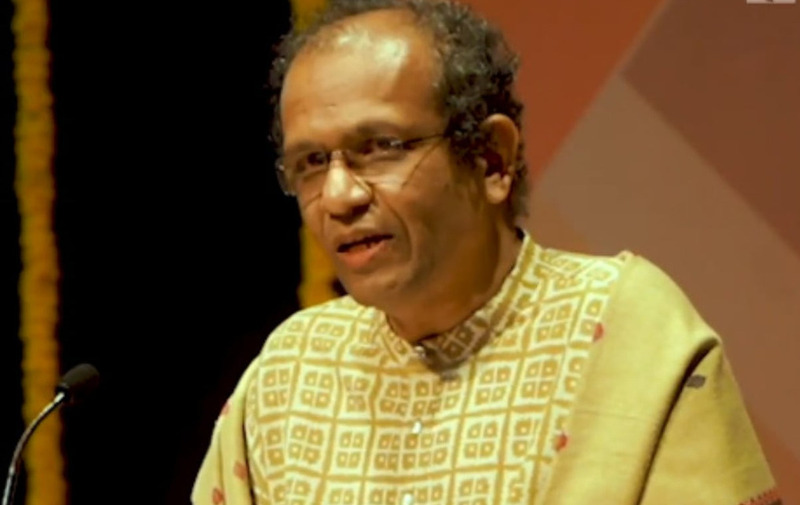
On May 25, 2026, the nation celebrated a remarkable cultural icon as the President of India conferred the prestigious Padma Bhushan upon Dr R Ganesh in the field of Arts. For many, the award was a recognition long overdue. For others, it was an invitation to discover one of India’s most extraordinary living scholars, a man capable of performing feats that seem almost impossible in the age of artificial intelligence.
A master of 18 languages, author of more than 70 scholarly works, and performer of over 1,500 Avadhanas and five Shatavadhanas, Dr Ganesh has dedicated his life to reviving and redefining an ancient Indian intellectual tradition known as Avadhana.
Imagine being asked to solve complex puzzles, compose poetry, answer questions, remember long sequences of information, identify literary references, and respond to multiple people—all at the same time.
That, in essence, is Avadhana. Derived from the Sanskrit word Avadhana, meaning “attention” or “concentration,” it is a centuries-old literary and intellectual performance art that tests memory, creativity, linguistic skill, multitasking ability, and mental focus.
During an Avadhana performance, several questioners simultaneously challenge the Avadhani with different tasks. The performer must respond to each challenge while accurately remembering every detail, often over several hours.
A Shatavadhani, the title earned by Dr Ganesh, is someone capable of attending to and successfully completing 100 simultaneous tasks.
To understand the magnitude of Dr Ganesh’s abilities, consider this example. Imagine 100 people entering a room one after another, each sharing a unique phrase, code, or question in different languages. Hours later, Dr Ganesh can recall each one in the exact order, identify who said what, and answer related questions with astonishing accuracy. But memory is only one aspect of his genius.
He can compose poetry extempore, translate verses across languages while preserving metre and meaning, and create literary works instantly in response to complex challenges. His performances are not mechanical demonstrations of memory but living expressions of creativity and artistic excellence.
Historically, Avadhana was regarded as one of the highest forms of intellectual accomplishment in India. Yet over time, the tradition faded from public consciousness. Dr Ganesh changed that. Single-handedly, he revived Avadhana in the Kannada language and transformed it into a thriving contemporary art form. He introduced innovations previously considered impossible within the tradition.
Among his most celebrated contributions is the incorporation of Chitrakavita, intricate visual poetry, into spontaneous Avadhana performances. What many believed could never be accomplished in real time, Dr Ganesh achieved repeatedly. He also pioneered interdisciplinary artistic creations that blended literature, painting, music, and dance, giving rise to unique formats such as Kavya-Chitra and Kavya-Chitra-Geeta-Nritya.
While his achievements in literature are staggering, Dr Ganesh's influence extends far beyond books and performances. He is widely respected as an interpreter of Indian aesthetics and the philosophy of Rasa, the emotional essence of art. Through his lectures and performances, he has helped audiences understand literature, music, dance, painting, and even cinema in deeper and more meaningful ways.
Many scholars compare his contributions to the intellectual traditions established centuries ago by legendary thinkers such as Anandavardhana and Abhinavagupta.
In an era when information is available at the click of a button, some question the relevance of memory and concentration. Dr Ganesh offers a compelling answer. Just as physical exercise strengthens the body, mental discipline strengthens the mind. His life demonstrates the extraordinary capabilities of human cognition when nurtured through rigorous practice, learning, and creativity.
The Padma Bhushan is therefore more than an award for an individual. It is recognition of a timeless Indian tradition and a reminder that the human mind remains one of the greatest wonders ever created.
.jpeg)
I have a Masters in Literature and a knack for spotting the silver lining! When I’m not chasing good news, you’ll find me nurturing my farm or lost in a good book.