"Dream, Dream, Dream! Conduct these dreams into thoughts, and then transform them into action."
- Dr. A. P. J. Abdul Kalam
"Dream, Dream, Dream! Conduct these dreams into thoughts, and then transform them into action."
- Dr. A. P. J. Abdul Kalam
28 Mar 2026
You know how you instinctively say “hello” the moment a call connects? It feels so natural that you probably never question it. But imagine the very first telephone users, no set greeting, no habit, just a strange silence on the line. Do you introduce yourself? Do you ask, "Who's this?” Or do you just… wait? When the telephone first appeared in 1876, it didn’t come with social rules. It was a machine without manners. And that’s what makes this story so interesting: “hello” wasn’t just a word that happened; it was a solution to a very human problem: How do you begin a conversation when you can’t see the other person?
The Birth of a New Kind of Conversation
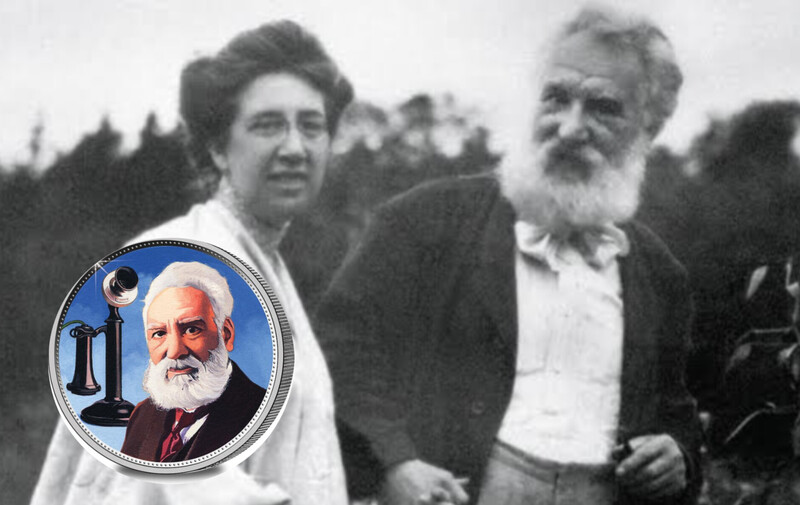
When Alexander Graham Bell invented the telephone, his focus was on sound transmission, not conversation etiquette. His famous first words to his assistant, Thomas Watson, “Mr. Watson, come here, I want to see you," were functional, not symbolic. Bell personally preferred the word “Ahoy!” as a greeting for telephone conversations. Borrowed from maritime language, it was loud, clear, and already used to call attention across distances. But Bell wasn’t thinking about everyday users at scale.
Meanwhile, his personal life often gets misrepresented, his wife, Mabel Bell, was deaf and played a crucial role in inspiring his work, but she wasn’t involved in deciding how calls should begin. The invention had been made, but the culture around it was still forming.
Edison’s Influence: How “Hello” Took Over the Line
Enter Thomas Edison, the man who would quietly shape how we answer calls even today. Edison believed “hello” was the perfect telephone greeting because it was sharp, audible, and already used to grab attention. At the time, “hello” wasn’t a polite greeting like it is today, it was closer to saying “hey!” or “listen!” In 1877, Edison wrote that “hello” would be the most effective word to use on the telephone, especially given the poor audio quality of early devices.
Telephone operators, who were mostly women and acted as the bridge connecting calls, began using “hello” as a standard response. This mattered more than anything else, because operators set the tone for how people interacted with the technology. Slowly but surely, Edison’s preference spread, and Bell’s “ahoy” was left behind.
How “Hello” Became Universal
What’s fascinating is how something so small became so global. As telephone systems expanded across countries, the practices that came with them were copied too. Instruction manuals, operator training, and everyday repetition turned “hello” into a habit. It didn’t need to be taught formally, people just heard it and followed. Over time, it became automatic, almost like muscle memory. Even in different languages, you can hear its influence, “hallo” in German, “allo” in French, variations of the same sound shaping global communication.
Today, “hello” isn’t just a word; it’s a ritual. It signals presence, connection, and the start of interaction in a space where you can’t rely on eye contact or body language. And the most fascinating part? It wasn’t chosen by the world, it was chosen by a few individuals, reinforced by technology, and then quietly adopted by everyone. So the next time you answer a call, remember, you’re not just speaking casually. You’re repeating a decision made nearly 150 years ago, one that turned a silent machine into a human experience.

Writing about what truly matters, good news and stories to remind the world - it is brighter than we think.