"Dream, Dream, Dream! Conduct these dreams into thoughts, and then transform them into action."
- Dr. A. P. J. Abdul Kalam
"Dream, Dream, Dream! Conduct these dreams into thoughts, and then transform them into action."
- Dr. A. P. J. Abdul Kalam
29 Apr 2026
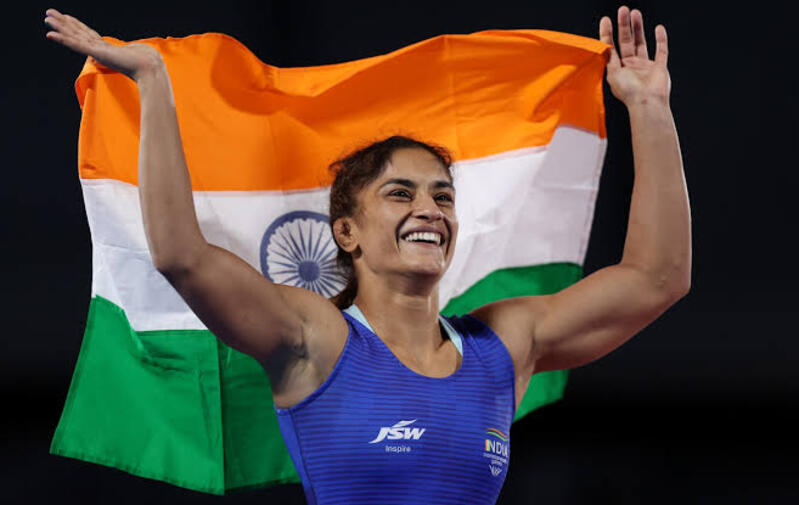
In Indian sport, some stories go beyond medals and records; they become symbols of courage. Vinesh Phogat is one such story. Just when it seemed her journey on the mat had come to a painful end after the Paris Olympics, she is now preparing for a remarkable comeback. Not just as an athlete, but as someone who has lived through triumph, loss, controversy, and transformation. Her return to competitive wrestling in a new weight category is not just about sport. It is about reclaiming a dream that refused to fade.
Born in a small village in Haryana, Vinesh grew up in a family where wrestling was not just a sport but a way of life. Guided by her uncle, the legendary coach Mahavir Singh Phogat, she trained alongside her cousins, including Geeta Phogat and Babita Kumari. But her journey was never easy. In a society where girls stepping into wrestling arenas faced resistance, Vinesh had to fight battles beyond the mat. Personal tragedy struck early when she lost her father at a young age. Yet, these challenges shaped her into a determined athlete who refused to back down.
Over the years, Vinesh built a career that placed her among India’s finest wrestlers. She became the only Indian woman to win gold medals at both the Asian Games and the Commonwealth Games. A three-time Olympian, she carried the nation’s hopes across multiple global stages. Her bronze medals at the World Championships and consistent performances made her a symbol of excellence. Each victory was not just hers—it belonged to every young girl who dared to dream differently.
The 2024 Paris Olympics was meant to be the defining chapter of her career. And in many ways, it was. Vinesh created history by becoming the first Indian woman wrestler to reach an Olympic final. But sport can be brutally unforgiving. On the morning of the final, she was disqualified for being slightly above the weight limit. In a matter of hours, a dream that had taken years to build slipped away. The moment was devastating. It was not just a loss of a medal—it was a loss of a moment that could have defined her legacy. Soon after, a heartbroken Vinesh announced her retirement, saying she no longer had the strength to continue.
Following the Olympics, Vinesh’s journey took a new direction. She stepped into public life and joined the Indian National Congress, eventually winning from the Julana constituency in Haryana. Her transition into politics reflected her desire to serve beyond sport. At the same time, she became a voice in important social movements, including protests demanding accountability in Indian wrestling. She also embraced a new chapter in her personal life, becoming a mother. It was a phase that brought distance from competitive sport, but not from the passion that had defined her identity.
Time away from wrestling often brings clarity. For Vinesh, it reignited something deeper—the love for the sport itself. As she later expressed, “the fire never truly left.” Now, she is set to return to competitive wrestling at the 2026 Senior Open Ranking Tournament in Gonda. What makes this comeback even more challenging is her decision to compete in the 57kg category, significantly higher than her usual weight class. This is not just a physical adjustment; it is a complete reinvention. Competing against stronger and heavier opponents demands a new level of preparation, strategy, and mental toughness.
Her return has not been without controversy. Vinesh has openly expressed concerns about obstacles in her comeback journey, including issues with registration and support systems. However, officials from the Wrestling Federation have denied any deliberate hurdles. Such challenges reflect the complex relationship between athletes and sporting institutions. Yet, if there is one thing Vinesh has shown throughout her career, it is her ability to fight both on and off the mat.
The road ahead leads to a bigger goal: the 2028 Los Angeles Olympics. For Vinesh, this is more than just another competition. It is an opportunity for redemption, a chance to rewrite the ending of her Olympic journey. Whether she wins or not, her return itself is a victory. It reflects courage, the courage to begin again when the world thinks you are done. In the world of sports, comebacks are often the most inspiring chapters. Vinesh Phogat’s return is not just about chasing medals; it is about reclaiming identity, proving resilience, and inspiring a generation. As she steps back onto the mat, she carries with her not just experience, but emotion, belief, and unfinished dreams. Because sometimes, the greatest victories are not about standing on the podium; they are about finding the strength to rise again.

Writing about what truly matters, good news and stories to remind the world - it is brighter than we think.