"Dream, Dream, Dream! Conduct these dreams into thoughts, and then transform them into action."
- Dr. A. P. J. Abdul Kalam
"Dream, Dream, Dream! Conduct these dreams into thoughts, and then transform them into action."
- Dr. A. P. J. Abdul Kalam
23 Apr 2026
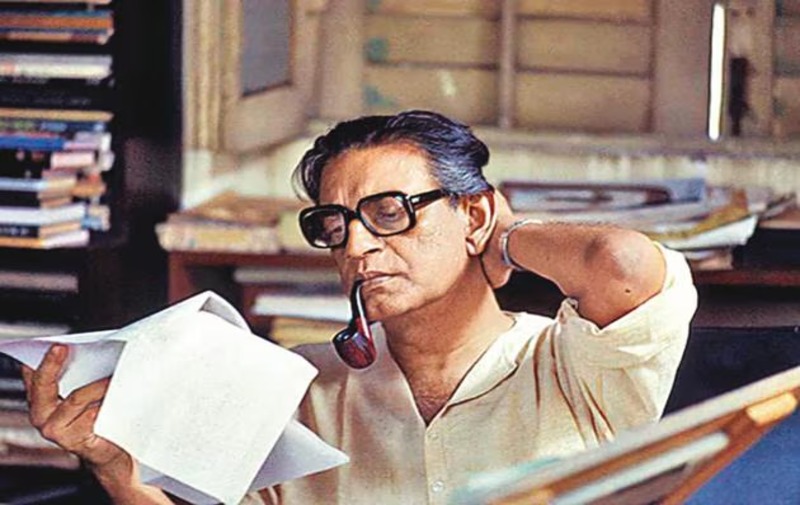
In the bustling lanes of Kolkata, a young boy named Manik grew up surrounded by ink, paper, and imagination. Born on May 2, 1921, into a family of artists and thinkers, Satyajit Ray inherited storytelling not as a skill, but as a way of life. His father, Sukumar Ray, was a pioneer of children’s literature, while his grandfather, Upendrakishore Ray Chowdhury, laid the foundation of a creative legacy that would echo across generations. But Ray’s journey into cinema was not immediate. He studied economics, worked in advertising, and designed book covers with remarkable finesse. It was only after encountering global cinema especially Jean Renoir and the Italian masterpiece Bicycle Thieves by Vittorio De Sica that something shifted. He realized cinema could be more than entertainment; it could be truth.
In 1955, Ray released Pather Panchali, a film that didn’t just mark his debut it redefined Indian cinema. Shot with limited resources and immense patience, the film told a simple story of a rural boy named Apu. Yet, its emotional depth resonated across borders. It went on to win international acclaim, including honors at the Cannes Film Festival. What followed was the iconic The Apu Trilogy, completed with Aparajito and Apur Sansar. These films didn’t rely on spectacle or dramatic excess. Instead, they focused on life as it is fragile, beautiful, and deeply human. Through Apu’s journey, Ray quietly connected audiences worldwide to the shared emotions of growth, loss, and hope.
Ray was never just a filmmaker. He was a complete artist. He wrote scripts, composed music, designed posters, and even created fonts. His films like Charulata, The Music Room, and The Big City explored themes of loneliness, changing societies, and the inner lives of ordinary people. Unlike many filmmakers of his time, Ray didn’t chase grandeur. He found stories in silence, in glances, in everyday struggles. His characters were not heroes or villains they were people. And that’s what made his cinema timeless. Even global legends like Akira Kurosawa admired him deeply. Kurosawa once said that not watching Ray’s films was like living in the world without seeing the sun or the moon. That admiration crossed continents, influencing directors like Martin Scorsese and Christopher Nolan.
Over a career spanning four decades, Ray directed 36 films and received countless honors. Among them were India’s highest civilian award, the Bharat Ratna, and the prestigious Academy Honorary Award in 1992. Even as he lay ill, he accepted the Oscar via video message, calling it the greatest achievement of his career. He also received the Dadasaheb Phalke Award and France’s Legion of Honour, proving that his art belonged not just to India, but to the world.
On April 23, 1992, Satyajit Ray passed away in Kolkata at the age of 70. The city came to a standstill. Thousands gathered outside his home, not just to mourn a filmmaker, but to say goodbye to a storyteller who had quietly become a part of their lives. His death marked the end of an era but not the end of his influence. Even decades later, Ray’s films feel alive. In an age of fast cuts and loud storytelling, his work reminds us of the power of simplicity. His cinema teaches us to observe to truly see people, emotions, and life. For a young filmmaker today, Ray is not just inspiration; he is a benchmark. For audiences, he is a reminder that the most powerful stories are often the most honest ones. There is something deeply human about his work. You don’t just watch a Satyajit Ray film you feel it. You carry it with you.
Today, institutions, festivals, and filmmakers continue to celebrate his legacy. The International Film Festival of India even renamed its lifetime achievement honor after him, ensuring that new generations remember the man who gave Indian cinema its global voice. But perhaps his greatest legacy lies elsewhere in the quiet moments his films capture. A child running through fields. A woman looking out of a window. A man searching for meaning. These moments are simple. Yet through Ray’s lens, they become unforgettable. And that is why, even though Indian cinema lost its greatest storyteller on that April day, the world still follows his lens frame by frame, emotion by emotion, story by story.
| Year | Film Title | Type | Language | Notes |
|---|---|---|---|---|
| 1955 | Pather Panchali | Feature | Bengali | First film; part of Apu Trilogy |
| 1956 | Aparajito | Feature | Bengali | Apu Trilogy |
| 1959 | Apur Sansar | Feature | Bengali | Apu Trilogy finale |
| 1958 | Parash Pathar | Feature | Bengali | Satirical comedy |
| 1958 | Jalsaghar (The Music Room) | Feature | Bengali | Critically acclaimed |
| 1960 | Devi | Feature | Bengali | Social drama |
| 1961 | Rabindranath Tagore | Documentary | Bengali | Biographical film |
| 1961 | Teen Kanya | Feature | Bengali | Anthology (3 stories) |
| 1962 | Kanchenjungha | Feature | Bengali | First original screenplay |
| 1962 | Abhijan | Feature | Bengali | Drama |
| 1963 | Mahanagar (The Big City) | Feature | Bengali | Urban realism |
| 1964 | Charulata | Feature | Bengali | One of his finest works |
| 1965 | Kapurush O Mahapurush | Feature | Bengali | Dual stories |
| 1966 | Nayak (The Hero) | Feature | Bengali | Psychological drama |
| 1967 | Chiriyakhana | Feature | Bengali | Detective film |
| 1969 | Goopy Gyne Bagha Byne | Feature | Bengali | Fantasy musical |
| 1970 | Aranyer Din Ratri | Feature | Bengali | Social drama |
| 1970 | Pratidwandi | Feature | Bengali | Calcutta Trilogy |
| 1971 | Seemabaddha | Feature | Bengali | Calcutta Trilogy |
| 1975 | Jana Aranya | Feature | Bengali | Calcutta Trilogy |
| 1971 | Sikkim | Documentary | English | Political documentary |
| 1974 | Sonar Kella | Feature | Bengali | Feluda detective film |
| 1977 | Shatranj Ke Khilari | Feature | Hindi/Urdu | Historical drama |
| 1978 | Joi Baba Felunath | Feature | Bengali | Feluda sequel |
| 1980 | Hirak Rajar Deshe | Feature | Bengali | Goopy-Bagha sequel |
| 1981 | Pikoo | Short Film | Bengali | Short drama |
| 1981 | Sadgati | Feature | Hindi | Based on Premchand story |
| 1984 | Ghare Baire | Feature | Bengali | Tagore adaptation |
| 1989 | Ganashatru | Feature | Bengali | Social/political |
| 1990 | Shakha Proshakha | Feature | Bengali | Family drama |
| 1991 | Agantuk | Feature | Bengali | Final film |
Romanticizing life and shaping stories from everything I see through my journalistic lens. Also, I love sports on the side.