"Dream, Dream, Dream! Conduct these dreams into thoughts, and then transform them into action."
- Dr. A. P. J. Abdul Kalam
"Dream, Dream, Dream! Conduct these dreams into thoughts, and then transform them into action."
- Dr. A. P. J. Abdul Kalam
13 Sep 2026
Planting a tree usually means digging a pit, placing a sapling and ensuring it gets enough water. But what if the land is too rocky, steep or dangerous to reach? A group of women in Rajasthan has found a surprisingly simple answer: slingshots.
During the monsoon, these women trek through hilly and forested terrain in Rajsamand district, carrying tiny balls made from soil, organic manure and seeds. Once they reach a difficult slope or hilltop, they use slingshots to propel the seed balls into places where conventional plantation would be challenging or risky.
The idea is simple. The impact could be huge.
The campaign has been running for nearly eight years, according to Bhavna Paliwal, who is associated with the initiative. During this period, more than 1.5 lakh seed balls have been scattered across Rajsamand, Amet, Bhim, Deogarh, Kumbhalgarh, Todgarh, Satpalia, Diver and surrounding areas.
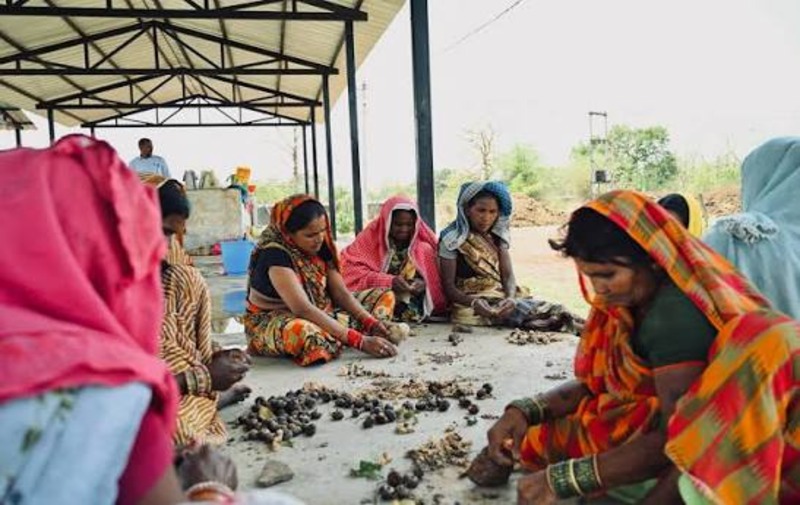
District coordinator Meenal Paliwal explains that the seed balls are prepared using soil, cow dung and an organic mixture, along with seeds of locally suitable plants. When the monsoon arrives, rain gradually breaks down the outer layer of the balls, allowing the seeds to germinate naturally. There is no need to dig pits or provide regular watering.
That makes the technique especially useful for barren landscapes, fire-affected forests and remote hills.
There is another wonderfully simple part of the initiative. Women collect seeds from fruits consumed at home instead of throwing them away. Neem, jamun, tamarind, mango, pomegranate, guava and papaya are among the seeds collected.
The seed balls also carry native species such as peepal, rohida, sheesham and karanj, chosen for their suitability to the local environment. This year, the campaign is reaching out to mining-affected hills, deep valleys, wildlife areas and barren land at the panchayat level, with a target of 50,000 seeds.
The initiative is jointly undertaken by Deogarh municipality, Career Sansthan Rajsamand, Career Mahila Mandal Deogarh and Mera Yuva Bharat Rajsamand.
Thousands of students, young people, villagers and environmental enthusiasts have joined the effort over the years. Women and schoolchildren have also been trained to make seed balls and use slingshots to disperse them. Inspired by similar efforts in Kenya and adapted to Rajasthan’s climate, each seed ball costs around ₹2, with the initiative reporting a success rate of about 70%.
These women are our unsung heroes. After completing their household chores, instead of taking rest, they volunteer to make Aravalli greener through this unique initiative. In a landscape where restoring forests can seem like a massive challenge, these women are proving that sometimes, all it takes is a little soil, a seed, a slingshot—and the will to aim for a greener future.
.jpeg)
I have a Masters in Literature and a knack for spotting the silver lining! When I’m not chasing good news, you’ll find me nurturing my farm or lost in a good book.