"Dream, Dream, Dream! Conduct these dreams into thoughts, and then transform them into action."
- Dr. A. P. J. Abdul Kalam
"Dream, Dream, Dream! Conduct these dreams into thoughts, and then transform them into action."
- Dr. A. P. J. Abdul Kalam
2 May 2026
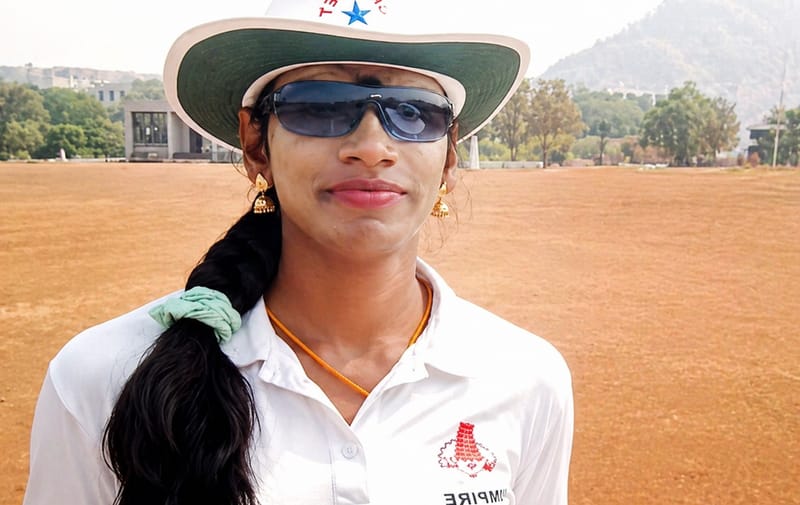
On a quiet cricket ground in Coimbatore, what should have been a routine day of officiating turned into a defining moment in one woman’s life. Rithika Shri had arrived to umpire a match, carrying with her not just a scorecard, but years of struggle, self-discovery, and hope. But before she could step onto the field, she was stopped at the gate. A security guard refused to let her in. Then came another. She was questioned, doubted, and nearly turned away from the very space she had worked so hard to belong to. But that day, Rithika didn’t walk away.
“It was a big moment for me,” she recalled. “To start a dignified life.” Yet, what she faced instead was rejection. For many, such humiliation might have ended the journey right there. But Rithika chose to confront it. She spoke up, demanded answers, and questioned a system that often leaves transgender individuals on the margins. “Why can’t a transgender live a normal life and be treated equally?” she asked. Eventually, after a few calls and much resistance, she was allowed to officiate. But the emotional toll of that morning stayed with her. It was not just about entering a ground—it was about claiming her space in a world that had long denied it.
Rithika’s journey into umpiring began years earlier, at an Indian Premier League match in Mohali in 2019. Watching the umpires closely, she felt a quiet calling. At that time, she was known as Muthu Raj, working in the IT sector, living a life that did not fully reflect who she was inside. Then came the pandemic. The 2020 lockdown took away her job, forcing her to return to Salem. What seemed like a setback became a turning point. She decided to pursue umpiring seriously, starting from district-level matches. The journey was not easy, but it was honest.
In Salem and Namakkal, Rithika began officiating matches tirelessly. She stood in over 300 games, building not just experience but credibility. Senior umpires like Shanthipooshan and Parthasarathy became her early supporters, offering guidance and, more importantly, acceptance. It was during this time that she opened up about her gender identity. The transformation that followed was deeply personal, and it kept her away from cricket for a year. But when she returned, she was ready to reclaim her place not just as an umpire but as herself.
Her return, however, exposed a deeper issue within the system. Cricket, like many institutions, had no clear space for transgender individuals. Match officials were categorised strictly as male or female. Despite this, the Coimbatore District Cricket Association chose to focus on her merit. Her record of officiating hundreds of matches spoke louder than any label. She was integrated back into the system without stigma. Still, challenges remained. Before her comeback match, she suffered a fractured leg. Yet, she continued to officiate in friendly matches, determined to rebuild trust among players and fellow umpires.
The Coimbatore gate incident became a turning point—not just for Rithika, but for the system around her. The association responded by organising gender-sensitivity sessions for players, officials, and venue staff. From that moment on, every venue hosting a match she officiated was informed in advance. Her safety and dignity became a priority. What followed was a quiet but powerful shift. Players began addressing her as “Ma’am.” Respect replaced hesitation. Conversations replaced silence. While there were still small moments of discomfort like the occasional missed handshake Rithika chose to focus on the larger change.
Now, Rithika stands on the brink of another milestone. She is set to take the umpiring examination conducted by the Tamil Nadu Cricket Association a crucial step in advancing her career. When the application form was first released, it did not include an option for third gender. But this time, things were different. The issue was raised, and the TNCA responded by updating the form to include it. For Rithika, this was more than administrative change it was history in the making. This move is especially significant in a state like Tamil Nadu, which was the first in India to formally recognise the third gender for welfare measures back in 2008. Now, its cricketing body is taking steps to reflect that inclusivity on the field.
Rithika Shri’s story is not just about cricket. It is about identity, dignity, and the courage to persist in the face of rejection. It is about choosing to stand your ground when the world asks you to step aside. Her journey reminds us that change does not always come from policies alone. Sometimes, it begins with one person refusing to give up. From being stopped at a gate to opening doors for others, Rithika has already made her mark. As she prepares for her next challenge, one thing is certain she is not just officiating matches; she is redefining what inclusion in sports truly looks like. And in doing so, she is inspiring a generation to believe that the field belongs to everyone.

Writing about what truly matters, good news and stories to remind the world - it is brighter than we think.