"Dream, Dream, Dream! Conduct these dreams into thoughts, and then transform them into action."
- Dr. A. P. J. Abdul Kalam
"Dream, Dream, Dream! Conduct these dreams into thoughts, and then transform them into action."
- Dr. A. P. J. Abdul Kalam
17 Feb 2026
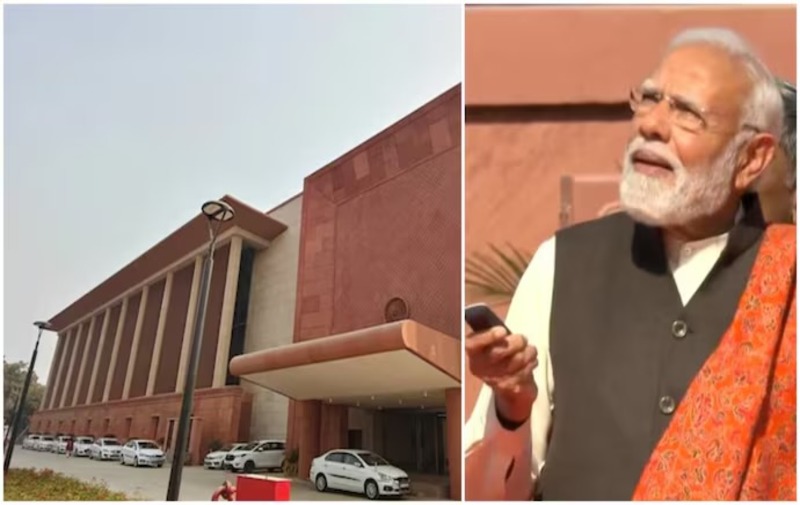
In a moment that blended history, symbolism, and governance, Prime Minister Narendra Modi inaugurated the Seva Teerth complex in Delhi, formally relocating the Prime Minister’s Office from the iconic South Block. The shift is not just a change of address; it signals a structural and ideological reset in the way India’s top executive functions operate. For nearly a century, South Block stood as the heart of India’s power corridors. Decisions that shaped modern India, from economic reforms to national security strategies, were taken within its grand sandstone walls. As PM Modi chaired his final Cabinet meeting there, it marked the end of an era that began under British rule and continued through independent India’s formative decades. Now, governance begins anew from Seva Teerth, a name that itself reflects the idea of service as sacred duty.
The nearly 100-year-old South Block building will not fade into obscurity. Instead, it will be converted into a museum. According to the Prime Minister, the structure is an important part of India’s history, and its memories must be preserved. Built during British rule on Raisina Hill, South Block was designed to symbolize imperial authority. Its elevated position and imposing architecture were meant to visually reinforce power. By turning it into a museum, the government intends to transform a symbol of colonial dominance into a space of public memory and education. In doing so, the building’s story evolves. From being a seat of power inaccessible to most citizens, it will become a place where people can walk through corridors that once witnessed critical national decisions. For many Indians, especially students and young visitors, this transition may offer a deeper understanding of how governance evolved from colonial administration to democratic leadership.
The Prime Minister explained that the relocation was driven by practical administrative needs. The old colonial-era buildings were not designed for the scale and technological demands of 21st-century governance. Modern digital systems, expanded ministries, and the complexity of policymaking required integrated spaces. Seva Teerth now houses the Prime Minister’s Office, the National Security Council Secretariat, and the Cabinet Secretariat under one roof. Kartavya Bhavan 1 and 2 accommodate major ministries, including Finance, Defence, Health and Family Welfare, Education, Agriculture and Farmers Welfare, Corporate Affairs, Law and Justice, Information and Broadcasting, Culture, Chemicals and Fertilizers, and Tribal Affairs. Bringing key decision-making bodies together aims to reduce bureaucratic delays, improve coordination, and ensure faster policy implementation. In governance, physical proximity can translate into administrative efficiency. Files move faster. Meetings happen more seamlessly. Crises can be managed with quicker consultation. For a country of 1.4 billion people, the scale of administration demands infrastructure that matches its ambition.
Seva Teerth’s design blends tradition with modernity. The complex is clad in white and red sandstone, referencing India’s long architectural heritage. Metal-clad domes inspired by the Buddha Stupa add contemporary accents while symbolizing continuity with India’s civilizational past. Jali screens filter daylight into office spaces, reducing heat and improving energy efficiency. The entrance portal draws inspiration from Chalukyan temple stonework of the 11th and 13th centuries. Floral motifs echo geometric temple patterns, and carved stone plinth bands are inspired by the 12th-century Chennakeshava Temple. The message is clear: governance spaces should reflect India’s cultural roots rather than colonial symbolism. PM Modi framed the transition ideologically. He said buildings like South Block and North Block were constructed to serve the British Empire’s vision. In contrast, Seva Teerth represents the aspirations of independent India, connected to the ground and the people.
The first major decisions taken from Seva Teerth carried strong welfare signals. The government approved the launch of the RAHAT scheme, doubled the target under the Lakhpati Didi initiative, and enhanced the outlay for the Agriculture Infrastructure Fund. These measures indicate a focus on rural empowerment, women’s financial independence, and agricultural development. Symbolically, the first policy steps from the new office were not about power projection but about social welfare. This aligns with the Prime Minister’s emphasis on service over authority. Even the renaming of Race Course Road to Lok Kalyan Marg was earlier described as an attempt to shift from a mindset of power to one of public service.
Seva Teerth is more than infrastructure. It represents a narrative shift from imperial symbolism to national self-definition. By combining administrative efficiency with cultural identity, the new complex attempts to mirror the idea of “Viksit Bharat,” or a developed India. As India continues to grow economically and strategically on the global stage, its institutions are also evolving. The relocation of the PMO marks not just a structural move but a symbolic step in redefining how power, service, and identity coexist in the world’s largest democracy.
Romanticizing life and shaping stories from everything I see through my journalistic lens. Also, I love sports on the side.