"Dream, Dream, Dream! Conduct these dreams into thoughts, and then transform them into action."
- Dr. A. P. J. Abdul Kalam
"Dream, Dream, Dream! Conduct these dreams into thoughts, and then transform them into action."
- Dr. A. P. J. Abdul Kalam
17 Aug 2026
India has built fighter aircraft, missiles, radars and sophisticated electronic warfare systems. Yet one formidable challenge has continued to stand between the country and complete aerospace self-reliance: the fighter jet engine.
That could be changing. On August 14, Reliance Industries and Rolls-Royce announced their intent to jointly pursue the development of a sovereign indigenous combat aircraft engine for India’s Advanced Medium Combat Aircraft (AMCA) programme. The proposed partnership aims to cover design, development, manufacturing and testing in India.
The companies are also exploring a dedicated Aerospace Gas Turbine Complex, potentially creating a major hub for propulsion technology. If the plan moves from announcement to execution, it could become a significant milestone in India's long pursuit of indigenous fighter propulsion.
Building a fighter aircraft is one challenge. Building the engine that powers it is another altogether. A modern turbofan determines far more than an aircraft's speed. Its performance influences thrust, range, payload, acceleration, fuel efficiency, electrical power and thermal management.
For a stealth fighter such as AMCA, the demands become even greater. The engine must work seamlessly with the airframe while meeting stringent requirements for infrared signature, heat management and aerodynamic performance.
According to a report in ET Government, India's Tejas fighters currently use GE Aerospace engines, while the initial AMCA configuration has also been planned around a foreign powerplant. Recent delays in GE engine deliveries to Hindustan Aeronautics Limited have further highlighted the vulnerabilities that can arise when a domestic aircraft programme depends on overseas propulsion supplies.
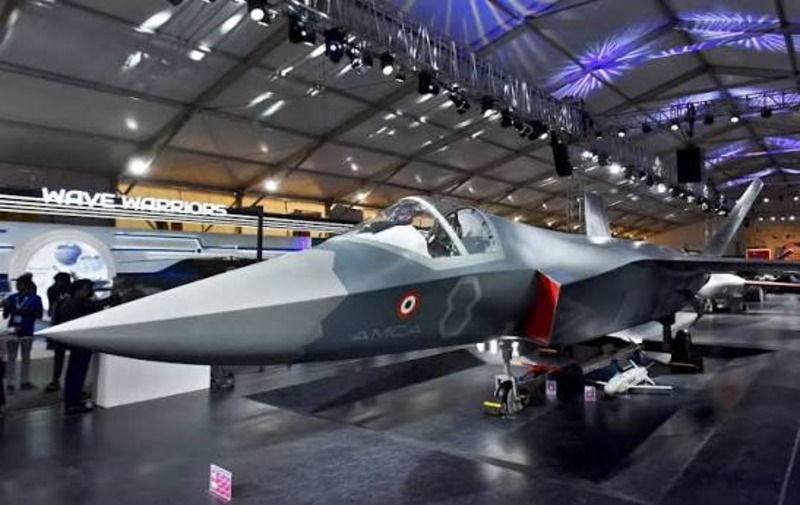
The stakes are now higher with AMCA. The planned fifth-generation fighter is being designed around stealth, internal weapons carriage, advanced sensors, electronic warfare and network-centric operations. India expects the first prototype around 2028, with development and certification continuing thereafter.
The government has also opened the AMCA development programme to greater private-sector participation, allowing Indian companies to compete independently or through joint ventures and consortia. That creates an opening for the Reliance–Rolls-Royce proposal.
India has another potential partner in the race. According to reports, France's Safran has separately proposed working with GTRE on a higher-thrust engine for later AMCA variants.
For New Delhi, the choice should therefore go beyond thrust figures or production capacity. The bigger prize is technological sovereignty. India needs the ability to understand, design, manufacture, test, modify, upgrade and maintain advanced engines—and eventually develop the next generation without starting from scratch.
That is why the Reliance–Rolls-Royce announcement matters. AMCA may become India's showcase for fifth-generation combat aviation. But an indigenous engine could take the achievement much further.
The ultimate milestone would not simply be an Indian fighter flying on an Indian production line. It would be an Indian-designed engine powering it—and Indian engineers owning the technology behind that power.
.jpeg)
I have a Masters in Literature and a knack for spotting the silver lining! When I’m not chasing good news, you’ll find me nurturing my farm or lost in a good book.