"Dream, Dream, Dream! Conduct these dreams into thoughts, and then transform them into action."
- Dr. A. P. J. Abdul Kalam
"Dream, Dream, Dream! Conduct these dreams into thoughts, and then transform them into action."
- Dr. A. P. J. Abdul Kalam
27 Mar 2026
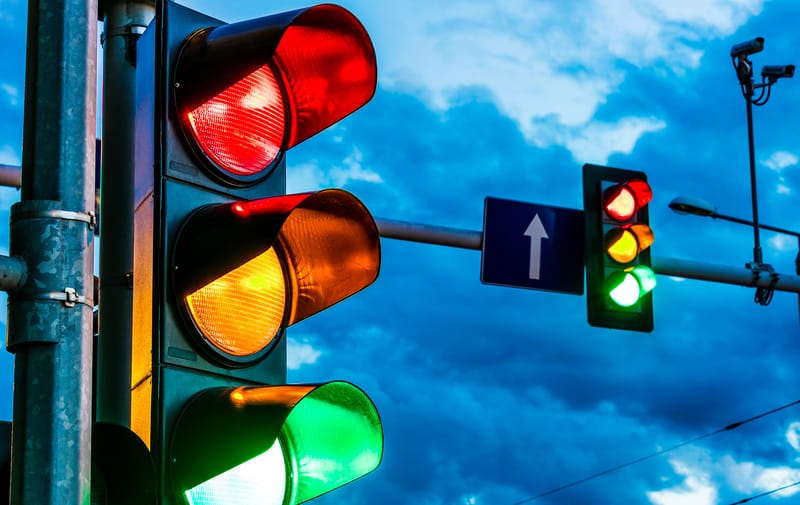
You know how traffic is always there? Like, no matter where you go—busy streets in Mumbai, quiet roads in a small town, or even somewhere as unexpected as Antarctica where vehicles still move, you’ll always find the same three lights watching over the road. Red, yellow, green. It’s almost strange, right? The world is so different everywhere, but these colours never change.
And think about it, we don’t even question them. The moment the light turns red, you stop. Green? You go. Yellow? You slow down, maybe hesitate for a second. But why these colours? Why not blue or white? It’s not random at all. In fact, it’s a system so well thought out that it speaks to you without saying a single word.
The History Behind Red, Yellow, and Green
So here’s where it actually begins, not with cars, but with trains. Back in the 1800s, railways needed a way to control movement and avoid accidents. That’s when colours came into play. Red was the obvious choice for danger, it was already associated with warnings and, scientifically, it’s the easiest to spot from far away.
Now green is interesting, it didn’t always mean “go.” At one point, it actually meant “be careful.” But that caused confusion, especially with visibility issues, so over time, its meaning shifted to “go,” while yellow was introduced as a middle ground, a kind of “wait, think, decide” signal. By the time the first electric traffic light came up in 1914 in Cleveland, this three-colour system was set. And eventually, the whole world agreed to follow it, because imagine the chaos if every country had its own version.
The Science of Seeing: Colour Theory
Now this is the part that’s actually fascinating, it’s not just about rules, it’s about how you react. Red doesn’t just tell you to stop, it almost forces you to. It’s intense, it grabs your attention immediately, and it’s naturally linked to danger. Your brain is wired to notice it first.
Yellow feels different, right? It doesn’t panic you, but it makes you alert. It’s like a gentle nudge saying, “Hey, something’s about to change.” And then there’s green, the easiest of the three. It feels calm, safe, almost reassuring. That’s why moving on green feels natural, not stressful.
So in a way, traffic lights aren’t just controlling roads, they’re quietly communicating with your mind. And maybe that’s why, anywhere in the world, without thinking twice, you already know what to do.

Romanticizing life and shaping stories from everything I see through my journalistic lens. Also, I love sports on the side.