"Dream, Dream, Dream! Conduct these dreams into thoughts, and then transform them into action."
- Dr. A. P. J. Abdul Kalam
"Dream, Dream, Dream! Conduct these dreams into thoughts, and then transform them into action."
- Dr. A. P. J. Abdul Kalam
8 May 2026
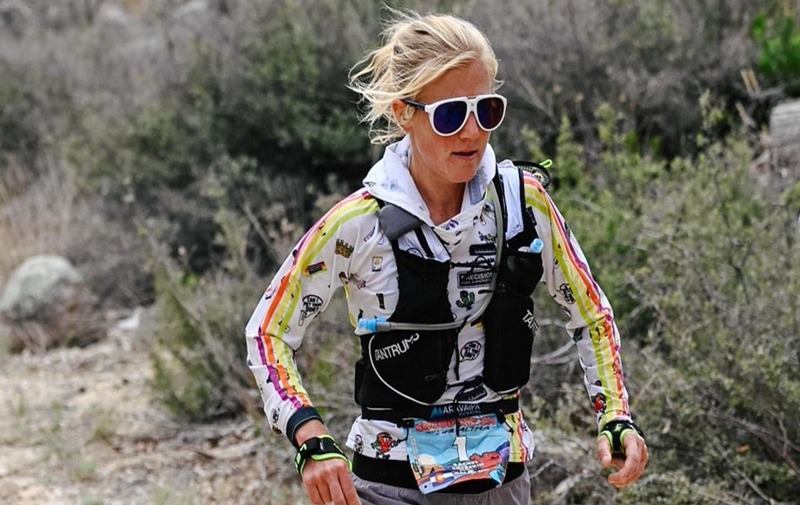
Most athletes preparing for a record-breaking performance focus on nutrition plans, recovery routines, and hours of rest. But for Rachel Entrekin, victory in one of the world’s toughest ultramarathons came down to something surprisingly simple: mashed potatoes and micro-naps on the ground.
The 34-year-old American runner made history at the Cocodona 250 in Arizona by winning the overall race—defeating every competitor, men included—in a staggering course-record time of 56 hours, nine minutes, and 48 seconds.
To put that achievement into perspective, the race stretches across 250 punishing miles through the Arizona wilderness, climbing nearly 38,800 feet from the scorching Sonoran Desert through Sedona’s rocky terrain and into the hills of Flagstaff. It is widely regarded as one of the most unforgiving ultramarathons on the planet.
And yet, Entrekin barely slept. “Somewhere around mile 200, I slept for five minutes at an aid station,” she revealed after the race. “Then around 230 miles, I took two seven-minute naps on the floor.”
That totals just 19 minutes of sleep across more than two days of nonstop running.
While elite athletes are often associated with high-tech nutrition and scientific precision, Entrekin’s race menu sounded comfortingly ordinary.
Mashed potatoes became her survival fuel. Alongside the potatoes, she powered herself with energy gels, sweets, rice, and broth while somehow still finding the energy for a sprint finish at the end of the 250-mile ordeal.
The morning after her victory, after sleeping from 11 pm to 6:30 am, she was already back at the finish line cheering fellow runners as they crossed.
That resilience perfectly captured the spirit of a runner who has now claimed three consecutive victories at Cocodona, having previously won the women’s race in 2024 and 2025.
For Entrekin, ultramarathons are not simply about fitness. They are about identity. “Your attitude and your ability to combat stress is so important,” she said. “They are at least as important as how physically fit you are.”
In a sport where exhaustion strips runners down mentally and emotionally, she believes the race becomes a test of character as much as endurance. Ironically, her greatest lesson came not from failure, but from winning.
Despite taking the title in 2024, Entrekin admitted she walked away disappointed with herself. “I actually did not like the person that emerged from that challenge,” she confessed. “I finished, I won the race, but I was really in a negative headspace.”
That emotional struggle became the driving force behind her return. Her goal in 2025 was not merely to win again, but to become “a person that I could stand behind when I got to the finish line.” This year, she achieved both.
Unlike many elite endurance athletes, Entrekin describes her training style as “non-traditional.” She does not obsess over weekly mileage targets or rigid coaching plans. Instead, her routine consists of roughly 70 to 80 miles a week around the Arkansas Valley in Colorado, where she now lives after growing up in Birmingham, Alabama.
Before becoming a professional trail runner, she worked as a physiotherapist, and earlier, she even returned to work the day after Cocodona races.
Now, after conquering 250 miles, Entrekin is already looking ahead to her next challenge — the iconic Ultra-Trail du Mont-Blanc in France.
At 108 miles, it may actually feel short compared to what she has just achieved.
.jpeg)
I have a Masters in Literature and a knack for spotting the silver lining! When I’m not chasing good news, you’ll find me nurturing my farm or lost in a good book.