"Dream, Dream, Dream! Conduct these dreams into thoughts, and then transform them into action."
- Dr. A. P. J. Abdul Kalam
"Dream, Dream, Dream! Conduct these dreams into thoughts, and then transform them into action."
- Dr. A. P. J. Abdul Kalam
24 Jul 2026
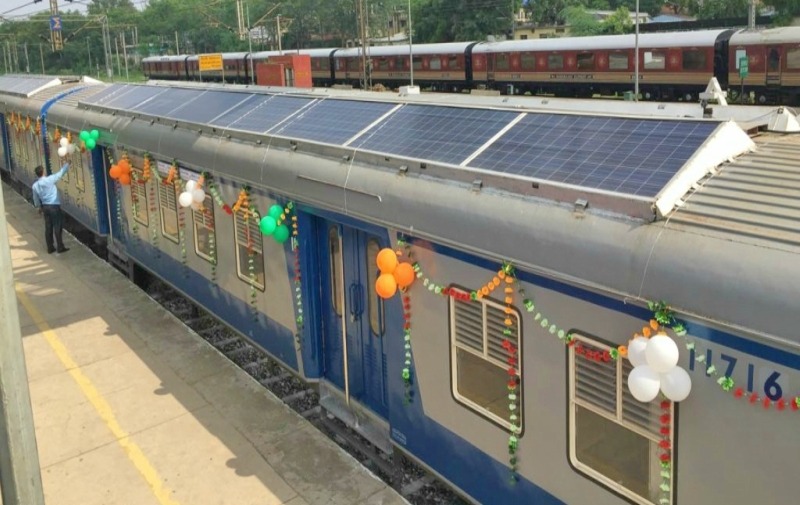
India's railway network is steadily becoming greener, smarter and more sustainable. In yet another breakthrough for eco-friendly transportation, North Central Railway (NCR) has developed a solar-assisted passenger coach that uses rooftop solar panels to power onboard amenities such as lights, fans and mobile charging points.
Developed as a pilot project in Prayagraj, the innovative coach is expected to reduce dependence on conventional power generation while improving energy efficiency and passenger comfort. The achievement comes just days after the launch of India's first hydrogen-powered train, highlighting Indian Railways' growing commitment to renewable energy and sustainable mobility.
The newly developed coach has been equipped with high-efficiency rooftop solar photovoltaic panels capable of generating nearly 7 kWp of clean electricity.
Rather than relying solely on traditional power systems, the solar panels generate electricity throughout the day to supplement the charging of the coach's battery bank. This stored energy powers essential passenger facilities, including lighting, ceiling fans and mobile charging points.
By making use of sunlight, the system reduces the load on the coach's conventional charging mechanism while ensuring more efficient utilisation of energy. The result is a cleaner, more reliable and environmentally friendly solution for everyday rail travel.
According to The Times of India, passenger coaches have traditionally depended on an axle-driven alternator mounted beneath the coach. This alternator generates electricity only when the train is moving, using mechanical energy transmitted through a belt connected to the coach's axle. Although the system has served Indian Railways effectively for decades, it inevitably involves mechanical and electrical conversion losses and remains dependent on train movement.
According to NCR Chief Public Relations Officer Shivam Sharma, the new solar-assisted technology addresses these limitations by producing electricity directly from sunlight. The innovation not only improves energy efficiency but also makes coach operations significantly more sustainable.
The pilot project promises several long-term advantages beyond reducing carbon emissions. By supplementing conventional charging systems, the solar panels are expected to improve the lifespan of the coach's battery bank, reduce maintenance requirements and lower dependence on traditional charging arrangements. Passengers, too, stand to benefit through more reliable electrical services, ensuring uninterrupted lighting and dependable charging facilities during journeys.
The project has received strong support from NCR General Manager Naresh Pal Singh, who personally reviewed the solar-assisted coach and commended the engineering and technical teams behind its development. He emphasised the importance of adopting innovative technologies that promote energy conservation and environmental sustainability across Indian Railways. According to NCR officials, the experience gained from this pilot project will provide valuable insights for deploying renewable energy solutions in passenger coaches across the country's vast railway network.
The solar-assisted coach represents much more than a technological innovation. It is another significant milestone in India's journey towards cleaner mobility and reduced carbon emissions.
.jpeg)
I have a Masters in Literature and a knack for spotting the silver lining! When I’m not chasing good news, you’ll find me nurturing my farm or lost in a good book.