"Dream, Dream, Dream! Conduct these dreams into thoughts, and then transform them into action."
- Dr. A. P. J. Abdul Kalam
"Dream, Dream, Dream! Conduct these dreams into thoughts, and then transform them into action."
- Dr. A. P. J. Abdul Kalam
20 Feb 2026
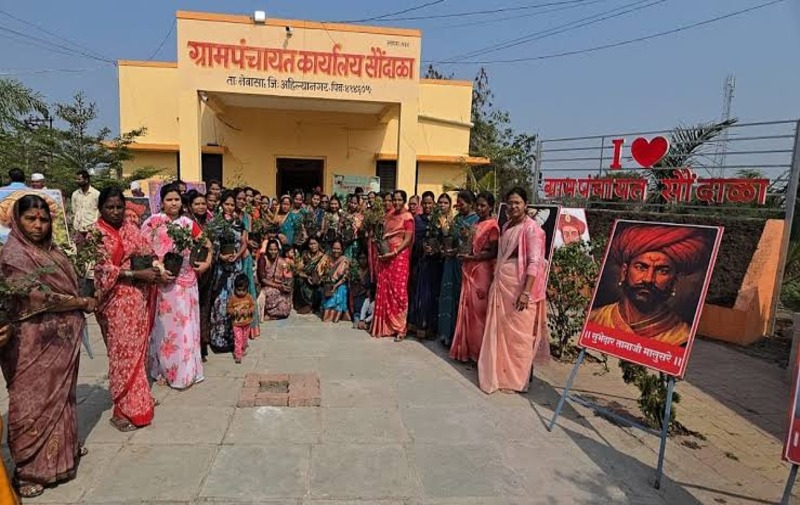
Before the Gram Sabha proceedings began in the village of Soundala in the Ahilyanagar district of Maharashtra, an unusual yet powerful act set the tone for history. Sarpanch Sharadrao Argade organised a voluntary blood donation camp. More than 200 villagers participated. As the camp concluded and residents gathered for the meeting, Argade delivered a statement that would echo far beyond the village boundaries. “Our blood is not green or blue. It is simply red. And once it mixes, no one can ever separate it again.” In that simple metaphor lay the foundation of a radical social transformation. What followed was not merely a resolution passed in a village meeting; it was a declaration of intent to rewrite centuries of social hierarchy.
At the Gram Sabha, Soundala passed a unanimous resolution declaring itself a “caste-free” village. The resolution invoked the Preamble of the Constitution of India, foregrounding Liberty, Equality and Fraternity as guiding principles. It clearly stated that from now onwards, no resident would follow caste or indulge in caste-based practices. Instead, humanity would be the only religion. The resolution is not symbolic alone. It carries monitoring measures and provisions for penalties against behaviour that violates its spirit.
Villagers are encouraged to write their caste as “human” in official records. Public places, water sources, temples, cremation grounds, schools are to remain open to all without discrimination. Social functions and access to government services will not be determined by caste identity. Residents are also expected not to post or promote content glorifying untouchability or social boycott. In placing accountability directly on its citizens, Soundala has moved beyond top-down reform. It has embraced collective responsibility as the engine of change.
Soundala’s declaration is particularly significant given the district’s troubled history. Ahilyanagar, formerly Ahmednagar, has witnessed brutal caste-based crimes, including the Sonai triple murder in 2013, the Javkhede triple murder in 2014, and the Kharda honour killing of a Dalit teenager in the same year. For years, the district has been listed as “atrocity-prone.” Soundala itself has not been untouched. Cases under the Prevention of Atrocities Act have been registered in the village. Yet Argade, now in his third tenure as Sarpanch, believes sustained engagement and social sensitisation have gradually transformed local attitudes. According to him, incidents of caste violence have drastically declined. Today, villagers visit each other’s homes, attend functions together, and support one another during times of crisis. The resolution represents not denial of history, but a conscious departure from it.
At its core, Soundala’s decision is about redefining identity. In a society long structured around graded inequality, caste often dictates access, dignity and opportunity. By urging residents to identify simply as “human,” the village symbolically dissolves inherited hierarchies. This shift is deeply human. It speaks to parents who wish for their children to grow without prejudice. It speaks to young people who seek friendships unbounded by social categories. It speaks to families who have endured discrimination and yearn for normalcy. It speaks to neighbours who realise that cooperation, not division, ensures collective progress. Argade framed the initiative as a quiet resistance to divisive narratives. In a climate where social binaries—Hindu versus Muslim, upper caste versus lower caste—often dominate political discourse, Soundala has chosen to counter fragmentation at the grassroots level. It is reform not through confrontation, but through consensus.
Can one village eliminate caste in all its manifestations? Realistically, no single resolution can dismantle deeply entrenched structures overnight. Yet symbolic acts often carry transformative power. By institutionalising equality within its Gram Sabha, the most influential democratic body at the village level, Soundala has signalled that change begins locally. The resolution’s strength lies in its grounding in constitutional values and its insistence on community accountability. It neither contradicts national law nor seeks to bypass it. Instead, it aligns village governance with the moral vision of the Constitution. Social reform does not always arrive through sweeping legislation or dramatic protest. Sometimes it begins with a blood donation camp, a simple metaphor, and a collective decision to see one another as equals. Soundala’s experiment may be small in scale, but its message is expansive: when people choose fraternity over fragmentation, they create the possibility of a more just society.
Romanticizing life and shaping stories from everything I see through my journalistic lens. Also, I love sports on the side.