"Dream, Dream, Dream! Conduct these dreams into thoughts, and then transform them into action."
- Dr. A. P. J. Abdul Kalam
"Dream, Dream, Dream! Conduct these dreams into thoughts, and then transform them into action."
- Dr. A. P. J. Abdul Kalam
7 May 2026
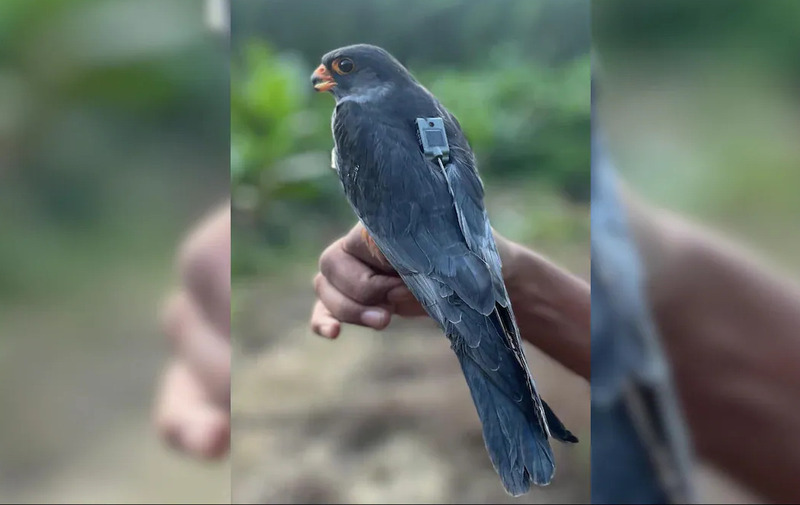
High above oceans, deserts, and changing landscapes, a bird no larger than a pigeon accomplished something extraordinary. An Amur Falcon named Apapang has completed a breathtaking non-stop journey of nearly 4,750 kilometres from Somalia to India in just 95 hours, leaving scientists and bird enthusiasts in awe.
Tracked through satellite technology, the tiny falcon crossed the vast Arabian Sea with astonishing precision and endurance before finally reaching India. Its journey, stretching across continents, is now being hailed as one of the most remarkable migration feats recorded for a bird of its size.
The update was shared by Supriya Sahu, Additional Chief Secretary for Environment, Climate Change and Forests in Tamil Nadu, who has closely followed the bird’s migration path.
“This truly makes Amurs among the most elite long-distance travellers on the planet,” she noted, capturing the sheer scale of what the bird had achieved.
For most creatures, crossing oceans would seem impossible. For the Amur Falcon, it is part of survival.
These small raptors are famous for their annual migration between breeding grounds in eastern Asia and wintering regions in southern Africa. But Apapang’s recent journey stood out even among this species known for endurance.
Satellite data revealed the falcon flying continuously across the Arabian Sea for nearly four days, relying entirely on stored fat reserves, favourable winds, and instinctive navigation abilities refined by evolution over thousands of years.
After completing the exhausting transcontinental stretch, Apapang finally made its first stop near the Sone River close to Varanasi. Yet the pause was brief. Within an hour, the falcon took flight again, covering another 200 kilometres before finally settling for the night in the hill forests near Gaya in Bihar.
For researchers, the journey was not just thrilling—it was scientifically invaluable.
The Amur Falcon’s migration is considered one of the longest over-water journeys undertaken by any bird of prey. Despite their small size, these falcons display extraordinary stamina, travelling thousands of kilometres every year between continents.
What makes their migration even more fascinating is the precision with which they navigate changing climates, shifting wind systems, and vast stretches of open sea without modern tools or guidance.
Scientists studying these birds believe such journeys offer critical insights into migration ecology, climate change, energy conservation, and animal navigation systems.
How does a tiny bird maintain energy for nearly 95 hours of continuous flight?
How do they calculate direction across featureless oceans?
And how might climate shifts affect these ancient migratory routes?
Apapang may hold answers to many of these questions.
The story of the Amur Falcon is also one of hope.
Years ago, the species faced severe threats from mass hunting during migration through parts of India. Thousands of birds were trapped annually, raising alarm among conservationists worldwide.
But community-led conservation efforts transformed the narrative. Awareness campaigns, local participation, and stronger protection measures helped reduce hunting dramatically, turning former danger zones into safe passage routes for the birds.
Today, the arrival of Amur Falcons in India is celebrated rather than feared—a powerful example of how conservation can succeed when communities and authorities work together.
Apapang’s incredible flight is more than a migration story. It is a reminder of the resilience and intelligence woven into nature itself.
From African landscapes to the forests of Bihar, the tiny falcon connected ecosystems, countries, and continents through a journey powered only by instinct and survival.
As scientists continue tracking the bird, one thing is already certain: inside the wings of this small traveller lies one of nature’s greatest marvels.
.jpeg)
I have a Masters in Literature and a knack for spotting the silver lining! When I’m not chasing good news, you’ll find me nurturing my farm or lost in a good book.