"Dream, Dream, Dream! Conduct these dreams into thoughts, and then transform them into action."
- Dr. A. P. J. Abdul Kalam
"Dream, Dream, Dream! Conduct these dreams into thoughts, and then transform them into action."
- Dr. A. P. J. Abdul Kalam
25 Mar 2026
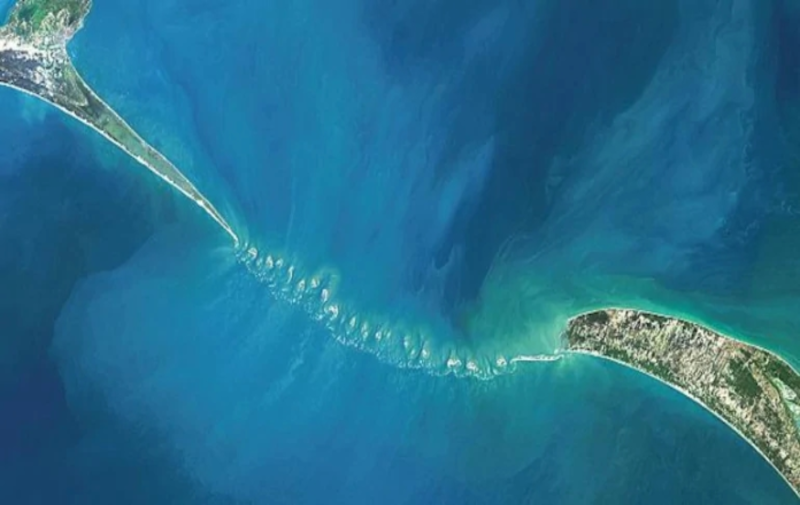
At the farthest tip of India, where the land slowly dissolves into endless blue waters, lies a place that feels suspended between reality and mythology. Arichal Munai, often called the “Last Road of India,” is not just a geographical endpointit is an emotional and spiritual threshold. Here, the Bay of Bengal and the Indian Ocean meet in a silent embrace, their waves whispering stories that have lived for thousands of years. Standing at this narrow stretch of land, with water on both sides and the horizon stretching infinitely, one cannot help but feel a deep sense of awe. It is here that the legendary Ram Setu is believed to begin, connecting India to Sri Lanka not just physically in the past, but eternally in faith and imagination.
Known historically as Adam’s Bridge, Ram Setu is a 48-kilometer chain of limestone shoals linking Rameswaram in India to Mannar Island. From above, it appears like a delicate thread stitching two nations together across the Palk Strait. Scientifically, it is a natural formation, shaped over centuries by shifting sands, coral deposits, and geological changes. Yet, for millions, it is far more than that. According to the ancient epic Ramayana, this is the very bridge built by Lord Rama and his army to reach Lanka. The idea that this vast stretch of sea once carried footsteps of devotion transforms the landscape into something sacred. It is not just a place you see it is a place you feel.
A short drive from Rameswaram takes you to Dhanushkodi, a ghost town that adds another layer of mystery to the journey. Once a bustling town, it was destroyed by a devastating cyclone in 1964, leaving behind haunting ruins that still stand against the salty winds. Walking through Dhanushkodi feels like stepping into a forgotten chapter of time, where broken churches and abandoned railway tracks quietly tell stories of the past. And yet, there is an undeniable beauty in this desolation. The emptiness is not unsettling it is calming, almost meditative. As you move closer to Arichal Munai, the road narrows, flanked by shimmering waters on both sides, creating one of the most surreal drives in India.
What makes Ram Setu truly fascinating is its delicate coexistence of science and spirituality. Geological studies suggest that this chain of shoals may have once been a continuous land connection between India and Sri Lanka, gradually submerged over time due to rising sea levels and natural erosion. The waters here are unusually shallow, often just one to three meters deep, giving the sea a calm, almost transparent appearance. This shallowness once made it difficult for large ships to pass, forcing them to take longer routes around Sri Lanka. Even today, as waves gently wash over the scattered limestone formations, there is a quiet elegance in how nature has shaped this landscape slowly, patiently, and beautifully.
There are very few places in the world that make you stop—not just physically, but emotionally. Arichal Munai is one of them. Watching the sunrise here feels like witnessing the beginning of time itself, as golden light spreads across the water and the sky melts into shades of orange and blue. The wind carries a soft stillness, broken only by the sound of waves and distant voices of visitors lost in their own thoughts. There is a statue of Lord Rama standing calmly, looking out towards the sea, as if still guarding the path that once connected two lands. In that moment, it becomes impossible to separate history from belief, or nature from narrative.
Visiting Ram Setu is not just about ticking off a destination on a travel list it is about experiencing something deeply personal. For some, it is a spiritual pilgrimage, a chance to connect with stories they have grown up hearing. For others, it is a journey into nature’s quiet brilliance, far away from crowded cities and noisy lives. And for many, it is simply a reminder of how vast and layered our world truly is. Standing at the edge of the land, looking out into the endless sea, you begin to reflect on your own journey your distances, your struggles, and your dreams. Places like this do not just show you the world; they help you understand yourself a little better. Ram Setu continues to inspire debates, research, and devotion, but beyond all that, it remains a place where stories refuse to fade. Whether you see it as a geological wonder or a sacred bridge from the Ramayana, its presence is undeniable. It stands quietly, shaped by time and belief, inviting every visitor to interpret it in their own way. And perhaps that is its true magic not in proving what it is, but in allowing everyone to feel something unique. At the edge of India, where the land ends and the sea begins, Ram Setu is not just a destination. It is an experience, a memory, and a story waiting to be lived.
Romanticizing life and shaping stories from everything I see through my journalistic lens. Also, I love sports on the side.