"Dream, Dream, Dream! Conduct these dreams into thoughts, and then transform them into action."
- Dr. A. P. J. Abdul Kalam
"Dream, Dream, Dream! Conduct these dreams into thoughts, and then transform them into action."
- Dr. A. P. J. Abdul Kalam
30 Sep 2026
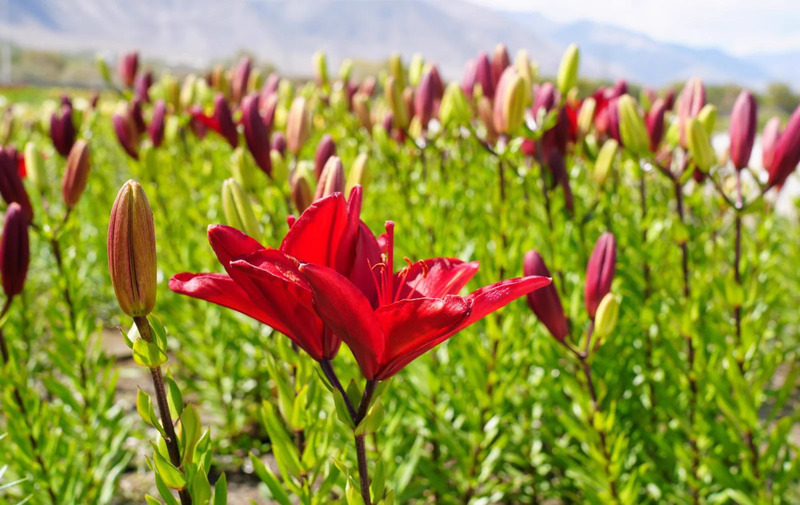
Ladakh’s rugged landscape has burst into color—and its flowers are now travelling far beyond the mountains.
Lieutenant Governor V.K. Saxena flagged off the Union Territory’s first commercial air cargo consignment of locally grown Lilium flowers from Leh’s Kushok Bakula Rinpoche Airport on September 29. The shipment carried 15,000 A-grade Lilium stems to flower markets in Delhi, Mumbai and Chandigarh.
The initiative marks a new step for Ladakh’s agriculture, showing how the region’s unique climate can potentially support high-value crops beyond conventional farming.
The Liliums have been cultivated at an altitude of around 10,600 feet, in a flower field described by the regional administration as the world’s highest-altitude commercial flower field.
The blooms come in striking shades of red, pink, white, yellow and orange. Each stem carries around four to five buds and has a shelf life of approximately five to seven days. The pilot floriculture project reportedly produced more than 25 lakh flowers within 60 days.
The first commercial consignment now offers a glimpse of how this unusual agricultural experiment could develop into a larger livelihood opportunity.
The project is also creating employment locally.
According to officials, 15 local women have been involved in cutting, sorting and packaging the flowers, earning ₹900 per day. A young Ladakhi botanist has also been assigned the responsibility of marketing the flowers across the country. The project moved quickly from planning to commercial dispatch.
According to a report in Deccan Herald, the foundation was laid on June 22, plantation began on July 16, the flower field was inaugurated on September 17, and the first commercial consignment left Ladakh on September 29.
Following the success of the Leh pilot, the administration has directed officials in Kargil, Drass, Sham, Changthang and Zanskar to explore land for similar flower fields. The broader plan aims to bring around 200 acres under high-value floriculture.
.jpeg)
I have a Masters in Literature and a knack for spotting the silver lining! When I’m not chasing good news, you’ll find me nurturing my farm or lost in a good book.