"Dream, Dream, Dream! Conduct these dreams into thoughts, and then transform them into action."
- Dr. A. P. J. Abdul Kalam
"Dream, Dream, Dream! Conduct these dreams into thoughts, and then transform them into action."
- Dr. A. P. J. Abdul Kalam
4 Dec 2025
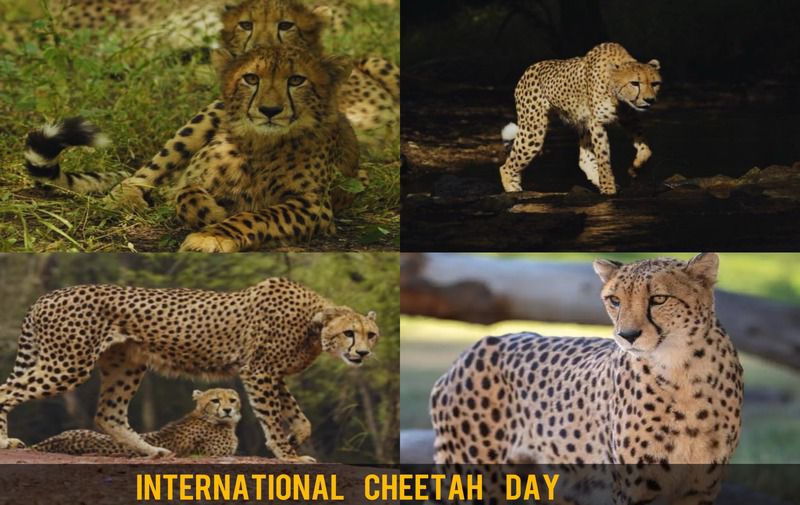
Since 2010, the world has marked December 4 as International Cheetah Day, a day dedicated to raising awareness about one of the planet’s most extraordinary yet vulnerable creatures. The idea was initiated by Dr. Laurie Marker, an American zoologist and the founder of the Cheetah Conservation Fund (CCF). She created this day in memory of Khayam, a cheetah she hand-raised and trained for future breeding programs. For Dr. Marker, Khayam symbolized the soul of her conservation mission, a reminder that cheetahs are not just wildlife statistics but living beings that depend on human responsibility and compassion for survival. Her efforts transformed a personal bond into a global movement, inspiring people across continents to stand for a species on the brink.
Cheetahs, scientifically known as Acinonyx jubatus, belong to the Felidae family and are among the oldest big cat species on Earth. Their ancestry stretches back more than five million years to the Miocene era, a time when early humans had not yet walked the planet. Over millions of years, cheetahs evolved into nature’s perfect sprinters, reaching speeds of up to 110 km/h, making them the fastest land mammals in the world. Their slender bodies, long legs, and enlarged nasal passages are evolutionary masterpieces designed for high-speed chases. Found mostly in parts of Africa and scattered pockets of Asia, cheetahs once roamed vast landscapes. Today, however, their survival is threatened by shrinking habitats, human-wildlife conflict, and illegal wildlife trade.
The decline of the cheetah has been rapid and tragic. They have disappeared from over 75 percent of their historic African range. In just the past two decades, their population has fallen by more than 30 percent, making them one of the most vulnerable big cat species globally. Today, Namibia holds the distinction of sheltering the world’s largest wild cheetah population, yet even this stronghold faces increasing pressure as human settlements expand and natural prey declines. The cheetah’s struggles reflect a larger environmental story. Their survival depends on large, healthy grasslands—ecosystems that are now rapidly vanishing due to development, agriculture, and climate change. When cheetahs lose their space, the entire ecological chain weakens. Their decline is not just an animal crisis; it is a signal that the natural world itself is under stress.
In a bold and ambitious step, India launched Project Cheetah in 2022 with the aim of reintroducing the species after it had gone extinct in the country more than seven decades ago. The extinction in India was primarily the result of excessive hunting and habitat loss. This reintroduction marks the first time a large carnivore is being relocated across continents, making it a milestone in global conservation history. As part of the project, cheetahs were translocated from Namibia and South Africa to India in 2022 and 2023. The goal is not just to reintroduce a species but to restore a lost ecological niche. Cheetahs played an important role in the grassland ecosystems of the Indian subcontinent, maintaining prey balance and contributing to biodiversity. Bringing them back is an effort to heal the ecological fabric that had been torn for decades.
On International Cheetah Day, Prime Minister Narendra Modi shared photographs of the majestic animal and spoke about the significance of the project. He reminded the country that Project Cheetah is more than a conservation initiative; it is an attempt to revive a part of India’s lost natural heritage. In his post on X, he emphasized that the three-year-old project was launched to create an environment in which cheetahs can thrive once again, thereby strengthening India’s biodiversity. His message echoed the sentiments of wildlife lovers across the nation: that the revival of the cheetah in India is not just symbolic but deeply meaningful. It speaks to a future where humans learn to coexist with wildlife and where development does not come at the cost of nature.
International Cheetah Day is more than a date on the calendar. It is a global reminder of what is at stake. Whether it is protecting Africa’s grasslands or restoring India’s ecological heritage, the world has come together with one message: the cheetah must not disappear. The future of cheetahs will depend on science, policy, local communities, and global cooperation. But most importantly, it will depend on human willingness to learn from past mistakes and build a future where wildlife and humans can both thrive. Every effort—big or small—brings the cheetah one step closer to safety.
Romanticizing life and shaping stories from everything I see through my journalistic lens. Also, I love sports on the side.