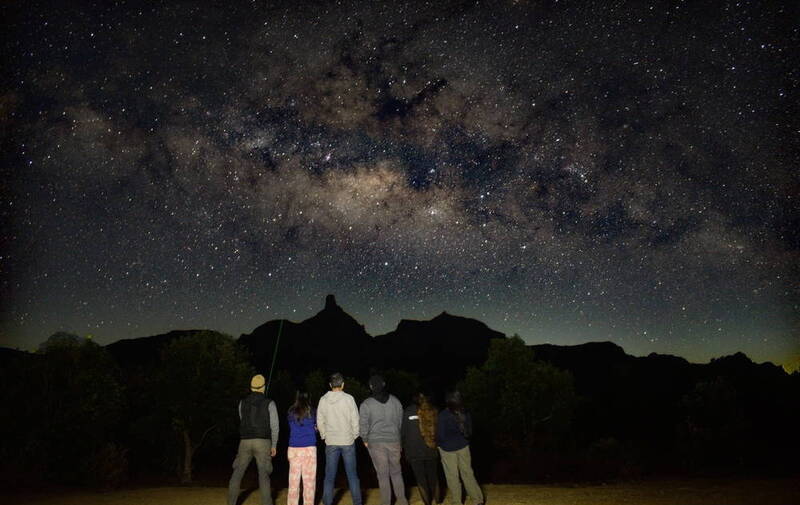
"Dream, Dream, Dream! Conduct these dreams into thoughts, and then transform them into action."
- Dr. A. P. J. Abdul Kalam
"Dream, Dream, Dream! Conduct these dreams into thoughts, and then transform them into action."
- Dr. A. P. J. Abdul Kalam
5 Apr 2026
In cities like Delhi, the sky has slowly disappeared, not in sight but in experience.
According to pollution data, Delhi frequently records PM2.5 levels far above safe limits, especially in winter. This dense mix of smoke, dust, and emissions doesn’t just harm health; it scatters and blocks light, making stars nearly invisible. Add to that excessive artificial lighting, and the night sky turns into a dull, orange haze.
For many urban residents, spotting even a handful of stars has become rare. The Milky Way, once visible across much of India, is now something most people only encounter in photographs. And yet, beyond the reach of city lights and industrial haze, India still holds places where the sky reveals itself in full clarity.

At an altitude of around 4,500 meters, Hanle sits in the Changthang region of Ladakh, far from any major settlement. Its significance isn’t just visual; it’s scientific. The Indian Astronomical Observatory, located here, is one of the highest in the world, chosen specifically for its exceptionally low light pollution and stable atmospheric conditions.
In 2022, Hanle was officially designated as India’s first Dark Sky Reserve, protecting it from artificial lighting and preserving its night environment. On most nights, especially around the new moon, the Milky Way is clearly visible as a dense band stretching across the sky. The clarity is such that even faint constellations and satellite trails can be spotted without telescopes.
Best time to visit: April to November
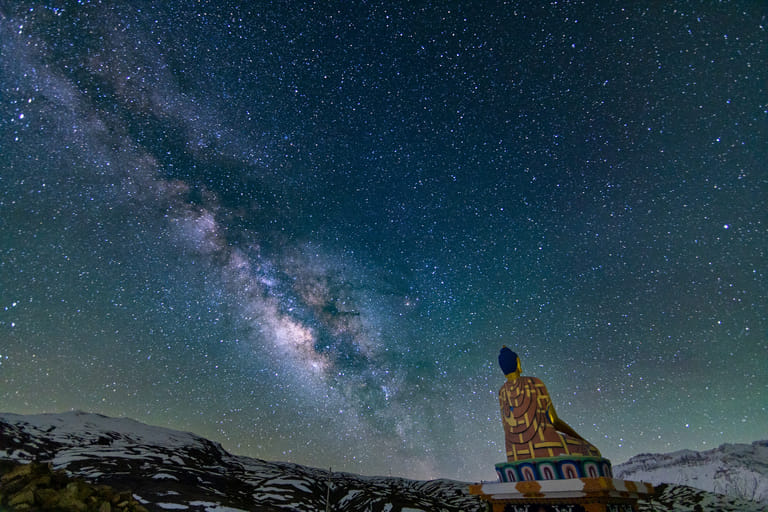
Spiti Valley, located in Himachal Pradesh, lies at an average elevation of 3,800–4,500 meters. Its cold desert climate means very low humidity and minimal cloud cover, two key factors for clear night skies. Villages like Langza and Kibber, among the highest inhabited settlements in the world, experience almost negligible light pollution. With fewer than a few hundred residents in some areas, artificial lighting remains minimal.
What makes Spiti unique is consistency; clear skies are not occasional but frequent. During peak months, stargazers can observe meteor showers, planetary alignments, and dense star clusters with remarkable clarity.
Best time to visit: June to October
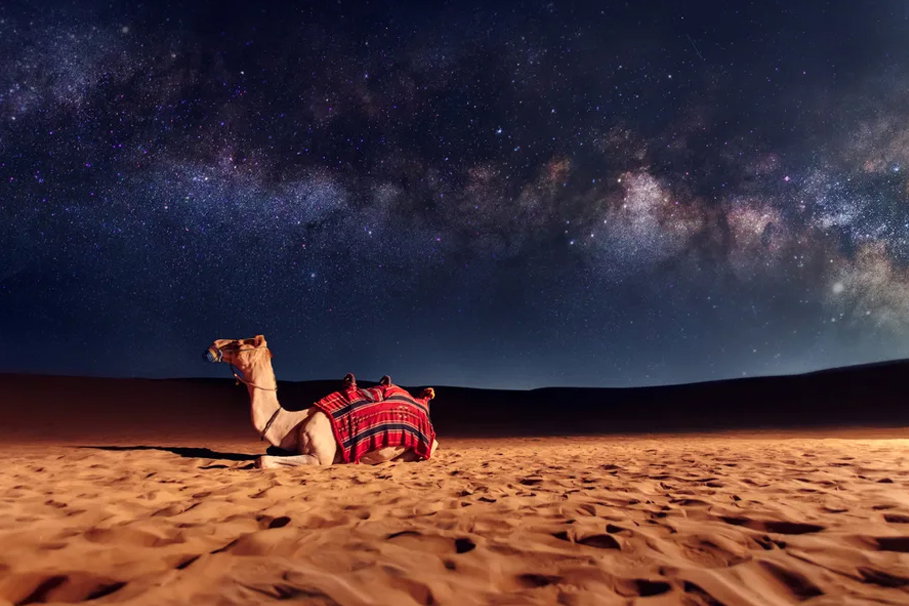
Located about 40 km from Jaisalmer, the Sam Sand Dunes sit deep within the Thar Desert, where dry air and open landscapes create ideal stargazing conditions.
Unlike mountainous regions, the dunes offer an unobstructed 360-degree horizon. This means the sky appears wider, almost panoramic. With humidity levels remaining low and minimal urban interference, stars appear sharper and more numerous.
Desert camps often switch off lights at night, allowing visitors to experience near-natural darkness. On clear nights, the Milky Way is visible, along with prominent constellations like Orion and Cassiopeia.
Best time to visit: October to March
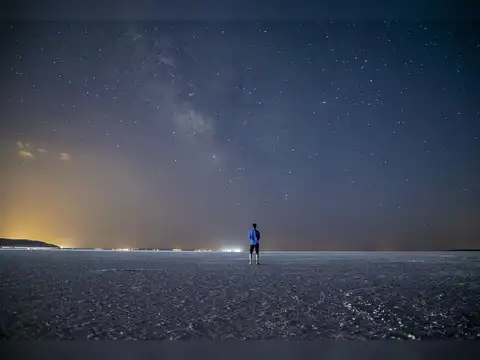
The Great Rann of Kutch in Gujarat is one of the largest salt deserts in the world. What makes it extraordinary at night is its flat, reflective white surface, which subtly mirrors starlight. With no vegetation, hills, or buildings, there is absolutely nothing to interrupt the line of sight. The horizon seems to dissolve, creating a visual illusion where the sky feels endless.
During winter, the region experiences clear, dry nights with stable atmospheric conditions, making it ideal for astrophotography. Long-exposure shots here often capture dense star fields and the Milky Way in remarkable detail.
Best time to visit: November to February
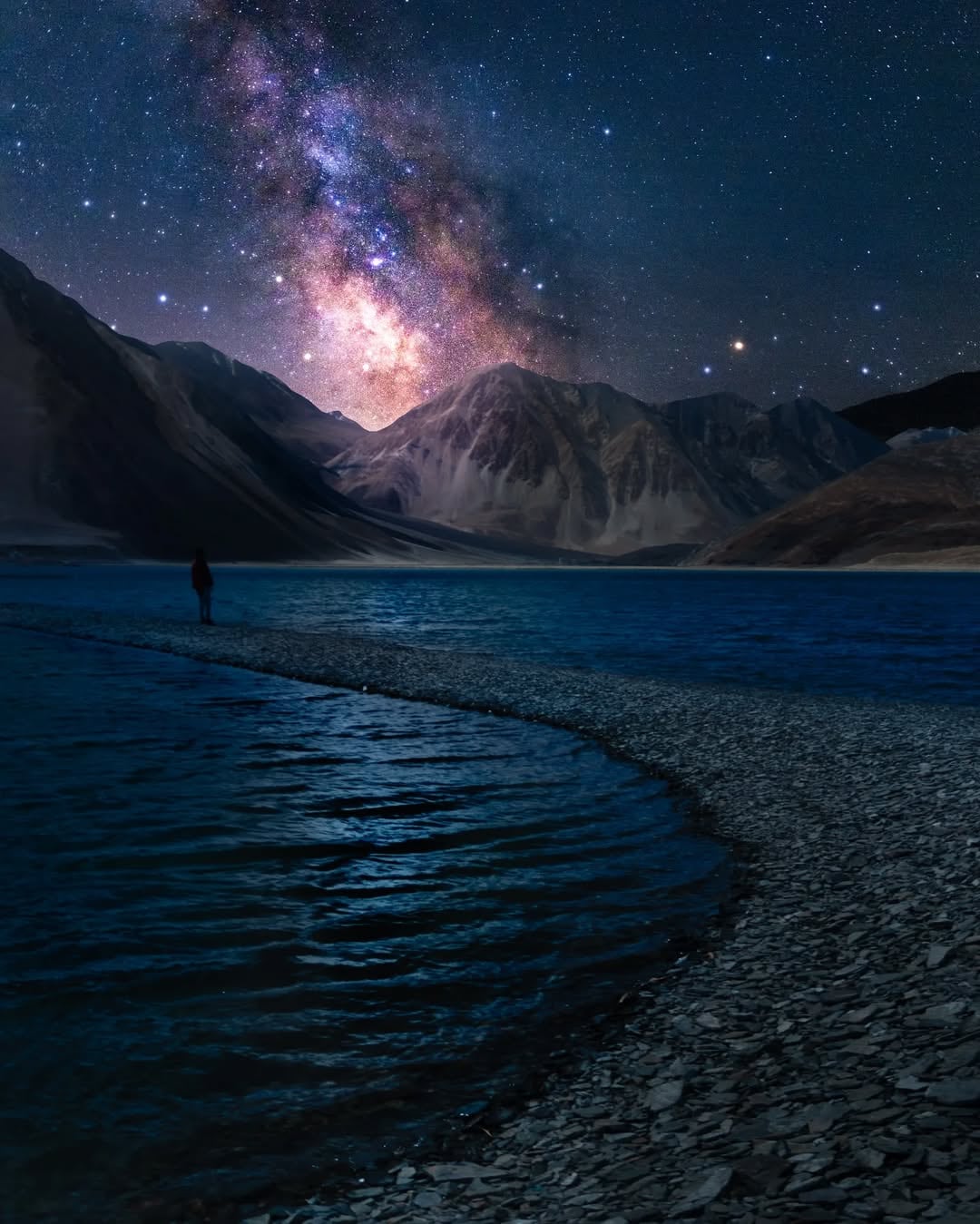
Across Ladakh, high altitude and sparse population create consistently dark skies. But near Pangong Lake, the experience becomes visually unique. At over 4,200 meters, the lake’s still waters act as a natural mirror. On windless nights, reflections of stars and even the Milky Way can appear on the surface, creating a layered sky, one above and one below.
The region’s thin atmosphere reduces distortion, making stars appear brighter and more defined compared to lower altitudes.
Best time to visit: May to September
India’s night skies haven’t disappeared; they’ve just retreated. Retreated into high-altitude deserts, remote villages, and landscapes untouched by excess light. These places are not just scenic, they are scientifically and environmentally significant, offering some of the clearest atmospheric conditions in the country.
In contrast to polluted urban skies, they remind us of a simple truth:
the stars are still there. We just have to go where they can still be seen.

Writing about what truly matters, good news and stories to remind the world - it is brighter than we think.