"Dream, Dream, Dream! Conduct these dreams into thoughts, and then transform them into action."
- Dr. A. P. J. Abdul Kalam
"Dream, Dream, Dream! Conduct these dreams into thoughts, and then transform them into action."
- Dr. A. P. J. Abdul Kalam
16 Jun 2026
One of India’s most ambitious infrastructure projects is entering its final chapter. The Delhi-Mumbai Expressway, a 1,386-kilometre engineering marvel that promises to transform road travel across the country, is now just steps away from becoming fully operational.
The latest milestone came with the successful completion of a 4.9-kilometre tunnel near Kota in Rajasthan, a crucial missing link that has brought the dream of seamless travel between Delhi and Mumbai closer than ever. Reports indicate that the expressway could open to the public after June 20, marking a historic moment for India's transport infrastructure and economic connectivity.
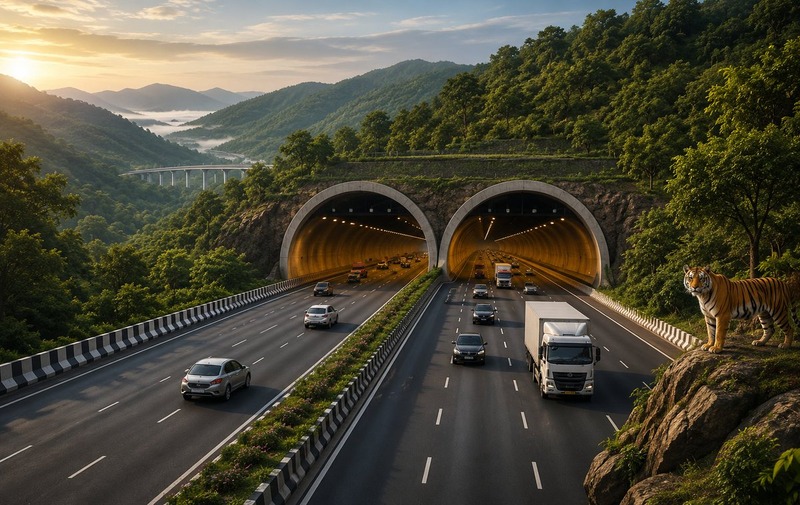
The newly completed tunnel is not just another stretch of road, it is an engineering achievement of national significance. Constructed beneath the ecologically sensitive Mukundra Hills Tiger Reserve, the twin-tube tunnel is set to become India's first eight-lane tunnel. Experts describe it as a landmark accomplishment, with no previous tunnel in the country designed to accommodate such a wide, high-capacity highway.
The tunnel allows vehicles to travel underground through the reserve while preserving the natural habitat above, ensuring that wildlife movement remains largely undisturbed.
For millions of travellers, the expressway promises a dramatic change in how they journey between India's political and financial capitals. Currently, the road trip between Delhi and Mumbai can take more than 24 hours. Once the expressway becomes fully operational, that journey is expected to be reduced to around 12 hours.
The impact extends beyond personal travel. Faster transit times will significantly reduce logistics costs, improve freight movement, and enhance connectivity across Haryana, Rajasthan, Madhya Pradesh, Gujarat, and Maharashtra.
Building a massive highway through a tiger reserve presented a unique challenge. Instead of cutting through forests and disrupting animal habitats, engineers adopted an underground solution. The tunnel enables uninterrupted movement of traffic while allowing wildlife to continue using their natural migration routes above ground.
The design also eliminates the need for motorists to navigate long and winding hill roads around Mukundra, improving safety and driving comfort. Equipped with advanced monitoring systems, modern ventilation mechanisms, and enhanced safety infrastructure, the tunnel represents some of the most sophisticated highway engineering ever undertaken in India.
Launched in 2019, the Delhi-Mumbai Expressway has been hailed as a game-changing project capable of reshaping transportation and economic activity across western and northern India.
With the completion of the Mukundra Hills tunnel, the final pieces are falling into place. More than just a road, the expressway represents a vision of modern India—where innovation, sustainability, connectivity, and growth move forward together.
.jpeg)
I have a Masters in Literature and a knack for spotting the silver lining! When I’m not chasing good news, you’ll find me nurturing my farm or lost in a good book.