"Dream, Dream, Dream! Conduct these dreams into thoughts, and then transform them into action."
- Dr. A. P. J. Abdul Kalam
"Dream, Dream, Dream! Conduct these dreams into thoughts, and then transform them into action."
- Dr. A. P. J. Abdul Kalam
14 Jan 2026
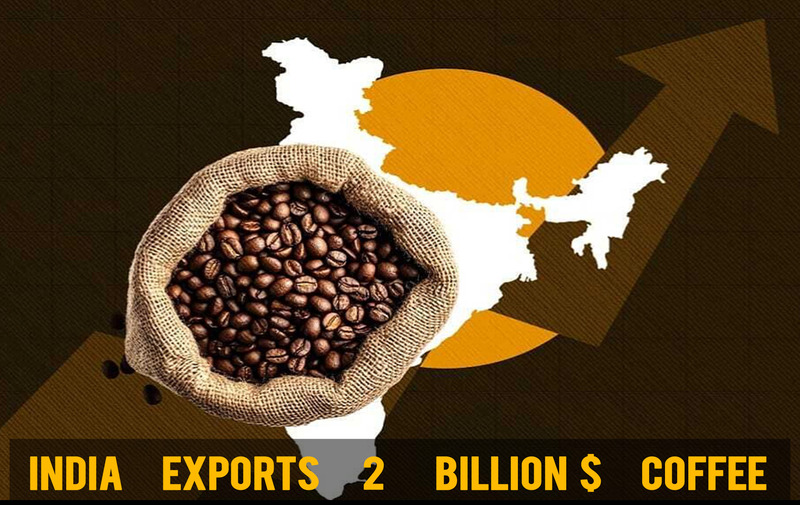
India has brewed history. For the first time ever, the country’s coffee exports have crossed the $2 billion mark, making it a landmark year for one of India’s most quietly powerful agricultural industries. The achievement reflects a sharp rise in export value, driven by strong global demand and elevated international coffee prices. Even with slightly lower shipment volumes, India’s coffee earned more than ever before, a clear sign that the world is willing to pay a premium for Indian beans. From traditional filter coffee lovers to global café chains, Indian coffee has found a stronger voice on the world stage, turning plantations into profit and tradition into trade strength.
The story of this export success begins in the mist-covered hills of Karnataka, Kerala and Tamil Nadu, where most of India’s coffee is grown. Karnataka remains the backbone of production, supported by smaller but significant contributions from Kerala and Tamil Nadu. Indian growers primarily cultivate Arabica and Robusta varieties, known for their distinct flavor profiles and consistent quality. What sets Indian coffee apart is not just the bean, but the method, shade-grown plantations, biodiversity-rich ecosystems, and sustainable farming practices.
As global consumers increasingly seek ethically sourced and traceable products, Indian coffee has emerged as a preferred choice, especially in Europe, West Asia and parts of Asia. Demand for premium, value-added coffee, including roasted and instant varieties, has further lifted export earnings.
Crossing the $2 billion milestone is more than a symbolic victory, as it has tangible implications for India’s trade economy. Agricultural exports play a crucial role in balancing India’s foreign trade, and coffee’s strong performance adds resilience to an export basket often dominated by manufacturing and services. Higher export earnings translate into better income realisation for farmers, especially small and medium growers in southern India who depend heavily on coffee cultivation.
The milestone also strengthens India’s position as one of the world’s leading coffee exporters, enhancing credibility in global commodity markets. At a time when India is pushing for export-led growth, coffee’s performance reinforces the importance of investing in quality, branding and market access rather than volume alone.
Despite the celebratory numbers, the road ahead is not without challenges. The rise in export value has largely been price-driven, not volume-led, indicating pressure on domestic supply. Climate uncertainty, production constraints and rising compliance costs, especially with stricter sustainability and traceability norms in global markets, could test the sector’s resilience. Premium pricing has also made Indian coffee less accessible in some price-sensitive markets. However, these challenges come with opportunity.
If India strengthens value addition, invests in sustainable certification, and supports small growers in meeting global standards, coffee exports could grow not just in value but in long-term stability. With global coffee culture expanding and appreciation for origin-specific beans rising, India’s $2 billion coffee moment may well be the foundation for a much richer future.

Writing about what truly matters, good news and stories to remind the world - it is brighter than we think.