"Dream, Dream, Dream! Conduct these dreams into thoughts, and then transform them into action."
- Dr. A. P. J. Abdul Kalam
"Dream, Dream, Dream! Conduct these dreams into thoughts, and then transform them into action."
- Dr. A. P. J. Abdul Kalam
11 Jan 2026
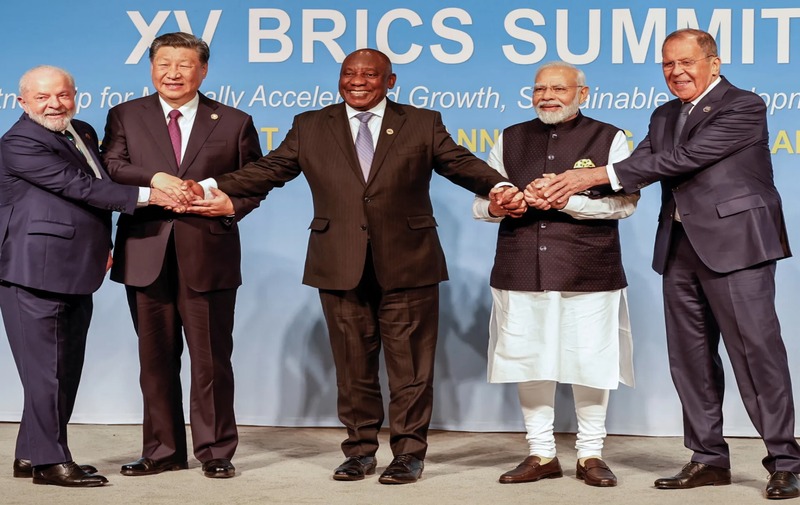
In a historic transition, Brazil has formally handed over the BRICS presidency to India for 2026. This marks a moment of strategic importance for India on the global stage, allowing the country to set the agenda for one of the world’s most influential groupings of emerging economies. The BRICS chairmanship for India is structured around four pillars: Resilience, Innovation, Cooperation, and Environmental Stability/Sustainability. These pillars will guide India’s approach to the summit and its broader diplomatic engagements, reflecting both India’s global ambitions and its vision for inclusive development.
India’s BRICS presidency comes at a time when the global balance of power is shifting. The country’s leadership focuses on reforming international institutions, promoting strategic autonomy, and strengthening the voice of the Global South. India has consistently emphasized the need to reform, not replace, global institutions such as the IMF, the World Bank, and the United Nations Security Council, aiming to reduce Western dominance and create a more equitable system.
By hosting the 18th BRICS Summit, India has the opportunity to push for reforms that reflect the interests and priorities of emerging economies while balancing relationships with both Western nations and China. India’s chairmanship also highlights its role as a bridge between the Global South and the Western world. As a representative of developing countries, India seeks to ensure that the concerns of these nations—ranging from climate adaptation to technology access—are central to international policymaking. The presidency provides India with a platform to showcase its diplomatic skills, promote multipolarity, and strengthen South-South cooperation in areas such as trade, technology, and sustainable development.
The BRICS group, comprising Brazil, Russia, India, China, and South Africa, originated from the vision of British economist Jim O’Neill in 2001, who identified these emerging economies as key drivers of global growth. The acronym BRIC represented the first four countries, and the formal group began functioning in 2006 alongside the G8 Outreach Summit. The first official BRIC Summit was held in Russia in 2009. South Africa joined in 2010, turning BRIC into BRICS.
The primary aim of BRICS is to reform global governance, offer alternatives to Western-dominated institutions, and foster cooperation in political, economic, and cultural arenas. Together, BRICS countries represent roughly 49.5% of the global population, contribute about 40% of the world’s GDP, and account for around 26% of global trade. This strategic weight gives the grouping substantial influence in global economic and political matters. In recent years, the BRICS+ expansion has included countries such as Egypt, Ethiopia, Iran, Indonesia, Saudi Arabia, and the United Arab Emirates, further strengthening the coalition of emerging economies.
One of India’s central initiatives during its BRICS presidency is the promotion of digital public infrastructure as a scalable development model for the Global South. India has pioneered platforms like Aadhaar and UPI, which have transformed financial inclusion, governance, and service delivery at a national scale. By showcasing these systems to BRICS partners, India aims to encourage adoption of similar digital frameworks in developing countries, enhancing efficiency, transparency, and citizen engagement. This approach not only reinforces India’s leadership in technology-driven development but also fosters a sense of shared growth among emerging economies.
India Leads the World: A Moment of Pride
India’s 2026 BRICS presidency is a historic achievement that every Indian can take pride in. For the first time, India will lead a coalition representing nearly half the world’s population and 40% of global GDP. This is recognition of India’s growing influence in global policymaking, its diplomatic leadership, and its innovative development model, including digital public infrastructure and sustainable solutions. By hosting the 18th BRICS Summit, India becomes a voice for the Global South, shaping decisions that impact millions. It is a celebration of India’s progress, vision, and ability to lead responsibly on the world stage.
Romanticizing life and shaping stories from everything I see through my journalistic lens. Also, I love sports on the side.