"Dream, Dream, Dream! Conduct these dreams into thoughts, and then transform them into action."
- Dr. A. P. J. Abdul Kalam
"Dream, Dream, Dream! Conduct these dreams into thoughts, and then transform them into action."
- Dr. A. P. J. Abdul Kalam
2 Dec 2025
In the aftermath of Cyclone Ditwah’s devastating sweep across Sri Lanka, India has once again stepped forward, out of deep regional friendship. Prime Minister Narendra Modi’s telephonic conversation with Sri Lankan President Anura Kumara Dissanayake on Monday reaffirmed a bond rooted in shared geography, shared history, and shared humanity.
With warm condolences for the lives lost and communities shattered, PM Modi assured President Dissanayake that India remains firmly committed to supporting Sri Lanka through Operation Sagar Bandhu, a humanitarian lifeline mobilized within hours of the crisis. For Sri Lankans grappling with destruction, this call was more than a diplomatic gesture, it was reassurance that they are not alone.
India’s role as the “First Responder” in the Indian Ocean region is backed not just by strategic policy, but by heartfelt intent. Under its Vision MAHASAGAR, New Delhi has long emphasised maritime security, cooperation, and neighbourly support. In this moment of Sri Lanka’s distress, that vision is being lived out on the ground and in the skies.
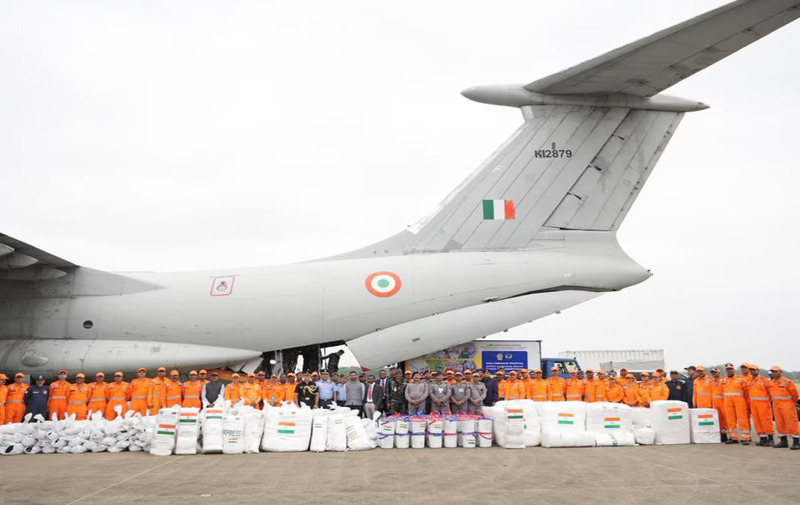
In close coordination with Sri Lankan authorities, India swiftly mobilised rescue teams, naval assets, and air support. Two Indian Navy ships docked in Colombo carrying 9.5 tons of emergency rations, while three Indian Air Force aircraft airlifted another 31.5 tons of essential relief material. These supplies are not just boxes of aid, they are packets of survival for families who lost homes, belongings, and livelihoods overnight.
Some of the most remarkable work has taken place above the cyclone-hit terrain. Chetak helicopters from INS Vikrant and MI-17 helicopters of the Indian Air Force have been instrumental in carrying out extensive rescue operations. These missions have airlifted stranded people from remote or inaccessible areas—pregnant women, infants, the critically injured, and distressed families.
Over 150 people have already been rescued, including nationals from Sri Lanka, India, Germany, Slovenia, the United Kingdom, South Africa, Poland, Belarus, Iran, Australia, Pakistan, and Bangladesh. This multinational rescue underscores something profound: in a disaster, humanity has no borders.
The Sri Lankan President expressed deep gratitude for this swift response, highlighting that the Sri Lankan people themselves deeply appreciate India’s timely assistance. For them, these rescue teams symbolise not just help, but hope.
As Sri Lanka begins the long and difficult journey of rehabilitation—restoring public services, rebuilding homes, and helping families reclaim livelihoods—India has assured full support. PM Modi reaffirmed that assistance will continue in the days ahead, reflecting a relationship anchored in empathy and mutual trust.
“The people of India stand in firm solidarity with the people of Sri Lanka,” the Prime Minister conveyed. In those words lies a powerful message: friendship is proven not in easy times, but in moments of heartbreak.
.jpeg)
I have a Masters in Literature and a knack for spotting the silver lining! When I’m not chasing good news, you’ll find me nurturing my farm or lost in a good book.