"Dream, Dream, Dream! Conduct these dreams into thoughts, and then transform them into action."
- Dr. A. P. J. Abdul Kalam
"Dream, Dream, Dream! Conduct these dreams into thoughts, and then transform them into action."
- Dr. A. P. J. Abdul Kalam
22 Mar 2026
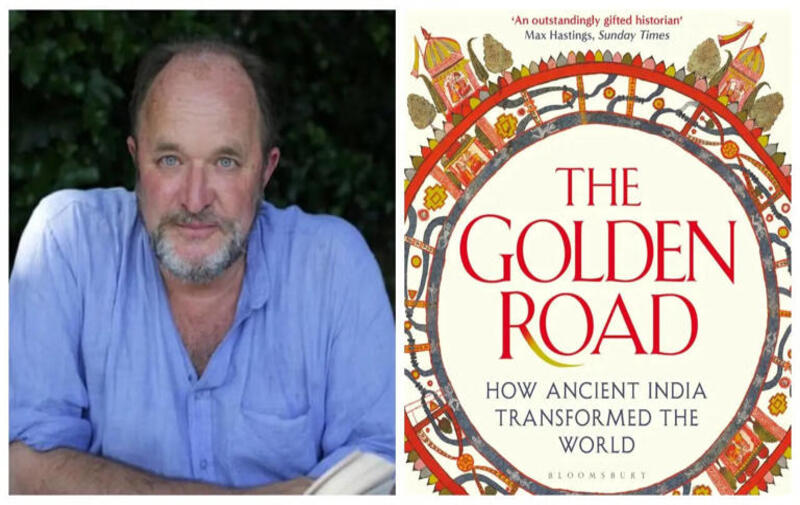
Historian and bestselling author William Dalrymple has been awarded the Mark Lynton History Prize 2026 for his remarkable book The Golden Road: How Ancient India Transformed the World. The accolade recognizes historical writing that combines rigorous research with compelling storytelling. Dalrymple’s work has been praised for its ability to illuminate India’s central role in shaping global cultural, economic, and intellectual networks across ancient Eurasia. The award includes a cash prize of USD 10,000 and is part of the J. Anthony Lukas Book Prize Project, administered jointly by the Nieman Foundation for Journalism and the Columbia University School of Journalism. Named after Mark Lynton, a renowned author and advocate for historical scholarship, the prize celebrates books that balance intellectual depth with clarity, accessibility, and social relevance.
In The Golden Road, Dalrymple challenges the traditional Silk Road narrative, highlighting India’s role as a hub of trade, culture, and knowledge. The book explores how India exported ideas, religion, art, technology, and commercial practices to regions stretching from the Red Sea to the Pacific Ocean. Dalrymple demonstrates that India’s influence extended far beyond its borders, shaping societies and economies across Asia. For example, the spread of Buddhism to East Asia, the construction of iconic structures like Angkor Wat, and Indian trade’s support of the Roman economy all underscore India’s global reach. The book also details the development of innovations like the numeral system, including zero, which transformed mathematics worldwide. Through these narratives, Dalrymple repositions India not as a peripheral player but as a central intellectual and cultural powerhouse in ancient history.
The Mark Lynton History Prize is awarded annually to a historical work that exhibits both scholarly excellence and literary quality. Part of the larger J. Anthony Lukas Book Prize Project, the award emphasizes readability, social relevance, and public engagement. Past recipients include authors who have made significant contributions to historical understanding through meticulous research combined with engaging storytelling. For Dalrymple, winning the 2026 prize underscores the global significance of Indian history and demonstrates the power of scholarship to reshape perceptions. The jury praised The Golden Road for its innovative perspective, its rigorous documentation, and its ability to make readers connect with the human stories behind historical events.
While the book is scholarly, its human dimension is what makes it relatable and compelling. Dalrymple paints vivid images of merchants, monks, and artisans whose lives connected continents. He brings to life the everyday interactions of people along trade routes, from bustling Indian ports to distant markets in East Asia and the Mediterranean. These stories remind readers that history is not merely a sequence of dates and events—it is about real lives and their enduring impact on the modern world. Dalrymple’s narrative helps readers appreciate that innovations like the numeral system, artistic motifs, and cultural practices are not abstract ideas; they are legacies shaped by human creativity and collaboration across borders.
William Dalrymple is already known worldwide for his acclaimed works such as White Mughals, The Last Mughal, Return of a King, and The Anarchy. Beyond writing, he is a co-founder of the Jaipur Literature Festival and has collaborated with leading academic and literary institutions globally. His writings consistently bridge rigorous historical research with accessible, engaging storytelling, making complex topics understandable for both scholars and general readers. The Golden Road continues this tradition, presenting India’s influence on global civilization in a way that is both intellectually enriching and emotionally resonant.
The Golden Road challenges narratives that have traditionally focused on China or the Silk Road as the primary vectors of cultural and technological exchange in ancient Eurasia. Dalrymple’s research demonstrates that India played an equally, if not more, influential role. From spreading religions like Buddhism to East Asia, to influencing architectural and artistic styles, to exporting trade practices and scientific innovations, India’s contributions shaped the evolution of multiple civilizations. By reframing this history, Dalrymple helps modern readers connect with the profound and far-reaching impact of Indian civilization on the world stage.
Winning the Mark Lynton History Prize 2026 cements Dalrymple’s status as a historian capable of blending deep scholarship with human storytelling. The Golden Road is not just a book; it is a celebration of India’s intellectual, cultural, and economic legacy, offering readers insight into how ideas, people, and innovations traveled across continents centuries ago. The award underscores the relevance of history in contemporary life. Understanding the past, as Dalrymple shows, is essential for appreciating the present and shaping the future. Through The Golden Road, readers are reminded of the human connections, creativity, and curiosity that have always driven civilizations forward—and of India’s central role in that story.

Writing about what truly matters, good news and stories to remind the world - it is brighter than we think.