"Dream, Dream, Dream! Conduct these dreams into thoughts, and then transform them into action."
- Dr. A. P. J. Abdul Kalam
"Dream, Dream, Dream! Conduct these dreams into thoughts, and then transform them into action."
- Dr. A. P. J. Abdul Kalam
27 Feb 2026
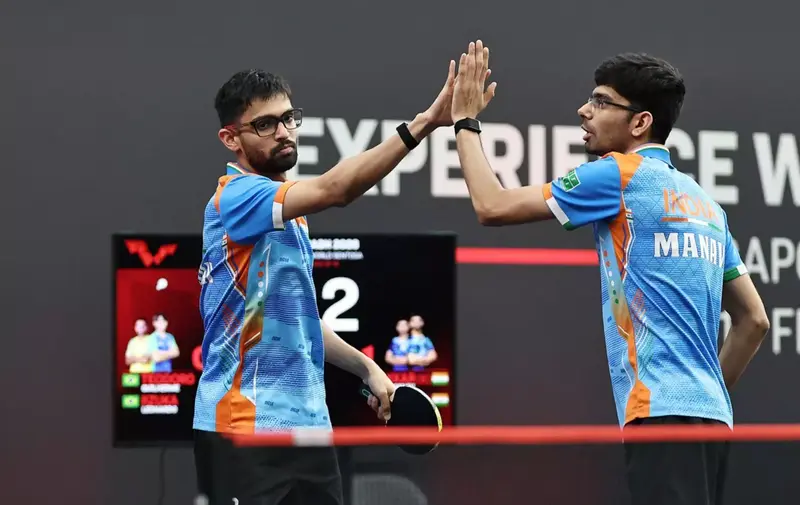
Under the blazing lights of Singapore’s premier table tennis arena, two young Indians stood tall, paddles raised, eyes steady, and history rewritten. Manav Thakkar and Manush Shah may have faced early exits in singles, but together they found rhythm, resilience, and redemption. With a commanding 3-0 victory over Germans Martin Allegro and Adrien Rassenfose, the Indian duo stormed into the semifinals of the Singapore Smash, becoming the first Indian pair ever to reach this stage at a WTT Grand Smash. For Indian table tennis, it was not just a win. It was a statement.
The Smash series represents the highest tier in world table tennis, often compared to tennis’ Grand Slams in prestige and intensity. To thrive here demands precision, tactical brilliance, and mental steel. Seeded sixth in Singapore, Thakkar and Shah displayed all three. Their 11-8, 11-9, and 11-9 victory was clinical yet hard-earned. While the scoreline suggests control, the contest demanded sharp reflexes and bold counterattacks. In the second game, trailing 2-5, the Indians recalibrated swiftly. They began attacking German serves with aggressive returns, claiming five consecutive points that swung momentum decisively in their favour. By the third game, confidence flowed freely; they surged to a 4-0 lead and never looked back. It marked the first time an Indian men’s doubles pair had reached the semifinals of a WTT Grand Smash since the tournament’s inception—a milestone that elevates India’s standing in global table tennis.
Manav Thakkar and Manush Shah, often fondly called the “Double Ms,” are no strangers to pressure. Both are India’s top names in singles, consistently leading the charge in international competitions. Their individual journeys have been marked by grit, from junior titles to challenging established global names. Yet, doubles demands a different chemistry. It requires unspoken understanding, seamless coordination, and trust in split-second decisions. Watching them in Singapore, one could see that bond in action in quick glances before serves, synchronized footwork, and instinctive anticipation of each other’s moves. Their partnership reflects more than tactical alignment; it mirrors years of shared ambition. When one faltered momentarily, the other lifted the tempo. When rallies stretched long, they stayed composed. It was not just about winning points—it was about building belief.
This achievement arrives at a pivotal moment. With the Asian Games looming large on the calendar, 2026 is shaping up to be a defining year for Indian paddlers. At the previous edition of the Asian Games, India clinched a historic bronze through Ayhika Mukherjee and Sutirtha Mukherjee in women’s doubles. The hunger now is to go further. For Thakkar and Shah, the Singapore Smash semifinal is more than a trophy chase. It strengthens India’s credentials ahead of continental battles where Asian powerhouses like China, Japan, and South Korea dominate. Breaking into the elite bracket consistently is essential, and performances like this send a message that India’s men are ready to contend. The duo, currently ranked World No. 5 in doubles, must now overcome the formidable French Lebrun brothers to secure a spot in the final—a challenge that promises intensity and spectacle.
Even if the ultimate prize remains ahead, reaching the semifinals of a WTT Grand Smash marks a psychological breakthrough. Sport often hinges on belief. Once barriers are broken, future achievements follow with greater ease. India’s table tennis narrative has evolved dramatically over the past decade, from sporadic wins to consistent international podium finishes. The rise of young talents has injected fresh energy into the sport, and structured professional leagues have added exposure and experience. Thakkar and Shah’s semifinal berth symbolizes this broader transformation. It signals that Indian players can compete not just as underdogs but as genuine contenders on the world’s biggest platforms. Whether or not they advance further, Manav Thakkar and Manush Shah have already achieved something historic. They have shown that Indian table tennis belongs among the world’s elite and that dreams, when pursued relentlessly, can echo far beyond a single match.

Writing about what truly matters, good news and stories to remind the world - it is brighter than we think.