"Dream, Dream, Dream! Conduct these dreams into thoughts, and then transform them into action."
- Dr. A. P. J. Abdul Kalam
"Dream, Dream, Dream! Conduct these dreams into thoughts, and then transform them into action."
- Dr. A. P. J. Abdul Kalam
27 Aug 2026
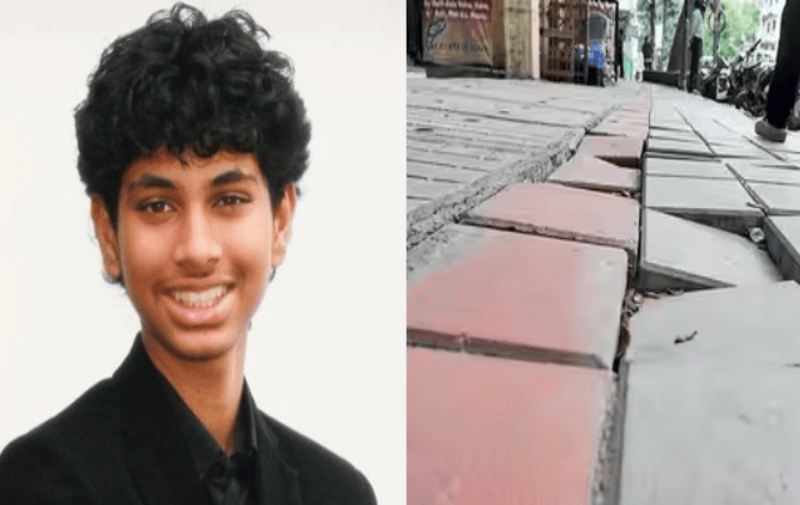
Broken pavements, blocked walkways, garbage-filled paths and construction debris are familiar sights on Bengaluru’s streets. But 14-year-old Surya Uthkarsha decided not just to complain about them—he built a solution.
A student of National Public School, Bengaluru, Surya created RASTHE, a civic-tech platform that allows citizens to report footpath problems directly to civic authorities. Its idea is simple: turn everyday citizens into “sensors for the city.”
Users can photograph unusable or encroached footpaths, rate pedestrian stretches and nominate the best and worst walkways in their neighbourhoods. The reports appear on crowd-sourced maps and ward-level grids, creating a visual picture of Bengaluru’s pedestrian infrastructure.
Surya’s journey into road safety began with a personal accident that made him think deeply about pedestrian safety. He later started The Marg Initiative, a road-safety awareness organisation that has worked with traffic police authorities and UNICEF.
The monsoon brought the footpath problem into sharper focus. With RASTHE, Surya found a way to combine technology, citizen participation. Remarkably, the app was built in just four hours using the 10x Apps platform.
The young creator initially reviews submissions himself and removes irrelevant reports, with plans to introduce automated moderation as the platform grows.
After RASTHE attracted more than 10,000 users and over 1,000 reports, Surya is now asking the Karnataka government and the Greater Bengaluru Authority (GBA) to collaborate with his platform.
His three suggestions are practical:
1. Use citizen data to stop repeat encroachments
Reports can reveal recurring problem areas and help authorities understand why footpaths are repeatedly obstructed.
2. Share before-and-after photographs
Publishing images of footpaths before and after restoration could make civic action more transparent and strengthen public trust.
3. Use ward-level heat maps
Maps showing clusters of complaints could help officials identify priority areas and deploy resources more efficiently.
Surya’s vision goes beyond fixing individual footpaths. He wants Bengaluru’s citizens to become active participants in improving their own city.
As authorities undertake drives to clear footpath encroachments, his message is clear: technology can help citizens speak—but collaboration can turn those voices into action.
.jpeg)
I have a Masters in Literature and a knack for spotting the silver lining! When I’m not chasing good news, you’ll find me nurturing my farm or lost in a good book.