"Dream, Dream, Dream! Conduct these dreams into thoughts, and then transform them into action."
- Dr. A. P. J. Abdul Kalam
"Dream, Dream, Dream! Conduct these dreams into thoughts, and then transform them into action."
- Dr. A. P. J. Abdul Kalam
2 Oct 2026
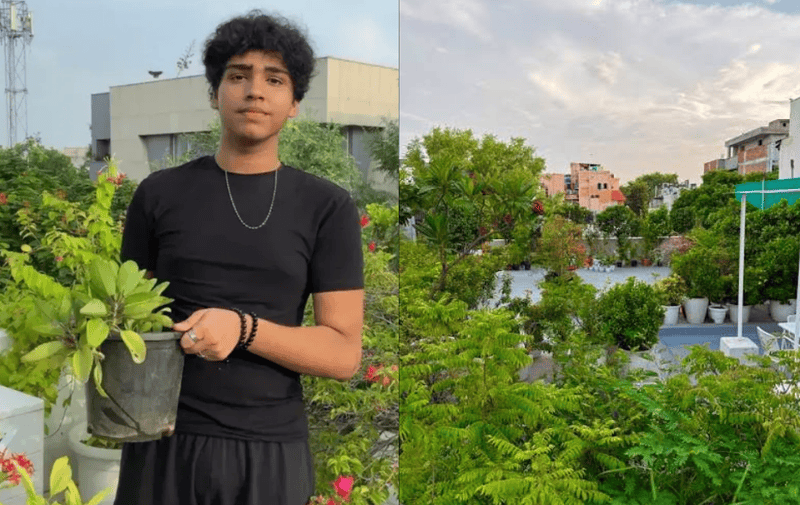
In the middle of Delhi’s concrete landscape, a small rooftop in Vasant Vihar is quietly buzzing with life.
What was once a barren 1,500-square-foot terrace has been transformed by 23-year-old conservationist and climate advocate Aman Sharma into a thriving urban forest. Today, the rooftop reportedly supports more than 500 native plants, along with a remarkable variety of birds, butterflies and other pollinators.
But this green transformation did not begin with a grand plan. It started with a pair of bulbuls.
During the Covid-19 lockdown in 2020, Sharma found himself unable to step outside for his usual connection with nature and birdwatching. Instead of waiting for the world to reopen, he decided to bring nature closer to home.
He began planting a few flowering and fruit-bearing species on the terrace. As the plants grew, they created food and shelter for insects. The insects, in turn, attracted birds and other pollinators. What started small gradually became a layered ecosystem.
Reports highlight that the rooftop now attracts more than 200 bird species and around 25 butterfly species, turning an otherwise unused concrete space into a refuge for urban wildlife. The return of birds year after year, including for nesting, has become one of the most rewarding aspects of Sharma’s experiment.
For Sharma, the rooftop is not only about bringing biodiversity back to the city. It has also become a personal escape from the constant pull of screens and social media. The sounds of birds, the movement of butterflies and the daily changes in the plants offer something that a digital environment cannot easily replicate—an opportunity to slow down and reconnect with the natural world.
His experience also points to a larger possibility for cities like Delhi. Rooftops, balconies and other unused spaces could potentially become small pockets of greenery, particularly as cities face rising temperatures and increasing pressure on natural habitats.
A successful urban forest does not necessarily require acres of land. Native plants can provide familiar sources of food and shelter for local wildlife. Butterfly host plants are equally important because they support butterflies through their life cycle, rather than simply attracting adults.
Water-efficient species can help reduce maintenance, while plants of different heights can create several layers of vegetation. Flowering plants can offer nectar, while fruit-bearing varieties can provide food for birds.
Sharma’s rooftop shows how even a modest patch of concrete can be reimagined as a living space. In a city where every square foot matters, sometimes, the next forest may be growing above our heads.
.jpeg)
I have a Masters in Literature and a knack for spotting the silver lining! When I’m not chasing good news, you’ll find me nurturing my farm or lost in a good book.