"Dream, Dream, Dream! Conduct these dreams into thoughts, and then transform them into action."
- Dr. A. P. J. Abdul Kalam
"Dream, Dream, Dream! Conduct these dreams into thoughts, and then transform them into action."
- Dr. A. P. J. Abdul Kalam
30 Aug 2026
What if you could slide through 800 years of Indian history and instantly see who ruled different parts of the country at any point in time?
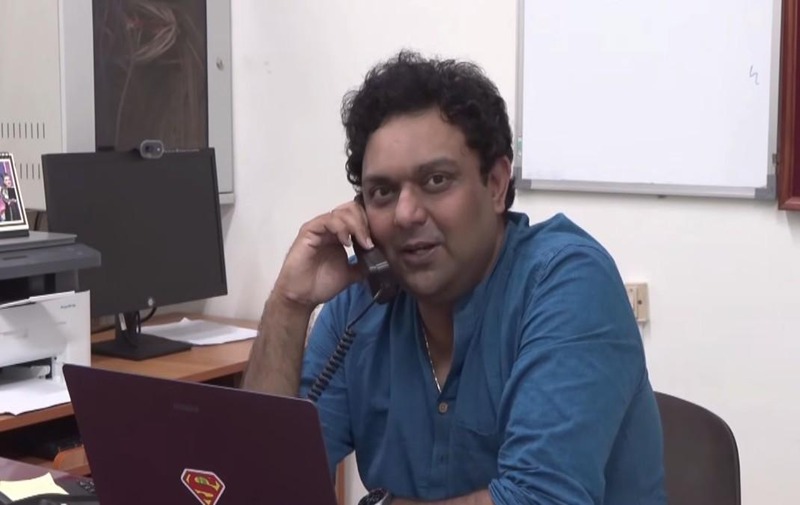
That is the idea behind BharatRajya, an interactive historical atlas that is making India’s past easier and far more fascinating to explore. And behind it is Mumbai resident Krishna Seshadri, a self-described “below average dude” whose connection to coding was, as the project’s description humorously puts it, little more than his Pincode.
Yet his 15-year-old dream of presenting Indian history differently eventually became a working digital platform—with a little help from generative AI.
Seshadri had long been frustrated by the way history is often taught. For him, history becomes memorable when it is told as a story rather than presented as a long list of dates and events. BharatRajya was born from that belief. The website allows users to move across a timeline and explore changing political boundaries, empires and rulers across India’s districts. Instead of simply reading about history, users can interact with it and watch the map change.
The result is a visual journey through India’s complex past.
The most remarkable part of the story is perhaps how Seshadri built it. Without a conventional programming background, he turned to generative AI, including Anthropic’s Claude, to help transform his idea into a functioning digital atlas.
What began as a small hobby project gradually evolved into a detailed platform featuring historical maps, timelines and tools that allow users to contribute corrections. For Seshadri, AI didn't replace the idea—it helped him finally build something he had imagined for years.
The project received its biggest spotlight when Prime Minister Narendra Modi featured BharatRajya during the 137th episode of Mann Ki Baat.
For Seshadri, the recognition was difficult to comprehend. What moved him most, he said, was not simply that the Prime Minister mentioned the website, but that he had actually explored it, scrolling through its empires, features and correction system.
For a project created as a hobby, that moment became an extraordinary validation.
BharatRajya’s appeal lies in its simplicity: take something that can feel complicated in textbooks and make it visual, interactive and engaging.
It also offers a glimpse of how AI is lowering the barriers to creating ambitious digital projects. A person without years of coding experience can now take a long-held idea and begin turning it into reality.
Seshadri’s journey proves that sometimes, you don’t need to be a coder to build something remarkable—you just need a story worth telling, and the determination to bring it to life.
.jpeg)
I have a Masters in Literature and a knack for spotting the silver lining! When I’m not chasing good news, you’ll find me nurturing my farm or lost in a good book.