"Dream, Dream, Dream! Conduct these dreams into thoughts, and then transform them into action."
- Dr. A. P. J. Abdul Kalam
"Dream, Dream, Dream! Conduct these dreams into thoughts, and then transform them into action."
- Dr. A. P. J. Abdul Kalam
10 May 2026
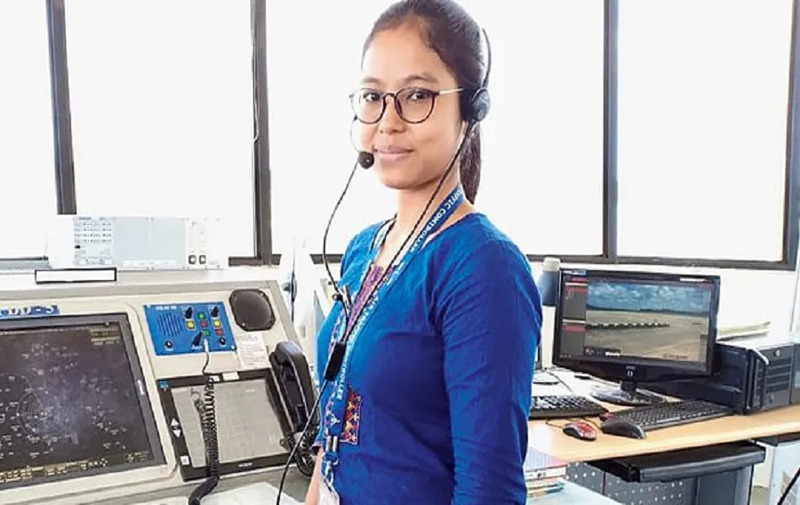
As a little girl in Tripura’s remote Rangamura village, Bipasha Hrangkhawl would sit beside her father watching the famous documentary series Air Crash Investigation on television. While most viewers focused on the dramatic crashes and investigations, Bipasha’s attention drifted elsewhere — toward the mysterious voices guiding pilots safely from the ground. She soon discovered that these unseen professionals were called Air Traffic Controllers.
Years later, the young girl from a tribal hamlet in Khowai district would go on to become Tripura’s first woman Air Traffic Controller (ATC), breaking barriers in a profession long dominated by men.
And on May 9, 2026, her inspiring journey received national recognition as she was honoured with the prestigious “100 Iconic Women of India” Award at the NDMC Convention Centre in New Delhi.
Bipasha’s rise is nothing short of extraordinary. Born in Rangamura village, around 50 kilometres from Agartala, she belonged to the Hrangkhawl community, one of Tripura’s indigenous tribes. Despite limited opportunities around them, her family placed immense importance on education.
Her father, Bijoy Kumar Hrangkhawl, became her strongest pillar of support, ensuring she studied in some of the best schools available in the state.
Determined to build a future beyond the boundaries of her village, Bipasha pursued Electronics and Telecommunication Engineering from Mumbai University.
Like many graduates, her career initially began in the private sector. But her father constantly encouraged her to aim higher and continue preparing for competitive examinations.
Bipasha cleared the Air Traffic Controller examination on her second try and joined the aviation sector in 2017 under the Airports Authority of India.
She first served at Mumbai’s Chhatrapati Shivaji International Airport before later being transferred to Maharaja Bir Bikram Airport in Agartala.
Behind every safe landing is a calm and highly alert Air Traffic Controller making split-second decisions. It is one of the most demanding professions in aviation, where a minor mistake can have disastrous consequences.
ATCs monitor aircraft movement from the ground up to nearly 20,000 feet within Indian airspace, coordinate take-offs and landings, and help pilots navigate difficult weather conditions safely. The role demands sharp concentration, quick thinking, emotional stability, and immense responsibility.
Beyond work, she balances life with remarkable grace. She spends time with her four dogs, cycles, plays badminton, reads philosophical books, and even feeds stray animals.
Bipasha’s story is not just about aviation. It is also about independence, identity, and challenging social expectations. She strongly believes women must realise their own strength and become financially independent so they can make choices freely and confidently.
While she says her workplace has treated her professionally and positively, she admits that societal expectations — especially questions around marriage — often become intrusive. Yet, Bipasha remains unapologetically herself.
Her journey reflects the changing aspirations of young women across India’s Northeast, particularly those from indigenous communities who are now stepping into spaces once considered inaccessible.
The “100 Iconic Women of India 2026” awards celebrated women from across the country for their courage, leadership, and societal impact.
Among them stood Bipasha Hrangkhawl — a woman whose journey began in a small village but now inspires countless young girls to dream bigger.
Her story is proof that geography does not define destiny. From watching planes on television to guiding them safely through Indian skies, Bipasha has already broken one glass ceiling after another.
And if her journey so far is any indication, this is only the beginning!
.jpeg)
I have a Masters in Literature and a knack for spotting the silver lining! When I’m not chasing good news, you’ll find me nurturing my farm or lost in a good book.