"Dream, Dream, Dream! Conduct these dreams into thoughts, and then transform them into action."
- Dr. A. P. J. Abdul Kalam
"Dream, Dream, Dream! Conduct these dreams into thoughts, and then transform them into action."
- Dr. A. P. J. Abdul Kalam
28 Apr 2026
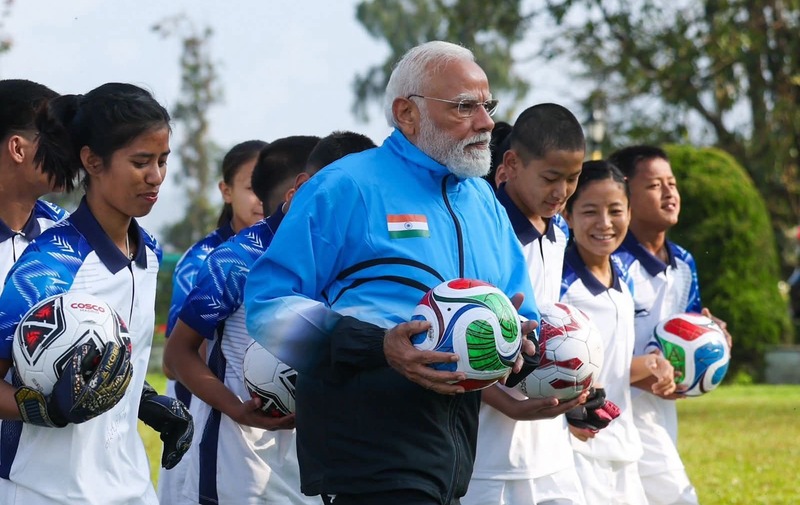
On a refreshing morning in Gangtok, an unexpected yet heartwarming scene unfolded. Amid official engagements and high-level meetings, Narendra Modi stepped onto a football field, not for ceremony but for connection. Dressed in a blue sports jacket marked with the tricolour, he joined a group of young football enthusiasts, each holding a ball and brimming with excitement. What followed was not just a casual interaction but a moment of joy that reflected the simple power of sports.
Sharing the experience later, he remarked, “Nothing like playing some football with my young friends in Sikkim on a lovely Gangtok morning.” In that one sentence, there was more than just enthusiasm; there was a message about youth, energy, and the role of sports in shaping lives.
Football, often called the world’s game, carries a unique emotional connection, especially among young players. For the children in Gangtok, this was not just a friendly kickabout; it was a memory that would stay with them for years. Moments like these go beyond photographs and headlines. They create inspiration. A child who played alongside the Prime Minister might now dream a little bigger of representing India, of chasing excellence, or simply of believing in their own potential. India’s growing focus on sports development, especially through initiatives like Khelo India, reflects this vision. By encouraging grassroots participation, the country aims to nurture talent from every corner, including the scenic yet often underrepresented Northeast.
The football session was just one part of a larger and significant visit. The Prime Minister was in Sikkim to mark the 50th anniversary of its statehood, a milestone that reflects both history and progress. During his visit, he attended celebrations, interacted with Padma awardees, and acknowledged individuals who have contributed to society in meaningful ways.
He described the Northeast as India’s “Ashtalakshmi,” a term symbolizing prosperity and diversity across the eight states. This vision places Sikkim not on the periphery, but at the center of India’s growth story.
Beyond symbolic gestures, the visit carried substantial announcements. Projects worth over ₹4,000 crore were unveiled, covering sectors such as infrastructure, healthcare, education, and tourism. These initiatives are designed to strengthen connectivity, improve public services, and create opportunities for local communities. Key proposals include an expressway linking Bagdogra to Gangtok, a ring road in the capital, and ropeway and skyway projects to enhance accessibility. The development of the Sevok– Rangpo railway line is particularly significant, as it will bring railway connectivity to Sikkim for the first time in its history. Such projects are not just about roads and bridges—they are about connecting people, ideas, and opportunities.
Sikkim’s natural beauty has long been one of its greatest strengths. With its clean air, lush forests, and rich biodiversity, the state offers a unique blend of nature and culture. The Prime Minister highlighted this, praising the people of Sikkim for their commitment to cleanliness and environmental conservation. With over 500 species of birds and nearly 700 species of butterflies, Sikkim is a paradise for nature lovers. The push for eco-wellness tourism and organic agriculture aligns with global trends toward sustainability. Plans to develop around 1,000 homestays aim to boost local livelihoods while offering visitors an authentic experience. Adventure tourism, supported by improved infrastructure, is expected to further enhance the state’s appeal.
The football session in Gangtok was not just a spontaneous activity—it reflected a broader commitment to promoting sports in the region. The Northeast has consistently produced talented athletes, particularly in football and archery. By investing in sports infrastructure and encouraging participation, the government aims to create pathways for young athletes to compete at national and international levels. Football, with its universal appeal, plays a key role in this vision. For many young players in Sikkim, access to better facilities and training could mean the difference between a hobby and a professional career. Moments like playing alongside the Prime Minister only add to that motivation.
Describing Sikkim as a reflection of “Ek Bharat, Shreshtha Bharat,” the Prime Minister emphasized unity in diversity. The state’s blend of tradition, nature, and progress embodies this idea. As India looks toward the future, the Northeast is increasingly becoming a focal point of development. With improved connectivity, growing tourism, and a strong emphasis on youth and sports, the region is poised for transformation.

Writing about what truly matters, good news and stories to remind the world - it is brighter than we think.