"Dream, Dream, Dream! Conduct these dreams into thoughts, and then transform them into action."
- Dr. A. P. J. Abdul Kalam
"Dream, Dream, Dream! Conduct these dreams into thoughts, and then transform them into action."
- Dr. A. P. J. Abdul Kalam
4 May 2026
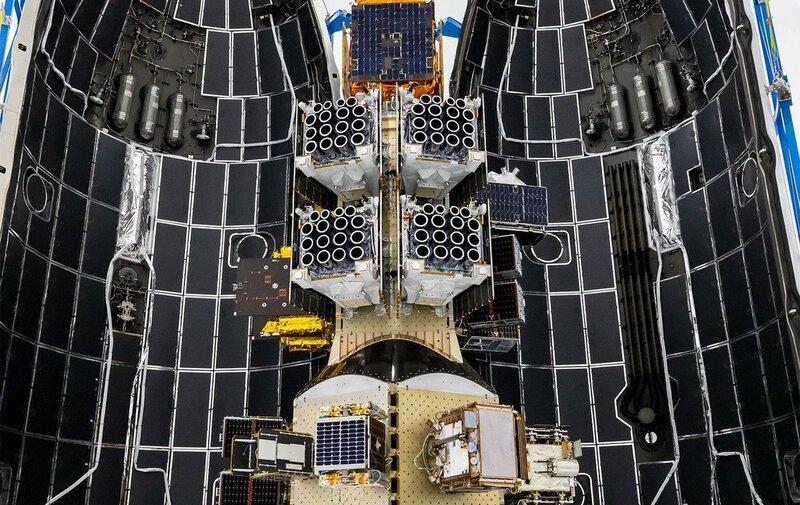
High above the Earth, as a rocket cut through the early morning skies of California on May 3, 2026, it carried more than just a satellite it carried a story of ambition, innovation, and a new India ready to lead. Launched aboard a SpaceX Falcon 9, Bengaluru-based startup GalaxEye successfully sent its flagship satellite, Mission Drishti, into orbit. In that moment, India’s private space sector didn’t just participate in the global race; it made a statement.
For decades, space exploration in India was largely driven by government-led missions, with organizations like the Indian Space Research Organisation setting benchmarks in cost-effective innovation. But Mission Drishti signals a powerful shift. It shows how young startups, driven by bold ideas and fearless thinking, are now shaping the next chapter of India’s space story.
At the heart of Mission Drishti lies a breakthrough that could redefine how we see our planet—OptoSAR technology. Unlike traditional satellites that rely either on optical imaging or radar systems, this satellite does something revolutionary: it combines both into one unified platform. Optical imaging provides detailed, high-resolution pictures, but it struggles when clouds, darkness, or weather disturbances get in the way. Synthetic aperture radar, on the other hand, can “see” through clouds and operate at night but often lacks the visual clarity of optical systems. By merging these two capabilities, OptoSAR offers the best of both worlds. This means Mission Drishti can capture sharp, reliable images of Earth—whether it’s a sunny afternoon or a stormy midnight. In practical terms, it eliminates delays, improves accuracy, and ensures that critical information is always available when needed.
The real power of this mission lies not just in its technology but in what that technology enables. Imagine a cyclone forming over the ocean. In the past, cloud cover could limit visibility, delaying crucial data. With OptoSAR, authorities can monitor such events in real time, even through dense clouds, helping save lives through faster disaster response.
In agriculture, farmers and policymakers can benefit from continuous monitoring of crop health, soil conditions, and water availability.
In defence, it strengthens surveillance capabilities by providing uninterrupted, high-resolution intelligence. For climate scientists, it offers a more accurate way to track environmental changes, from melting glaciers to deforestation. Mission Drishti is not just about seeing the Earth—it is about understanding it better, responding faster, and planning smarter.
The achievement quickly drew national attention, with Narendra Modi calling it a major milestone in India’s space journey. His words reflected more than celebration—they highlighted a deeper transformation underway. He emphasized how the success of Mission Drishti represents the passion and innovation of India’s youth. In many ways, this mission is a reflection of a generation that has grown up watching rockets launch on screens and now dreams of building them. It is proof that India’s young minds are not just participating in global innovation—they are leading it.
Mission Drishti is also a symbol of a larger shift in India’s space ecosystem. For years, space technology was seen as a domain reserved for governments and large institutions. Today, startups like GalaxEye are breaking that barrier. With supportive policies, increased investment, and access to global partnerships, private players are stepping into roles that were once unimaginable. They are bringing agility, fresh ideas, and a startup mindset to an industry that thrives on precision and long-term vision. This transformation is not just about launching satellites; it is about building an ecosystem where innovation can flourish. It is about creating opportunities for engineers, researchers, and entrepreneurs who dare to think beyond boundaries.
Mission Drishti is only the beginning. GalaxEye has plans to expand this technology into a larger constellation of satellites, creating a network that can provide continuous, real-time coverage of the Earth. Such a system could revolutionize industries and redefine how nations approach security, sustainability, and development. For India, this represents a step closer to self-reliance in advanced space-based intelligence. It strengthens the country’s position in the global space race and showcases its ability to innovate at the highest level.
This mission is not just about observing the world from above. It is about transforming how we understand it, how we protect it, and how we build a better future together. And in that sense, the name “Drishti,” meaning vision, feels more meaningful than ever.

Romanticizing life and shaping stories from everything I see through my journalistic lens. Also, I love sports on the side.