"Dream, Dream, Dream! Conduct these dreams into thoughts, and then transform them into action."
- Dr. A. P. J. Abdul Kalam
"Dream, Dream, Dream! Conduct these dreams into thoughts, and then transform them into action."
- Dr. A. P. J. Abdul Kalam
1 Apr 2026
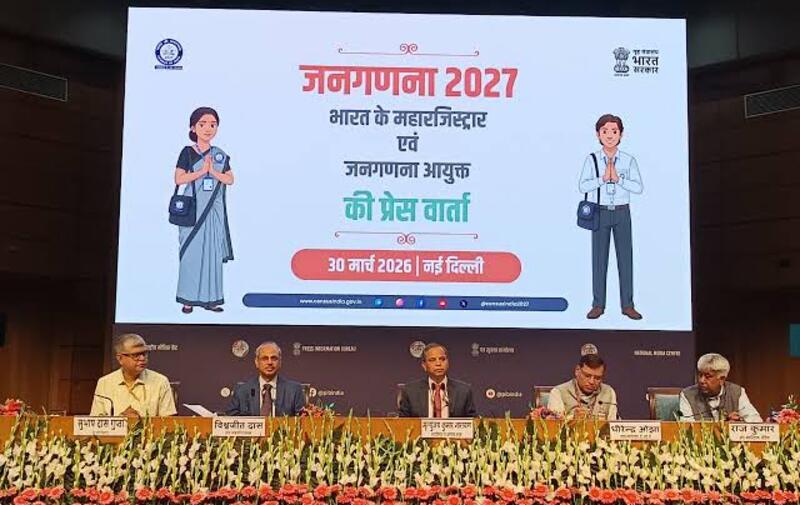
India is on the brink of a historic transformation as it prepares to conduct its first fully digital population census, beginning on 1 April 2026. Announced by the Registrar General and Census Commissioner of India, this will be the 16th census overall and the eighth after Independence. Widely regarded as the world’s largest enumeration exercise, the census will involve more than 3 million officials, including enumerators and supervisors, covering every corner of the country—from bustling cities to remote villages. This is not just a routine exercise; it is a major step toward modern governance powered by data and technology.
For the first time in India’s history, the census will be conducted using mobile applications and digital tools. This shift from paper-based surveys to digital platforms represents a major leap forward. Enumerators will collect data using smartphones, enabling real-time updates and reducing errors. Additionally, advanced web-based mapping systems and monitoring dashboards will help track progress and ensure efficiency. This digital transformation is expected to make the census faster, more accurate, and more transparent than ever before.
One of the most innovative features of this census is self-enumeration. Citizens will have the option to submit their own data through a secure online portal available in 16 languages. After completing the process, households will receive a unique Self-Enumeration ID. This ID will later be verified by field enumerators during their visits. This hybrid approach combining digital self-reporting with traditional verification not only empowers citizens but also improves participation and data reliability. For many Indians, this will be their first direct interaction with such a large-scale digital governance initiative.
The census will be conducted under the provisions of the Census Act, 1948 and the Census Rules, 1990. These laws ensure confidentiality, accuracy, and proper handling of data. The reference date for most parts of India has been set as 1 March 2027, which means all population data will be recorded as it exists on that date. However, for snow-bound regions such as Ladakh and parts of Jammu and Kashmir, Himachal Pradesh, and Uttarakhand, the reference date will be 1 October 2026. This adjustment accounts for harsh weather conditions that make access difficult during winter months.
India’s census will be carried out in two key phases, each focusing on different aspects of data collection. The first phase, from April to September 2026, will gather information on housing conditions, infrastructure, and household amenities, offering insights into living standards. The second phase, scheduled for February 2027, will focus on population details such as education, employment, and socio-economic conditions, along with caste enumeration. Together, these phases will provide a detailed and comprehensive understanding of India’s population, helping the government plan policies, allocate resources effectively, and ensure balanced social and economic development across the country. The sheer scale of the census is staggering. The government has allocated ₹11,718.24 crore for the exercise, covering 36 States and Union Territories, over 7,000 sub-districts, and nearly 6.4 lakh villages.
The census is not just about counting people; it is the foundation of governance and planning. Accurate data helps the government design policies, allocate resources, and plan infrastructure. From healthcare and education to employment and welfare schemes, almost every major decision depends on census data. With the inclusion of digital tools and self-enumeration, this census is expected to provide more precise and timely information, helping India address its challenges more effectively.
India’s first fully digital census is more than just an administrative exercise; it is a milestone in the country’s journey toward modern, data-driven governance. By combining technology with traditional methods, the census aims to deliver accurate, reliable, and comprehensive data. It reflects India’s readiness to embrace innovation while staying rooted in its commitment to inclusive development. As the nation prepares for this massive exercise, one thing is clear: every individual counted brings India one step closer to a better-informed and more equitable future.

Writing about what truly matters, good news and stories to remind the world - it is brighter than we think.