"Dream, Dream, Dream! Conduct these dreams into thoughts, and then transform them into action."
- Dr. A. P. J. Abdul Kalam
"Dream, Dream, Dream! Conduct these dreams into thoughts, and then transform them into action."
- Dr. A. P. J. Abdul Kalam
4 Oct 2026
India’s busy ports are getting a greener makeover, and Dhamra Port in Odisha has just achieved a significant milestone.
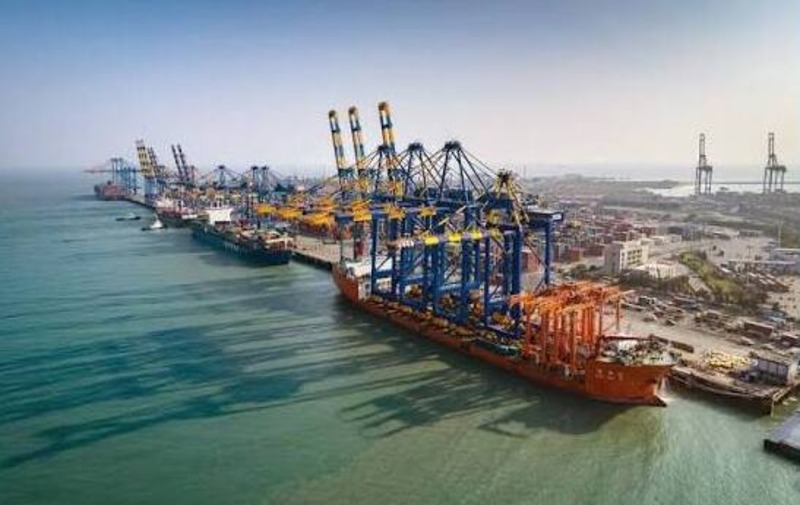
Operated by Adani Ports and Special Economic Zone (APSEZ), Dhamra Port has shifted its entire electricity consumption to renewable power, becoming India’s first large-scale private multi-cargo port to operate fully on renewable electricity. The transition took effect in August 2026, as part of APSEZ’s (Adani Ports and Special Economic Zone Limited) long-term net-zero strategy.
The port now meets a monthly electricity requirement of more than 90 lakh units through renewable sources. Its annualised renewable electricity consumption is estimated at more than 108 GWh.
Keeping a large port running around the clock requires a huge and reliable supply of electricity. According to The Economic Times, Dhamra’s renewable power comes through a combination of sources.
Around 25–30% of its renewable electricity is supplied by APSEZ’s captive hybrid renewable power plant at Khavda in Gujarat.
Another 10–15% comes through third-party access arrangements. The remaining requirement is met through a Green Consumer arrangement with Odisha’s electricity distribution utility.
Together, these sources allow Dhamra to meet its electricity needs with renewable power while continuing its round-the-clock operations.
The port has an installed capacity of 60 million tonnes (MT) and handled 48.8 MT of cargo in the financial year ended March 2026.
Its infrastructure includes six dry-cargo berths, rapid-loading silos, wagon tipplers, track hoppers, mechanised storage yards and specialised jetty equipment. That makes the shift to renewable electricity particularly significant because it covers an energy-intensive logistics operation at a large scale.
Located on Odisha’s coast between Haldia and Paradip, Dhamra is one of eastern India’s important deep-draft ports. It is connected by road and rail to mineral-rich regions across Odisha, Jharkhand and West Bengal.
By moving its electricity consumption entirely to renewable sources, the port is expected to reduce emissions associated with purchased electricity and improve the environmental performance of its operations. The move also highlights how India’s logistics infrastructure can increasingly combine large-scale industrial activity with cleaner energy.
As ports handle growing volumes of cargo, Dhamra’s renewable-powered model offers a glimpse of how the backbone of trade can become greener too.
.jpeg)
I have a Masters in Literature and a knack for spotting the silver lining! When I’m not chasing good news, you’ll find me nurturing my farm or lost in a good book.