"Dream, Dream, Dream! Conduct these dreams into thoughts, and then transform them into action."
- Dr. A. P. J. Abdul Kalam
"Dream, Dream, Dream! Conduct these dreams into thoughts, and then transform them into action."
- Dr. A. P. J. Abdul Kalam
22 Dec 2025
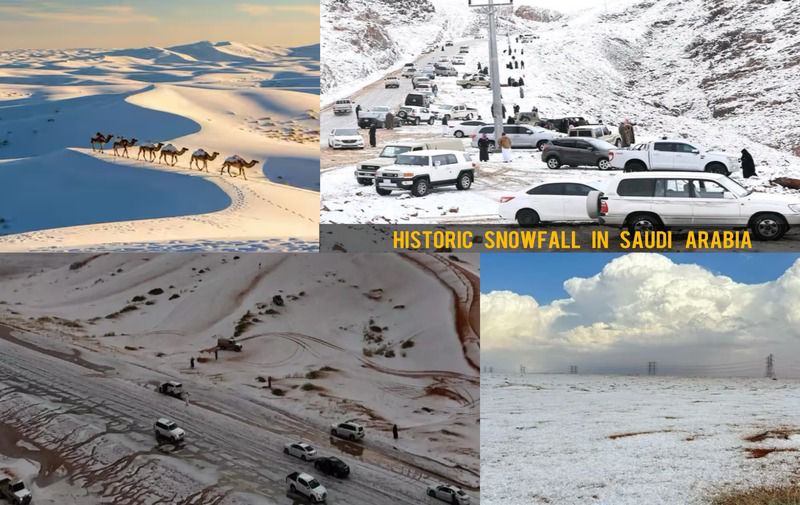
In a moment that seemed almost unreal, parts of Saudi Arabia witnessed their first-ever recorded snowfall, turning vast stretches of desert into a scene more familiar to alpine Europe than the Arabian Peninsula. On December 18, northern regions of the Kingdom, including Al-Jawf, Tabuk and areas around Al Ula, were blanketed in snow following intense rain and hailstorms. Golden sand dunes and rugged rocky hills suddenly shimmered under a layer of white, creating a visual contrast that left residents and visitors in awe. For a country globally associated with scorching heat and endless deserts, the sight of snow falling from the sky marked a historic and emotional moment.
The most dramatic scenes emerged from the Tabuk region, particularly Jabal Al-Lawz, also known as Almond Mountain. Rising to about 2,580 meters above sea level, the mountain’s peaks were covered in thick snow, giving it an alpine appearance. At that height, the terrain resembled European snow-capped summits rather than a Middle Eastern desert. Images and videos of the mountain rapidly spread across social media platforms, drawing astonished reactions from around the world. Many viewers questioned whether the visuals were real or digitally altered.
Meteorologists attributed the snowfall to a powerful northern cold front that swept across the kingdom. This cold air system collided with moist conditions created by preceding rain and hailstorms, rapidly lowering temperatures in northern Saudi Arabia. In some areas, temperatures dropped as low as minus 4 degrees Celsius, a stark contrast to the country’s typical winter climate. While snowfall has occasionally been reported in high-altitude areas of the Middle East, seeing snow blanket desert terrain and sand dunes remains extremely rare. The conditions briefly transformed the arid landscape into a winter scene that many residents had never experienced in their lifetime.
As snowflakes fell, residents rushed outdoors, phones in hand, eager to capture history. Social media platforms were soon flooded with videos of camels cautiously walking through snow-covered sand, cars navigating icy desert roads, and children laughing and playing in the cold where intense heat usually dominates. For many families, it was the first time they had touched snow. The excitement was raw and genuine, turning an unusual weather event into a shared national memory. Saudi Arabia is known for extreme heat, with summer temperatures often soaring above 45 degrees Celsius. The sudden shift to freezing conditions highlighted how dramatically the weather had changed in a matter of days. Rain swept through several parts of the kingdom, while snow fell in the north, creating conditions that felt worlds apart from the country’s usual climate.
How Did Snowfall Occur in Saudi Arabia?
In Saudi Arabia, snowfall occurred due to a powerful northern cold air system moving into the region. This cold front collided with moist air brought by earlier rain and hailstorms, rapidly lowering temperatures, especially in high-altitude areas like Jabal Al-Lawz. As temperatures dropped below freezing, moisture in the clouds turned into ice crystals. These crystals grew heavier and fell as snow, briefly covering the desert landscape under rare winter conditions.
Beyond the science and spectacle, the snowfall carried a deeply human element. Elderly residents spoke of never having seen snow in their hometowns, while younger generations experienced a sense of wonder normally reserved for foreign landscapes. Tourists visiting the region were equally stunned, finding themselves in a rare moment where geography and expectation collided. Camels, icons of desert life, became unexpected stars of the moment, captured walking slowly through snow-covered paths. These images symbolized the surreal nature of the event, blending tradition with an extraordinary twist of nature.
The snow did not last long, melting away as temperatures gradually rose. Yet its impact lingered far beyond the brief winter spell. For Saudi Arabia, the event was more than just a weather anomaly; it was a moment of collective amazement, curiosity, and shared joy. For a day, the desert became a winter wonderland, reminding people that nature still has the power to surprise, inspire, and unite. Long after the snow disappeared, the images and memories remained, marking December 18 as a day when the sands of Saudi Arabia briefly turned white and the impossible felt real.

Writing about what truly matters, good news and stories to remind the world - it is brighter than we think.