"Dream, Dream, Dream! Conduct these dreams into thoughts, and then transform them into action."
- Dr. A. P. J. Abdul Kalam
"Dream, Dream, Dream! Conduct these dreams into thoughts, and then transform them into action."
- Dr. A. P. J. Abdul Kalam
25 Feb 2026
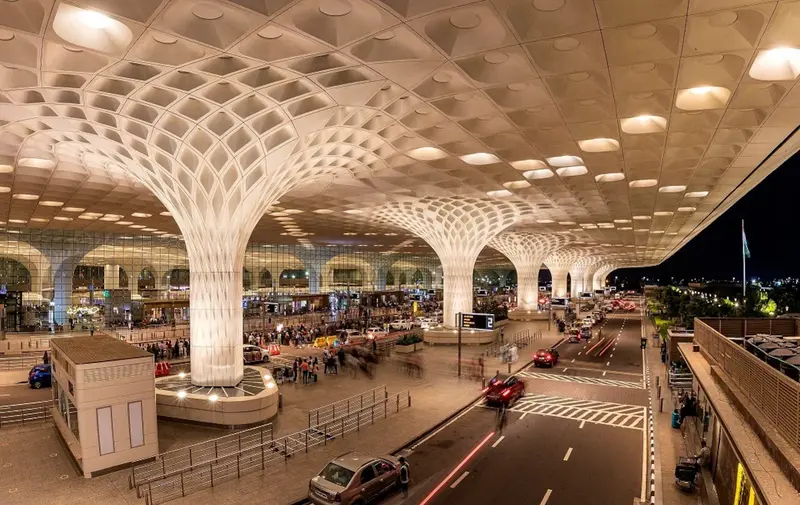
For millions of travellers, an airport departure is the first emotional step of a journey—a mix of excitement, urgency, and anticipation. At Chhatrapati Shivaji Maharaj International Airport, that experience has now earned international recognition. Mumbai’s primary aviation hub has been crowned Asia-Pacific’s Best Airport for Departures in the over 40-million passengers category at the 2025 Airport Service Quality (ASQ) Customer Experience Awards. The honour, presented by Airports Council International, reinforces Mumbai Airport’s standing as one of the region’s leading aviation gateways. In a city known for speed and scale, the award highlights how efficiency and empathy can go hand in hand.
What makes this award particularly significant is its foundation—it is based entirely on passenger feedback. The ASQ program, globally benchmarked and independently audited, evaluates the complete outbound experience. From the moment a traveller enters the terminal to the instant they board the aircraft, every touchpoint matters. The evaluation covers terminal access, check-in efficiency, security processes, queue management, boarding coordination, ambience, retail diversity, cleanliness, and staff responsiveness. At a high-density airport like Mumbai, where heavy passenger volumes are the norm, maintaining consistency across these elements requires precision and coordination. Departures are often considered the most critical phase of air travel. A smooth exit sets the tone for the entire journey. For business travellers rushing to meetings, families embarking on vacations, or students flying abroad for the first time, the departure experience shapes their lasting impression of the city.
Mumbai Airport has invested heavily in improving passenger flow and service consistency. Clearer wayfinding systems reduce confusion, especially for first-time flyers. Streamlined queue management ensures shorter waiting times during peak hours. Enhanced housekeeping standards maintain cleanliness even under heavy footfall. Premium lounges provide comfort for frequent flyers and business travellers, while a thoughtfully curated retail and dining portfolio caters to diverse tastes and budgets. The introduction of the UDAN Yatri Café expands access to affordable refreshments, aligning with India’s broader efforts to make air travel more inclusive under the UDAN regional connectivity scheme. For a city that never sleeps, these refinements ensure that departures remain organised, calm, and efficient despite constant movement.
As the world’s busiest single-runway airport by annual passenger traffic, operational efficiency is not optional; it is essential. Mumbai Airport has embraced digital solutions to strengthen throughput capacity and reduce processing time. The rollout of DigiYatra biometric e-gates enables contactless entry and faster security clearance for registered passengers. This technology-driven facilitation reduces bottlenecks and enhances convenience. A wider network of self-check-in kiosks and self-baggage drop counters empowers travellers to manage their journey independently. Recently introduced hybrid self-baggage-drop units can switch between assisted and automated modes. This flexibility is particularly valuable during peak travel hours, when passenger surges demand rapid adaptation. For international travellers, the Fast Track Immigration Trusted Traveller Programme (FTI-TTP) further expedites clearance, aligning Mumbai with global best practices. These technological upgrades are not merely about speed. They represent a broader shift toward seamless, data-driven airport operations.
Beyond efficiency, Mumbai Airport integrates culture into its infrastructure. Terminal 2 houses the 3.2-kilometre ‘Artbeat of New India’ museum corridor, displaying more than 5,500 artefacts and over 100 curated installations. This immersive cultural experience transforms the departure zone into a gallery of Indian heritage. For departing passengers, the corridor becomes a final visual memory of India, a reminder of its artistic richness and diversity. For international visitors, it offers a cultural introduction even before takeoff. Such integration of art and architecture elevates the airport beyond a transit hub. It becomes a cultural landmark.
The airport is operated by Mumbai International Airport Limited (MIAL), a joint venture between Adani Airport Holdings Limited and the Airports Authority of India, with the Adani Group holding a majority stake. Strategic investments in infrastructure refinement and digital modernisation have positioned Mumbai Airport as a benchmark for high-capacity urban airports. The ASQ recognition also reflects strong coordination among multiple stakeholders: airline operators, security agencies, immigration authorities, ground staff, and hospitality teams. Seamless departures are the result of thousands of professionals working in sync. As aircraft continue to take off from its single runway, Mumbai’s gateway stands as a symbol of how operational efficiency, cultural integration, and passenger-centric innovation can redefine the departure experience for millions.

Writing about what truly matters, good news and stories to remind the world - it is brighter than we think.