"Dream, Dream, Dream! Conduct these dreams into thoughts, and then transform them into action."
- Dr. A. P. J. Abdul Kalam
"Dream, Dream, Dream! Conduct these dreams into thoughts, and then transform them into action."
- Dr. A. P. J. Abdul Kalam
18 Aug 2026
What if a school fee wasn't money—but a bag of plastic waste?
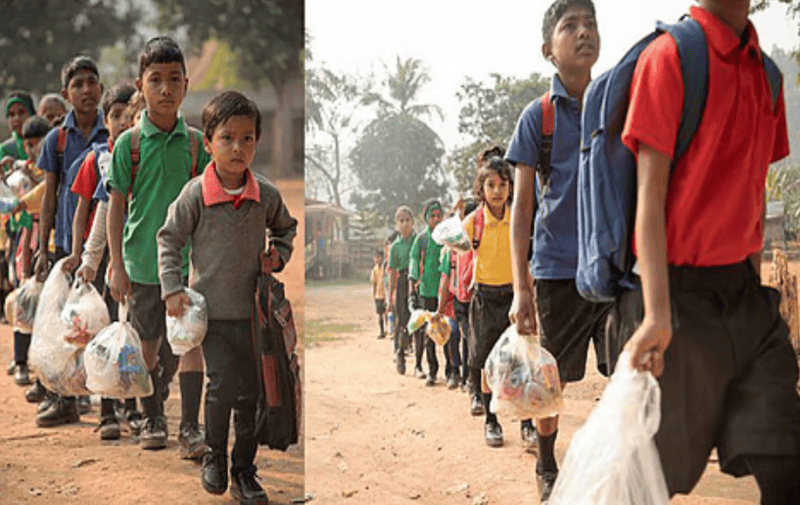
That is the unusual idea taking root at Akshar Foundation School in Pamohi, Assam, where students bring plastic waste to school as part of their contribution towards education. The initiative was started by Parmita Sarma and Mazin Mukhtar, who wanted to tackle two problems at once: limited access to quality education and the growing plastic waste problem in the community.
When the school began, families were asked to send at least 25 pieces of plastic waste every week with their children. What might otherwise have been burned or discarded was instead collected and put to use.
The result? Trash became a ticket to education.
The idea emerged against the backdrop of India's enormous plastic waste challenge. In Pamohi, discarded plastic had often been burned, creating another environmental problem. Akshar's approach offered a different solution. The collected plastic is sorted and recycled, while the school's recycling centre also produces eco-bricks that can be used for simple construction projects. But the school's ambitions extend far beyond recycling.
Inspired by Mahatma Gandhi's Nai Talim philosophy, the curriculum combines conventional academics with practical skills designed to prepare students for life beyond school.
One of Akshar's most innovative ideas addresses another serious issue: child labour. Older students who might otherwise leave school to work in local quarries are given an opportunity to teach younger children. They receive a stipend for their work, with their earnings increasing as they progress academically.
The approach gives teenagers practical experience, financial responsibility and, most importantly, a reason to stay in school. Education isn't simply something they receive—it becomes something that can help support their families.
At Akshar, learning doesn't stop when the classroom bell rings. Students learn how to install and operate solar panels, participate in landscaping projects and develop digital skills using tablets and interactive learning resources.
They also run an animal shelter, caring for injured and abandoned dogs before helping find them homes. In this school, a lesson in sustainability can happen while sorting plastic, a lesson in economics while earning money and a lesson in compassion while caring for an animal.
The founders have already taken their model beyond Pamohi. Through their Akshar School Reform Fellowship, they have worked with schools in Delhi and aim to expand the approach to more institutions. The larger vision is ambitious: transform public education by making learning practical, sustainable and connected to the needs of local communities.
At Akshar, a discarded plastic bottle is no longer simply waste. It can become part of a child's journey towards a better future.
.jpeg)
I have a Masters in Literature and a knack for spotting the silver lining! When I’m not chasing good news, you’ll find me nurturing my farm or lost in a good book.