"Dream, Dream, Dream! Conduct these dreams into thoughts, and then transform them into action."
- Dr. A. P. J. Abdul Kalam
"Dream, Dream, Dream! Conduct these dreams into thoughts, and then transform them into action."
- Dr. A. P. J. Abdul Kalam
6 Mar 2026
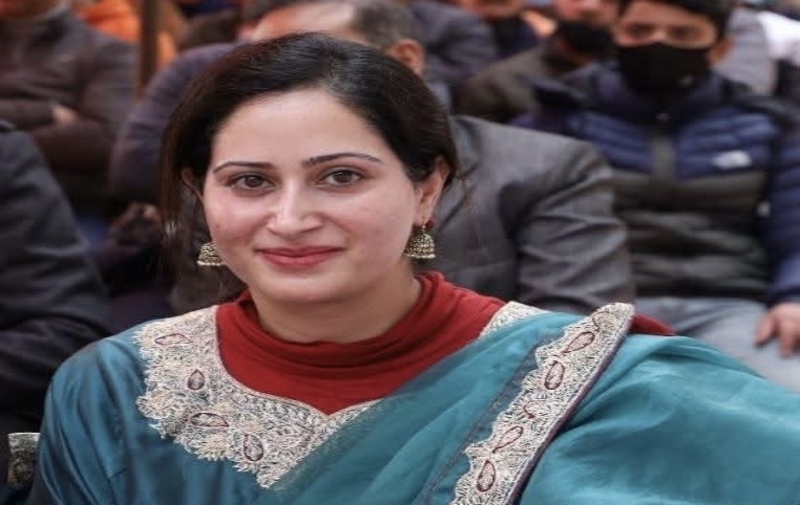
In institutions known for discipline, security, and rigid hierarchies, leadership positions have traditionally been dominated by men. However, history was made in Jammu and Kashmir when Saba Shawl was appointed as the Superintendent of Central Jail Srinagar, becoming the first Kashmiri woman to head the high-security correctional facility. The appointment, formalised under Government Order No. 145-Home of 2026 dated March 2, 2026, marks a significant moment for women in uniformed services across the Union Territory. Central Jail Srinagar is one of the most sensitive and strategically important prisons in the region, making this leadership transition particularly notable. For many observers, Shawl’s rise represents more than a professional milestone. It symbolises a gradual but meaningful shift toward greater gender inclusion in law enforcement and correctional administration.
Saba Shawl’s story begins in Peerbagh, Srinagar, where she grew up before embarking on a career that would eventually take her to the top of the region’s prison administration. Unlike many officers whose careers begin strictly within the policing framework, Shawl’s early academic journey was rooted in social work and community development. She holds a master’s degree in Social Work, a discipline focused on social justice, rehabilitation, and community welfare. This educational background plays an important role in shaping her approach to correctional management. Modern prison administration increasingly emphasises rehabilitation and reintegration, alongside security and discipline. Shawl’s training in social work offers a unique perspective in this evolving field. Before entering government service, she worked as a senior community development consultant and was associated with the Indo Global Social Service Society, where she participated in grassroots programs aimed at community empowerment and capacity building. These early experiences exposed her to the realities of social challenges at the community level, strengthening her understanding of human behaviour and institutional reform.
In 2012, Saba Shawl achieved a major breakthrough by clearing the Jammu and Kashmir Public Service Commission (JKPSC) examination. She secured the lone open merit position for Superintendent of Police (Prisons) a remarkable achievement at a time when very few Kashmiri women were entering uniformed services. The selection was significant not only for her career but also for the broader conversation around women’s representation in security institutions. Uniformed services such as police, paramilitary forces, and prison administration have historically had low female representation in many parts of India. Shawl’s entry into the service therefore signalled a changing landscape where more women were stepping into roles traditionally considered male-dominated. Over time, she established herself as a capable officer known for her administrative discipline, professionalism, and ability to handle institutional responsibilities.
Saba Shawl’s appointment came as part of a larger administrative reshuffle within the Jammu and Kashmir Prisons Department. Under the same government order, Sheikh Zulfkar Azad was repatriated to his parent department, the Jammu and Kashmir Police. Several other officers were also reassigned or deputed to important positions across the region’s prison system. New postings were made at District Jail Poonch, District Jail Anantnag, and Special Jail Pulwama, among others. These changes are part of a broader effort to strengthen administrative efficiency, security oversight, and operational management within correctional institutions across the Union Territory. Such periodic reshuffles are common in law enforcement systems to ensure better coordination and effective institutional functioning. Her appointment is not just a milestone for the prison department—it is also a reminder that change often begins when someone is willing to step into spaces where few have gone before.
Romanticizing life and shaping stories from everything I see through my journalistic lens. Also, I love sports on the side.