"Dream, Dream, Dream! Conduct these dreams into thoughts, and then transform them into action."
- Dr. A. P. J. Abdul Kalam
"Dream, Dream, Dream! Conduct these dreams into thoughts, and then transform them into action."
- Dr. A. P. J. Abdul Kalam
23 Feb 2026
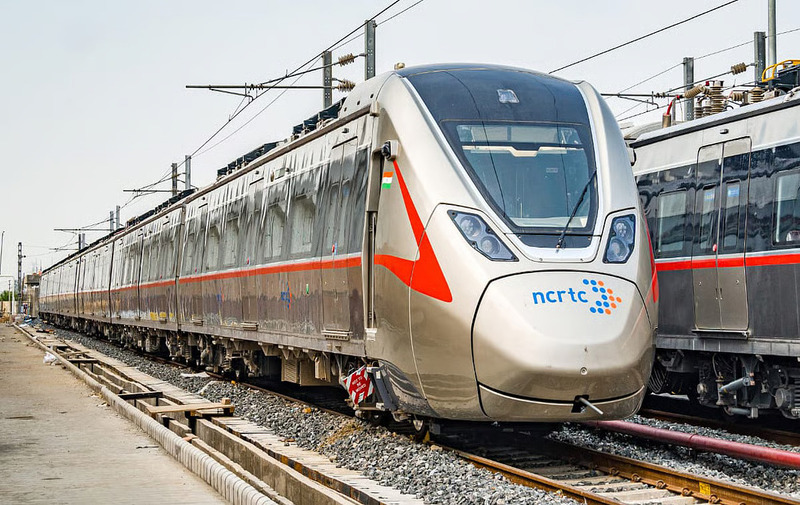
In a landmark moment for India’s transport infrastructure, Prime Minister Narendra Modi on Sunday inaugurated the much-awaited Meerut Metro alongside the cutting-edge Namo Bharat Regional Rapid Transit System (RRTS). The twin launch marks not just the introduction of new rail lines but a bold declaration of India’s ambitions in next-generation mobility.
Touted as India’s fastest local metro rail system, the Meerut Metro clocks a maximum operational speed of approximately 120 kmph, placing it in an elite category far ahead of conventional urban metro services. Running between Meerut South and Modipuram, the system promises to transform daily commuting into a swift, predictable, and modern experience.
If the Meerut Metro represents speed within the city, the Namo Bharat RRTS symbolizes inter-city acceleration at an unprecedented scale. Designed for a breathtaking 180 kmph, India’s first Regional Rapid Transit System is engineered to shrink distances and redraw economic geography.
The newly inaugurated stretches include:
Together, these additions bring India closer to realizing a futuristic high-speed regional network connecting Delhi with major urban centres such as Ghaziabad, Sahibabad, Modinagar, and Meerut.
Most strikingly, what once took four to five hours between Delhi and Meerut is now expected to take just 45–50 minutes — a statistic that captures the project’s transformative potential.
One of the most innovative aspects of the project is its integrated infrastructure model. The Meerut Metro operates on the same tracks as the Namo Bharat RRTS—a first-of-its-kind approach in India’s metro ecosystem.
This design enables:
For commuters, this means fewer delays, minimal friction, and a truly unified transit experience.
Beyond speed and engineering milestones, the inauguration carries a deeper social resonance. Addressing the public, Prime Minister Modi reflected on how improved connectivity and law-and-order have reshaped everyday life along the corridor.
Recalling earlier years, he noted that many stretches would fall eerily silent after sunset, particularly worrying for women commuters. Today, he emphasized, the landscape has changed. Modern, safe, and efficient transit systems now breathe life into areas once marked by hesitation and fear.
The symbolism is powerful: infrastructure as an instrument of confidence, safety, and opportunity.
At the heart of the corridor lies Sarai Kale Khan, the originating station of the RRTS. Its strategic significance extends beyond geography.
Positioned as a major multi-modal transport hub, it seamlessly connects:
Such interlinkages underline a critical shift in India’s urban planning—toward interoperability, passenger convenience, and future-ready design.
Developed at an estimated cost of ₹30,274 crore, the projects span approximately 82.15 km, making them among the most ambitious urban transit initiatives in the country.
Key highlights:
India’s fastest metro, Meerut Metro, Namo Bharat RRTS, Narendra Modi, Delhi Meerut corridor, high-speed rail India, Sarai Kale Khan, urban mobility India, rapid transit Uttar Pradesh, infrastructure pride India
.jpeg)
I have a Masters in Literature and a knack for spotting the silver lining! When I’m not chasing good news, you’ll find me nurturing my farm or lost in a good book.