"Dream, Dream, Dream! Conduct these dreams into thoughts, and then transform them into action."
- Dr. A. P. J. Abdul Kalam
"Dream, Dream, Dream! Conduct these dreams into thoughts, and then transform them into action."
- Dr. A. P. J. Abdul Kalam
6 May 2026
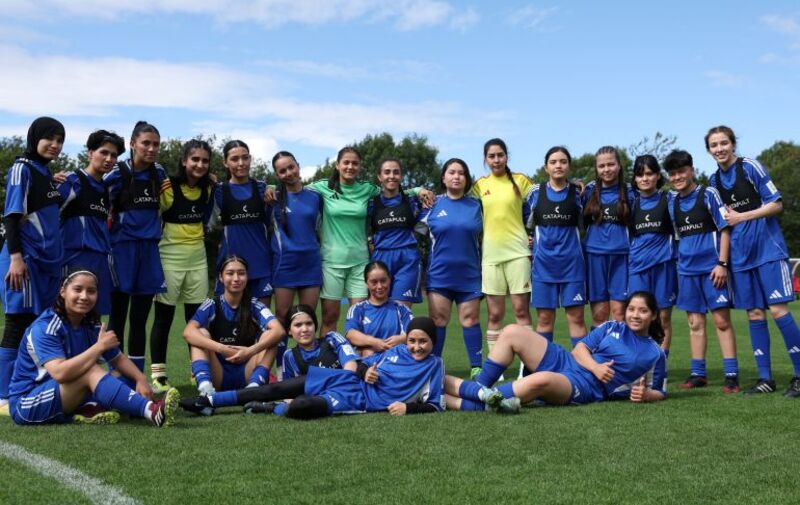
There are moments in sport that go beyond goals, trophies, and scorelines—moments that remind the world what sport truly stands for. The return of the Afghanistan women’s football team to international competition is one such moment. It is not just about a team stepping back onto the pitch; it is about reclaiming identity, voice, and dignity. In a powerful and historic move, FIFA has approved the team’s return, sending a clear message: sport does not belong to politics, restrictions, or circumstance; it belongs to the people who play it.
The story of Afghanistan’s women’s football team is one of courage and disruption. Once a growing symbol of progress, the team last played an official international match in 2018. But everything changed in 2021, when the return of the Taliban led to sweeping restrictions on women’s rights, including a ban on women’s sports. For the players, football was no longer just a game it became something they were forced to leave behind. Many sought asylum across the world, scattering across countries in Europe, Australia, the United States, and the Middle East. The team, once united by a shared dream, was suddenly divided by geography and circumstance. Yet, even in exile, the spirit of the game refused to fade.
Recognizing the extraordinary situation, FIFA made a crucial amendment to its governance regulations. Previously, teams could only compete internationally if they were officially recognized by their national football association. In Afghanistan’s case, that recognition was no longer possible. But the new amendment allows FIFA to approve teams under “exceptional circumstances,” ensuring that players are not denied the right to compete due to situations beyond their control. This decision, taken in coordination with the Asian Football Confederation, opens the door for the Afghan women’s team to return with full international recognition.
FIFA President Gianni Infantino described it as a landmark step—one that reinforces the idea that no player should be excluded from the game they love because of forces beyond their reach.
Although the team cannot currently play on home soil, they will compete in qualifiers and friendly matches at neutral venues. It is a compromise shaped by reality, but it does not diminish the significance of their return. For these players, stepping onto the pitch again is more than a professional opportunity; it is a deeply emotional act. It is about representing a country they carry in their hearts, even if they cannot physically return to it. What makes this team extraordinary is the purpose behind their game. For players, football is a connection to identity, to community, and to the countless girls who are unable to play. When they step onto the pitch, they carry more than their own dreams.
FIFA’s support extends beyond permission to play. With technical and financial backing for up to two years, the organization aims to help the team reintegrate into international football. Regional selection camps in countries like England and Australia, along with training sessions in New Zealand, are part of this effort to rebuild the team. The formation of Afghan Women United, a refugee team supported by FIFA, has already laid the groundwork. Their participation in events like the FIFA Women’s Series has shown that despite years of disruption, the talent and determination remain intact. While the team may not be eligible for the 2027 Women’s World Cup, they are expected to compete in qualifiers for the 2028 Olympics, marking the beginning of a new chapter.
Writing about what truly matters, good news and stories to remind the world - it is brighter than we think.