"Dream, Dream, Dream! Conduct these dreams into thoughts, and then transform them into action."
- Dr. A. P. J. Abdul Kalam
"Dream, Dream, Dream! Conduct these dreams into thoughts, and then transform them into action."
- Dr. A. P. J. Abdul Kalam
3 Apr 2026
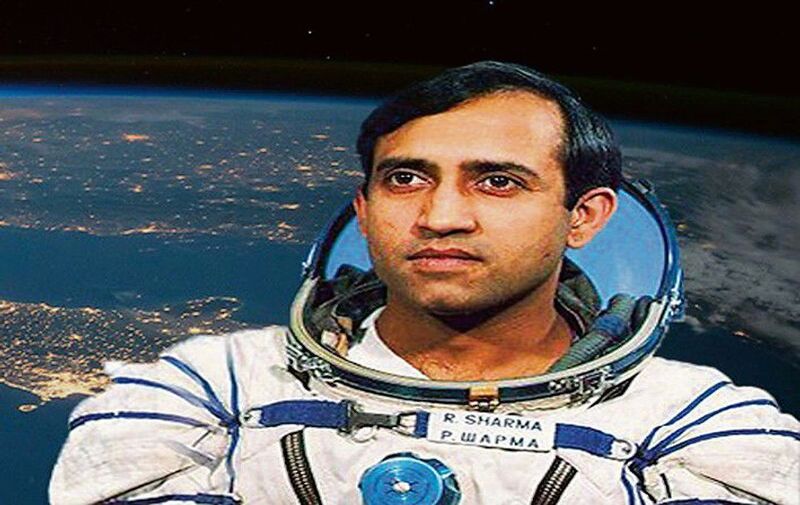
April 3 is not just another date in history; it is the day when India first reached the stars. On this day in 1984, Rakesh Sharma became the first Indian to travel to outer space, marking a moment of immense pride for the nation. His journey aboard Soyuz T-11 under the Soviet Interkosmos program placed India among a select group of countries that had sent humans into space. For millions of Indians, this was more than a scientific achievement—it was an emotional victory, a symbol of hope, and a glimpse into the future.
Born on January 13, 1949, in Patiala, Sharma grew up in a modest Punjabi family. His early education at St. George’s Grammar School and later at Nizam College shaped his academic foundation. But it was his entry into the National Defence Academy in 1966 that set the stage for his extraordinary journey. From a young cadet to a skilled fighter pilot in the Indian Air Force, Sharma’s life reflects discipline, dedication, and an unshakable commitment to serving the nation.
Before becoming a cosmonaut, Sharma built a strong career as a fighter pilot and test pilot. His expertise, calmness under pressure, and technical brilliance made him a perfect candidate for India’s first human space mission. In 1982, he was selected for the prestigious Interkosmos programme, a Soviet initiative that allowed allied nations to send their astronauts into space. After rigorous training, Sharma was ready to embark on a mission that would change Indian history forever.
On April 3, 1984, Sharma launched into space from the Baikonur Cosmodrome aboard Soyuz T-11. He was accompanied by commander Yury Malyshev and flight engineer Gennadi Strekalov. The spacecraft successfully docked with the Salyut 7, where Sharma spent nearly eight days in space. During his time there, he conducted over 40 scientific experiments, focusing mainly on biomedicine and remote sensing. His work contributed valuable data that would later support advancements in space science and technology.
One of the most iconic moments of Sharma’s journey came after his return to Earth. During a live interaction, then Prime Minister Indira Gandhi asked him how India looked from space. His response, “Sare Jahan Se Accha,” inspired by Allama Iqbal’s famous poem, instantly became a symbol of national pride. Those four words captured the emotions of an entire country: love, pride, and unity.
After completing his historic mission, Sharma returned to his duties in the Indian Air Force and eventually retired as a Wing Commander. In 1987, he joined Hindustan Aeronautics Limited (HAL), where he served as a chief test pilot. He continued contributing to India’s aerospace advancements until his retirement from flying in 2001. Even after stepping away from active service, Sharma remains an inspiration for generations of Indians.
While Sharma’s achievements are extraordinary, what makes his story truly special is its human connection. He was not born into privilege or fame—he built his path through hard work, discipline, and determination. Behind the astronaut suit was a husband, a father, and a man who carried the hopes of over a billion people. His journey reminds us that greatness is not reserved for a few; it is achievable for anyone willing to dream and work relentlessly.
For young Indians, especially students looking up at the night sky, Sharma’s story serves as a powerful reminder: your dreams are valid, no matter how big they seem. Even today, April 3 is celebrated as a milestone in India’s space journey. It laid the foundation for future achievements by ISRO, including missions like Chandrayaan and Gaganyaan. Rakesh Sharma’s mission was not just about reaching space; it was about opening doors for future explorers, scientists, and dreamers.
As we remember this historic day, we are reminded that courage, curiosity, and perseverance can take us beyond limits, sometimes even beyond Earth itself. And somewhere, in the vast silence of space, echoes the pride of a nation in four unforgettable words: “Sare Jahan Se Accha.”
Romanticizing life and shaping stories from everything I see through my journalistic lens. Also, I love sports on the side.