"Dream, Dream, Dream! Conduct these dreams into thoughts, and then transform them into action."
- Dr. A. P. J. Abdul Kalam
"Dream, Dream, Dream! Conduct these dreams into thoughts, and then transform them into action."
- Dr. A. P. J. Abdul Kalam
22 Dec 2025
The brand-new Terminal 2 at Lokapriya Gopinath Bordoloi International Airport (LGBI), Guwahati, is more than just an infrastructure upgrade; it is a statement of identity, ambition, and pride for Northeast India. Recently honored with the International Architecture Award 2025 in the transport category, the terminal has quickly gained attention as an “airport sensation.” Prime Minister Narendra Modi inaugurated it on December 20, 2025, and the terminal stands as a powerful symbol of how modern India is learning to grow without losing its cultural soul.
Guwahati has long been known as the gateway to Northeast India, but Terminal 2 redefines that role for the 21st century. Designed to handle the region’s growing passenger and trade demands, the terminal reflects the increasing strategic, economic, and tourism importance of the Northeast in India’s national vision. As air travel becomes central to regional development, this terminal positions Guwahati alongside India’s most modern airports while still speaking the language of its land and people.
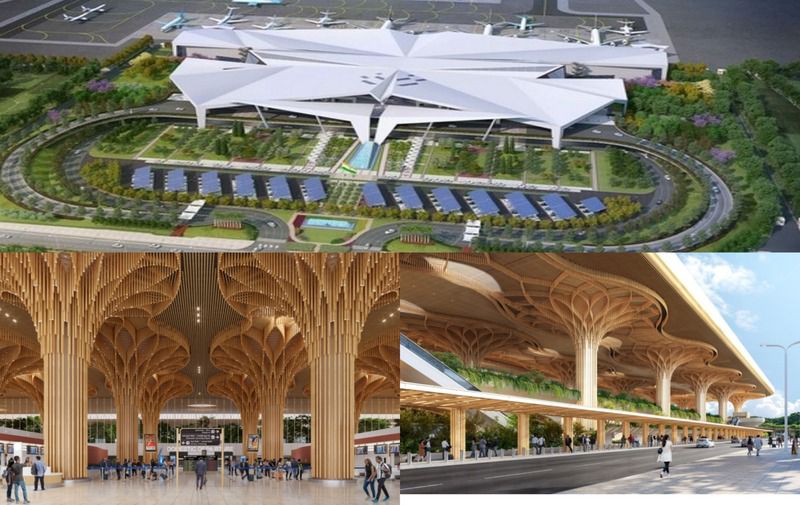
What truly sets Guwahati’s Terminal 2 apart is its deep cultural connection. Inspired by Northeast India’s natural beauty and indigenous traditions, the terminal prominently features bamboo architecture and orchid motifs. Bamboo, a material deeply embedded in Assamese life, represents warmth, sustainability, and resilience. Orchids, especially the iconic kopou phool (foxtail orchid), symbolize love, celebration, and identity in Assamese culture. Designed by Guwahati International Airport Limited (GIAL) in collaboration with Mumbai-based architectural firm NUDES, the terminal is a contemporary interpretation of vernacular architecture. Instead of copying global airport designs, it proudly showcases local materials, forms, and stories, creating a sense of place the moment passengers step inside.
At the heart of Terminal 2 lies its most striking feature, the Bamboo Vault, located in the arrival concourse. This architectural marvel is not just visually stunning but emotionally resonant. Crafted using local bamboo species such as Apatani and Bholuka, the Vault integrates traditional bamboo weaving techniques into a modern structural form. The design draws inspiration from Assam’s historic landmarks, including the Kamakhya Temple and the moidams of Charaideo, the ancient burial mounds of the Ahom royalty. By reimagining these elements for a contemporary airport, the Bamboo Vault becomes a bridge between the past and the future. It functions as a cultural hub, encouraging community engagement, cultural exchange, and a sense of belonging for both locals and visitors.
While rooted in tradition, Terminal 2 is firmly future-ready. The terminal features advanced digital infrastructure, including DigiYatra, a biometric-based initiative that enables paperless and contactless travel using facial recognition. With multiple DigiYatra gates and streamlined entry points, passengers experience shorter queues and smoother security checks. This balance between technology and comfort reflects a human-centric design philosophy. The goal is not just efficiency but also reduced stress, making travel easier for families, elderly passengers, and first-time flyers from the region who may be navigating airports on a large scale for the first time.
Terminal 2 is designed to accommodate 13.1 million passengers per annum (MPPA) by 2032, with the ability to handle 34 air traffic movements per hour. This significant capacity boost is expected to transform air connectivity across the Northeast, improving access to remote states and enhancing links with major Indian cities and international destinations. Better connectivity means more than convenience. For the people of the Northeast, it means easier access to education, healthcare, jobs, and markets. For artisans, farmers, entrepreneurs, and tourism operators, it opens new doors to economic opportunity and global exposure.
For a student flying out for studies, a worker returning home, or a tourist arriving for the first time, Terminal 2 offers something rare: a feeling of recognition. The bamboo textures, orchid patterns, and cultural references quietly say, “You are in Assam.” That emotional connection is what elevates this terminal from infrastructure to experience. Much like Bengaluru’s airport became a symbol of South India’s tech-driven rise, Guwahati’s Terminal 2 represents the Northeast’s confident step into the future—modern, connected, and proudly rooted in its heritage. In blending world-class design with local soul, Guwahati Airport’s Terminal 2 does not just move people across distances. It carries stories, culture, and aspirations, taking Northeast India higher, together.

Writing about what truly matters, good news and stories to remind the world - it is brighter than we think.