"Dream, Dream, Dream! Conduct these dreams into thoughts, and then transform them into action."
- Dr. A. P. J. Abdul Kalam
"Dream, Dream, Dream! Conduct these dreams into thoughts, and then transform them into action."
- Dr. A. P. J. Abdul Kalam
25 Feb 2026
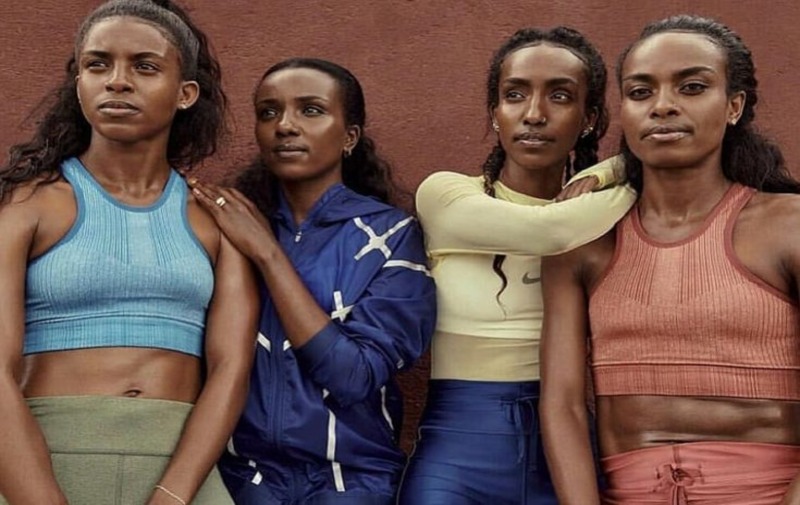
In the world of distance running, records are broken, champions rise and fall, but legends endure. And few names echo through stadiums and history books like the Dibaba sisters. Hailing from Bekoji in Ethiopia’s Oromia Region, this extraordinary family turned their shared childhood into a dynasty that reshaped global athletics. The Dibaba sisters—Ejegayehu, Tirunesh, Genzebe, and Anna—alongside their cousin Derartu Tulu, became symbols of endurance, excellence, and Ethiopian pride. Collectively, the family has won multiple Olympic medals, including four golds, along with an astonishing collection of World Championship titles. Media outlets have rightly called them the “fastest family on Earth,” and their achievements justify every bit of that praise. But their journey did not begin in grand stadiums. It began on dusty roads.
Bekoji sits at an altitude of over 2,800 metres above sea level. Thin air, rolling terrain, and a culture deeply rooted in running have made it one of the most productive athletics towns in history. The Dibabas grew up on a rural farm, running to school, helping with chores, and unknowingly building the stamina that would later shock the world. This same town also produced legends like Kenenisa Bekele, proving that Bekoji is not just a location; it is a breeding ground for greatness. The high-altitude environment strengthened lungs and hearts, but it was discipline, family bonding, and ambition that shaped champions. Inspired by their cousin Derartu Tulu, the first Ethiopian woman to win Olympic gold, the sisters dared to dream beyond their village. Tulu’s triumph showed them that a girl from rural Ethiopia could conquer the world.
Among the sisters, Tirunesh Dibaba stands tallest in Olympic glory. Nicknamed the “Baby Faced Destroyer,” she combined a calm expression with devastating finishing speed. At the 2008 Beijing Olympics, she delivered a historic double gold in the 5,000 m and 10,000 m, a rare achievement in distance running. She later defended her 10,000 m title at the London 2012 Olympics, cementing her place among the sport’s greatest. Tirunesh’s career includes five World Championship titles and multiple world records. Her racing style was tactical yet fearless. She would stay patient in the pack, conserving energy, before unleashing a final lap kick that left rivals stunned. For Ethiopian fans, she became a national hero. For young girls across Africa, she became proof that dominance has no gender.
If Tirunesh ruled the outdoor championships, Genzebe Dibaba redefined indoor racing. Known for her smooth stride and relentless pace, Genzebe set multiple indoor world records in the 1,500 m, mile, 3,000 m, and 5,000 m. Her record-breaking spree in 2014 and 2015 stunned the athletics world. At the Rio 2016 Olympics, she won silver in the 1,500 m, and she captured gold at the 2015 World Championships. Genzebe’s strength lay in her rhythm; once she found her pace, few could match it. She carried the family legacy into middle-distance events, proving that the Dibaba excellence extended beyond long races.
Before the global spotlight fully shone on the younger sisters, Ejegayehu Dibaba had already begun writing history. The eldest sibling, Ejegayehu, won silver in the 10,000m at the 2004 Athens Olympics. She also claimed bronze medals in both the 5,000 m and 10,000 m at the 2005 World Championships. Her achievements paved the way for Tirunesh and Genzebe. As the first among them to succeed on the Olympic stage, she showed that the family dream was real. In many ways, she was the bridge between Derartu Tulu’s pioneering era and the dominance that followed.
The youngest sister, Anna Dibaba, represents the new chapter. Specialising in road racing, she clocked a personal best of 2:23:56 at the 2024 Amsterdam Marathon. While her career is still unfolding, she carries the weight and pride of one of athletics’ greatest family legacies. In marathon racing, patience and mental strength are as important as physical power. Anna’s transition to road racing shows the evolution of the Dibaba name from track dominance to global marathon circuits. For Ethiopia, their achievements elevated the country’s global profile in athletics. For women in sport, they shattered barriers. They became role models in a society where opportunities for girls were once limited. Their dominance encouraged greater female participation in athletics across Ethiopia and beyond.
No other trio of siblings has achieved what the Dibaba sisters have, each winning Olympic medals and multiple world titles. They did not just win races; they changed perceptions. They showed that greatness can come from humble beginnings and that family can be the strongest training partner of all. From Bekoji’s highlands to Olympic stadiums in Beijing, London, and Rio, the Dibaba family built a dynasty that may never be matched. Their strides were not just measured in metres, but in milestones for African athletics and women’s empowerment. The Dibaba sisters did not simply run. They carried a nation’s pride, a family’s dream, and the rhythm of Ethiopia’s highlands all the way to history.

Writing about what truly matters, good news and stories to remind the world - it is brighter than we think.