"Dream, Dream, Dream! Conduct these dreams into thoughts, and then transform them into action."
- Dr. A. P. J. Abdul Kalam
"Dream, Dream, Dream! Conduct these dreams into thoughts, and then transform them into action."
- Dr. A. P. J. Abdul Kalam
8 Jun 2026
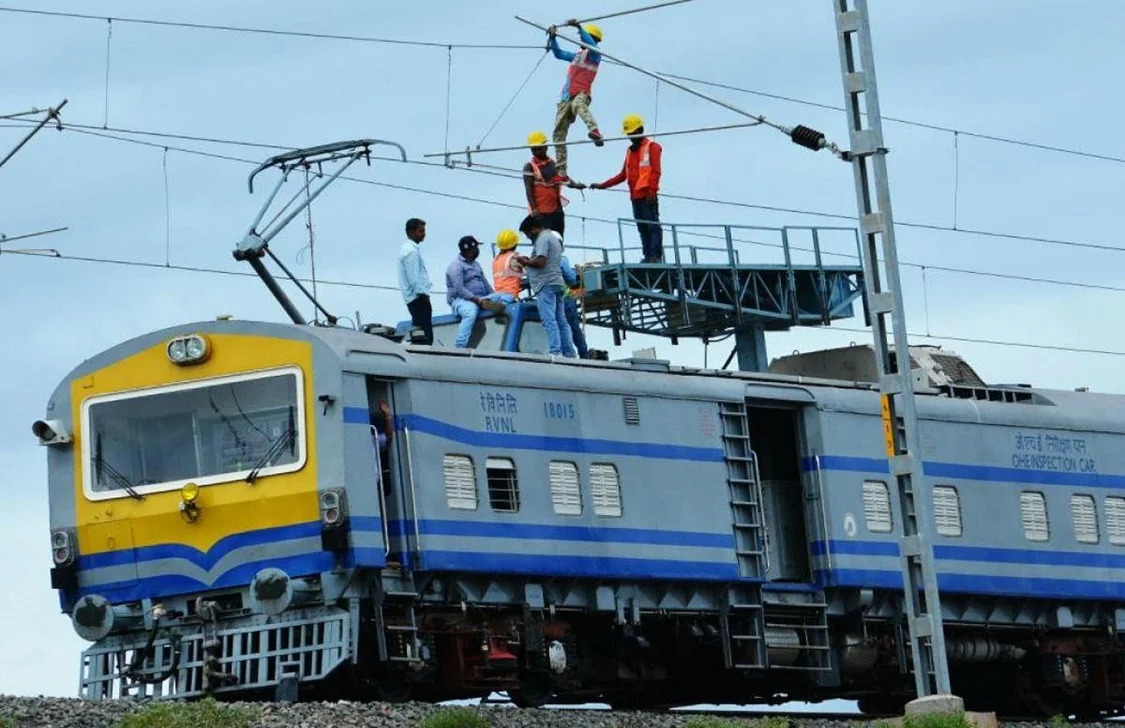
India has achieved a landmark feat in its railway modernization journey. The country has successfully electrified 99.6 per cent of its Broad Gauge railway network, bringing one of the world's largest transportation systems to the brink of complete electrification.
As of May 31, 2026, electrification work has been completed across 70,002 route kilometres of the total 70,271 route kilometre Broad Gauge network. With only 269 kilometres remaining, India is closer than ever to achieving a fully electrified railway system. The achievement places Indian Railways ahead of several major rail networks globally, including those in the European Union, the United Kingdom and the United States.
The scale of progress is staggering. In 2014, only about 21,801 route kilometres of railway lines were electrified, accounting for roughly 20 per cent of the Broad Gauge network. Today, that figure has surged to more than 69,873 route kilometres, representing one of the fastest large-scale railway electrification drives anywhere in the world.
The transformation reflects a strategic shift toward cleaner and more efficient transportation. By reducing dependence on diesel locomotives, Indian Railways has significantly lowered fuel consumption while improving operational performance.
The impact has been substantial. During 2024-25 alone, railway electrification helped save nearly ₹6,000 crore in fuel costs and reduced diesel consumption by approximately 180 crore litres.
Indian Railways remains the backbone of the nation's transportation system. Every day, nearly 25,000 trains operate across the network, connecting cities, towns and villages from Kashmir to Kanyakumari. The scale is reflected in passenger numbers as well. During 2025-26, Indian Railways carried a record 741 crore passengers, highlighting its central role in India's economic and social life.
Modernisation efforts have gone far beyond electrification. Over 54,600 kilometres of railway tracks have been renewed, while premium services such as Vande Bharat and Amrit Bharat trains continue expanding across the country. The Union Budget 2026-27 has further accelerated this momentum, allocating a record ₹2.78 lakh crore for railway infrastructure development, including plans for seven new high-speed rail corridors.
The modernization story is also one of technological innovation. Indian Railways has been integrating cutting-edge systems to improve safety, efficiency and passenger experience.
The indigenous Kavach automatic train protection system has already been commissioned over 3,100 route kilometres, with implementation underway on an additional 24,400 kilometres.
Alongside Kavach, AI-enabled video surveillance systems, advanced telecom upgrades and real-time passenger information platforms are helping create a smarter and more responsive railway network. These developments are strengthening India's position as a leader in railway technology while supporting the broader goals of the Make in India initiative.
Although the finish line is in sight, completing the remaining electrification work is not without challenges. According to the Ministry of Railways, only five states—Rajasthan, Tamil Nadu, Assam, Karnataka and Goa—still have Broad Gauge sections awaiting electrification. Factors such as forest clearances, difficult terrain, utility shifting, regulatory approvals and weather conditions continue to influence project timelines.
Nevertheless, railway authorities are pursuing the remaining work in mission mode. Importantly, all new railway lines and multi-tracking projects are now being developed with electrification from the outset, ensuring future expansion remains sustainable and energy efficient.
The journey from steam locomotives to digitally connected, high-speed electric trains symbolizes India's broader infrastructure transformation.
As the nation closes in on 100 per cent electrification, Indian Railways is redefining the future of transportation. Cleaner energy, lower emissions, faster operations and smarter technology are converging to create a railway network ready for the demands of the twenty-first century.
.jpeg)
I have a Masters in Literature and a knack for spotting the silver lining! When I’m not chasing good news, you’ll find me nurturing my farm or lost in a good book.