"Dream, Dream, Dream! Conduct these dreams into thoughts, and then transform them into action."
- Dr. A. P. J. Abdul Kalam
"Dream, Dream, Dream! Conduct these dreams into thoughts, and then transform them into action."
- Dr. A. P. J. Abdul Kalam
6 Oct 2026
In an age when electricity, smartphones and digital technology have become part of everyday life, it is fascinating to find a community choosing to live closer to an older way of life.
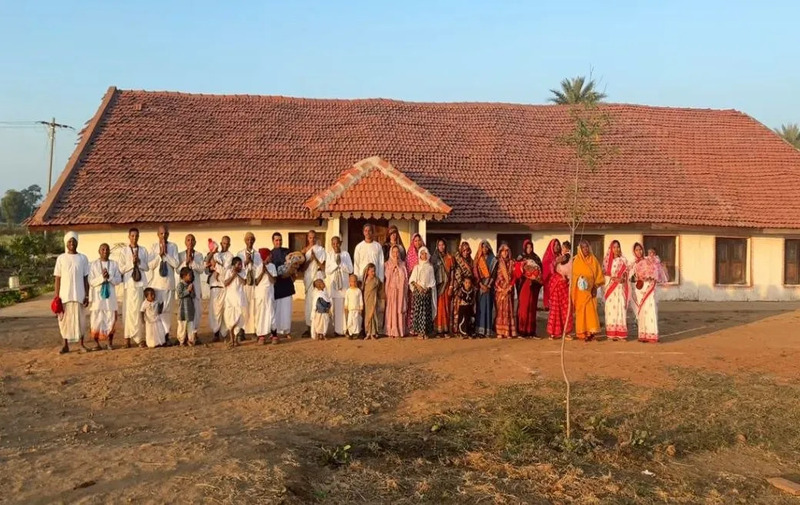
About 28 kilometres from Ganjbasoda in Madhya Pradesh’s Vidisha district, a unique village is taking shape near Badwasa, along the Bhal Bamora-Kulhar roads. It is called Bhakti Gram.
Started in 2021 and spread across around 32 acres, the community is envisioned as a non-sectarian Krishna-conscious Vedic village. Families and devotees living here seek to build their lives around spiritual practice, nature and community living.
Bhakti Gram is being developed as more than just a residential settlement.
The community includes organic agriculture, a Goshala, a Vedic Gurukulam, traditional arts and crafts, and training and workshops focused on natural and sustainable living.
Food is closely connected to the land, with grains and other produce cultivated through organic farming practices. The Goshala forms another part of the community’s rural ecosystem, while the Gurukulam draws inspiration from traditional Indian education.
For the residents, the idea is to create a lifestyle where spiritual practice, farming, learning and community coexist.
Interestingly, even the architecture of Bhakti Gram has been shaped by local traditions.
Before the settlement was designed, an in-depth study was undertaken of the religious beliefs, practices and daily routines of the devotees. The built heritage of villages around Badwasa was also studied. These learnings were then incorporated into the design through a participatory process involving devotees and local villagers.
The buildings use thick cob walls, local stone, khajuri wood and bamboo, while the overall design considers the region’s climate and traditional ways of living.
Bhakti Gram offers an unusual picture of rural India—one where ancient knowledge is being explored alongside contemporary ideas of sustainability.
It does not simply attempt to recreate the past. Instead, it is experimenting with how elements of Vedic culture, organic farming, traditional architecture and community living can work together today.
At a time when modern life is moving increasingly online, Bhakti Gram is taking a different route—back to the soil, the cow shed, the classroom and the community.
.jpeg)
I have a Masters in Literature and a knack for spotting the silver lining! When I’m not chasing good news, you’ll find me nurturing my farm or lost in a good book.