"Dream, Dream, Dream! Conduct these dreams into thoughts, and then transform them into action."
- Dr. A. P. J. Abdul Kalam
25 Nov 2026
A new robotic assistant is on its way to the International Space Station (ISS)! Russia launched its Progress MS-36 cargo spacecraft from the Baikonur Cosmodrome in Kazakhstan on November 24, aboard a Soyuz-2.1b rocket.
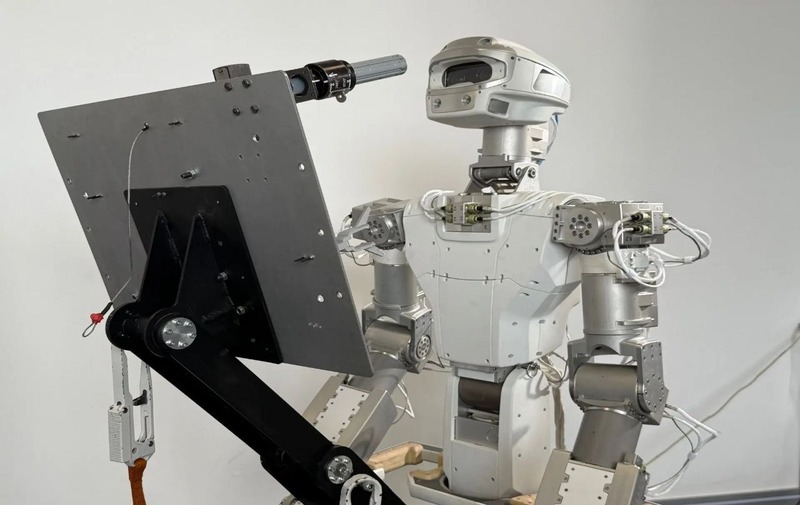
The spacecraft successfully reached its intended orbit, separated from the rocket's third stage and deployed its antennas and solar panels. It is carrying more than 2.4 tonnes of supplies, equipment and scientific hardware, including Teledroid, a humanoid robot developed to support space operations.
The spacecraft is expected to dock with the ISS on November 26. Until then, Teledroid has reached orbit, but its arrival at the station is still ahead.
Teledroid is designed to help cosmonauts carry out tasks on the exterior of the ISS. Working in the vacuum of space can be challenging, and spacewalks require astronauts to wear bulky suits while performing demanding operations.
The robot is designed to work as a remotely controlled avatar. An operator wearing a special control suit can make movements for Teledroid to replicate. It can also perform certain tasks autonomously.
Its robotic system includes a torso-like structure, two arms and external cameras. It is being developed to work with standard space tools and withstand the extreme conditions of outer space.
One of Teledroid's main goals is to support work on the outside of the space station. It could help prepare work areas, handle equipment and assist with tasks that would otherwise require astronauts to spend time outside. By combining remote operation with autonomous functions, the experiment aims to explore how robots can take on some of the demanding tasks involved in spacewalks.
The technology could eventually help reduce the time cosmonauts spend outside the station, making future missions more efficient.
Progress MS-36 is also delivering essential supplies for the station's crew, including food, water, oxygen and fuel, along with equipment for several scientific experiments. The ISS serves as a unique research laboratory where astronauts from different countries conduct research in the fields of biology, physics, chemistry, astronomy and meteorology.
With Teledroid now in orbit, the mission marks another step towards exploring how humans and robots can work together beyond Earth.
.jpeg)
I have a Masters in Literature and a knack for spotting the silver lining! When I’m not chasing good news, you’ll find me nurturing my farm or lost in a good book.