"Dream, Dream, Dream! Conduct these dreams into thoughts, and then transform them into action."
- Dr. A. P. J. Abdul Kalam
"Dream, Dream, Dream! Conduct these dreams into thoughts, and then transform them into action."
- Dr. A. P. J. Abdul Kalam
7 Mar 2026
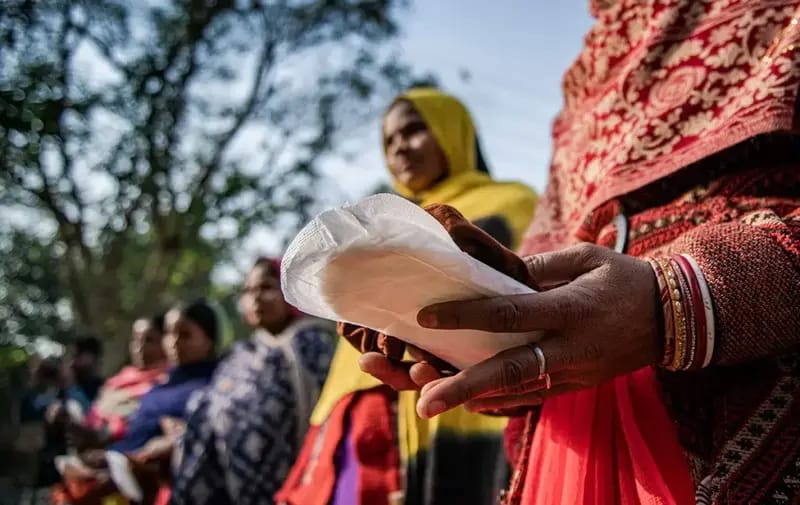
For generations, millions of girls in India have grown up whispering about something that is completely natural. Menstruation, a normal biological process, has long been surrounded by silence, shame, and stigma. In many homes, schools, and communities, even mentioning periods is considered uncomfortable. But in a historic moment for gender equality and dignity, the Supreme Court of India declared menstrual health and hygiene a Fundamental Right under Article 21 of the Constitution of India. The ruling recognizes that access to safe menstrual products, sanitation facilities, and awareness is not a luxury; it is a matter of basic human dignity. For millions of girls who have struggled silently with “period poverty,” this judgment represents hope, recognition, and the promise of change.
The landmark judgment was delivered by a bench led by Justice J. B. Pardiwala and Justice R. Mahadevan while hearing a petition seeking free biodegradable sanitary pads for schoolgirls. The court emphasized that menstrual hygiene is inseparable from the right to life with dignity guaranteed by the Constitution. The judges observed that when girls lack access to safe menstrual products or hygienic sanitation facilities, it directly impacts their health, education, and privacy. The court acknowledged that this deprivation leads to what is widely known as “period poverty.” Period poverty forces many girls to rely on unsafe materials during menstruation, increasing the risk of infections and serious health complications. It also pushes thousands of girls to miss school or drop out entirely, especially in rural areas where sanitation facilities remain inadequate. By declaring menstrual hygiene a fundamental right, the court has placed the issue firmly within the framework of human rights and gender equality.
One of the most significant directions issued by the court is that all schools must provide free sanitary napkins to adolescent girls. The ruling mandates both government and private educational institutions to ensure access to menstrual hygiene products. Schools are also required to provide functional, hygienic, and gender-segregated toilets. The court has ordered the nationwide implementation of the Union government’s Menstrual Hygiene Policy for School-going Girls, which focuses on improving menstrual awareness and access to hygiene facilities for girls from Classes 6 to 12. Importantly, the court made it clear that non-compliance will not be tolerated. Private schools that fail to provide separate toilets or access to sanitary pads may even face derecognition. In addition, schools have been asked to set up Menstrual Hygiene Management corners, where girls can access sanitary pads, spare uniforms, innerwear, and proper disposal facilities. These steps aim to ensure that no girl feels forced to skip school simply because she is menstruating.
The judgment also acknowledges that the challenge is not just infrastructural; it is deeply cultural. Across many parts of India and South Asia, menstruation has historically been surrounded by myths and superstitions. In some communities, menstruating girls are considered "impure" and prevented from entering temples, cooking food, or participating in family activities. In extreme cases, girls are forced to stay in unhygienic spaces during their periods, reinforcing the idea that their natural bodily functions are something to be ashamed of. The Supreme Court stressed that education and awareness are essential to dismantle these harmful beliefs. Teachers, both male and female, have been directed to educate students, including boys, about the biological reality of menstruation. By normalizing conversations about periods in classrooms, the court hopes to create a generation that sees menstruation as a normal part of life rather than a taboo.
The impact of this ruling extends beyond schools and sanitation facilities. By addressing menstrual health openly, India moves closer to improving girls’ education, women’s workforce participation, and overall gender equality. When girls can attend school confidently and manage their periods safely, their opportunities expand. Education leads to empowerment, economic independence, and stronger communities. This judgment is therefore not just about sanitary pads or toilets; it is about restoring dignity to millions of women and girls. The journey toward menstrual equality is far from over. Policies must now be implemented effectively, infrastructure must be built, and social attitudes must evolve. But the Supreme Court’s decision marks a powerful turning point. For a country where menstruation was once hidden behind closed doors, the message from the nation’s highest court is clear: periods are not shameful; denying dignity is. As India celebrates women’s strength and resilience, this ruling reminds us that true empowerment begins when even the most basic needs of women are recognized as rights.
A Women’s Day Step Toward Dignity
As the world prepares to celebrate International Women's Day, India has taken a powerful step toward ensuring dignity and equality for millions of girls and women. The Supreme Court of India recently declared menstrual hygiene a fundamental right under Article 21 of the Constitution of India, recognizing that access to sanitary products, clean toilets, and awareness is essential for a woman’s health and dignity. This landmark decision not only challenges long-standing taboos around menstruation but also strengthens the fight for girls’ education, health, and equality—reminding society that empowering women begins with respecting their most basic needs.

Writing about what truly matters, good news and stories to remind the world - it is brighter than we think.