"Dream, Dream, Dream! Conduct these dreams into thoughts, and then transform them into action."
- Dr. A. P. J. Abdul Kalam
"Dream, Dream, Dream! Conduct these dreams into thoughts, and then transform them into action."
- Dr. A. P. J. Abdul Kalam
23 Sep 2026
Assam is set to become home to an advanced radar facility that could strengthen India’s ability to monitor both objects in space and weather systems on Earth.
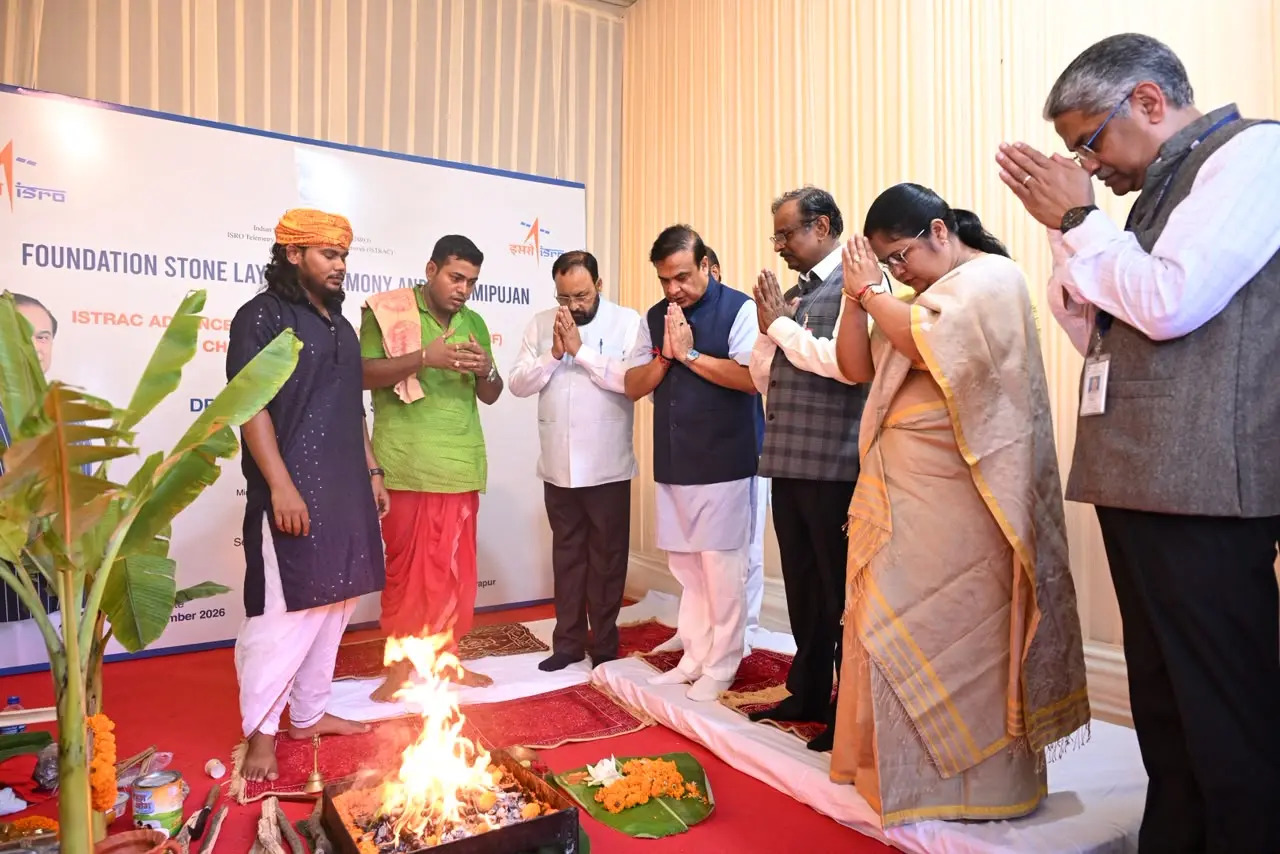
The foundation stone for the Advanced Radar Research Centre was laid at Chandrapur, Assam, on September 21, bringing a major space technology project to Northeast India. The facility is part of Project NETRA — Network for Space Objects Tracking and Analysis, ISRO’s programme for improving India’s space situational awareness.
One of the most exciting features of the planned centre is its phased-array radar. Unlike conventional radar systems that rely on physically moving antennas, phased-array technology uses multiple fixed antenna elements to electronically steer and scan beams. The proposed system is expected to detect and track objects as small as 10 cm from distances of up to 2,000 km, according to the report.
This capability can help India keep a closer watch on satellites, rocket bodies and space debris moving around Earth. Project NETRA is designed to identify, track and catalogue objects that could pose risks to Indian space assets. ISRO’s existing Space Situational Awareness Control Centre in Bengaluru serves as the hub for processing data, analysing close approaches and supporting collision-avoidance activities.
The centre’s role will extend beyond watching the skies. The planned radar infrastructure will also support cloud and rainfall research, potentially contributing to better understanding of weather systems and improved monitoring of extreme weather events.
The first radar intended for cloud research is expected to come up by February 2027, according to the report. For a region that frequently faces heavy rainfall, floods and other natural hazards, improved weather observations could prove particularly valuable.
The Assam facility will add to ISRO’s growing network of ground-based observation systems. It represents another step towards building stronger indigenous capabilities for monitoring the increasingly busy space environment.
From detecting tiny pieces of debris to studying clouds over Earth, the new centre could give India a wider and sharper view of what is happening both above us and around us.
.jpeg)
I have a Masters in Literature and a knack for spotting the silver lining! When I’m not chasing good news, you’ll find me nurturing my farm or lost in a good book.